
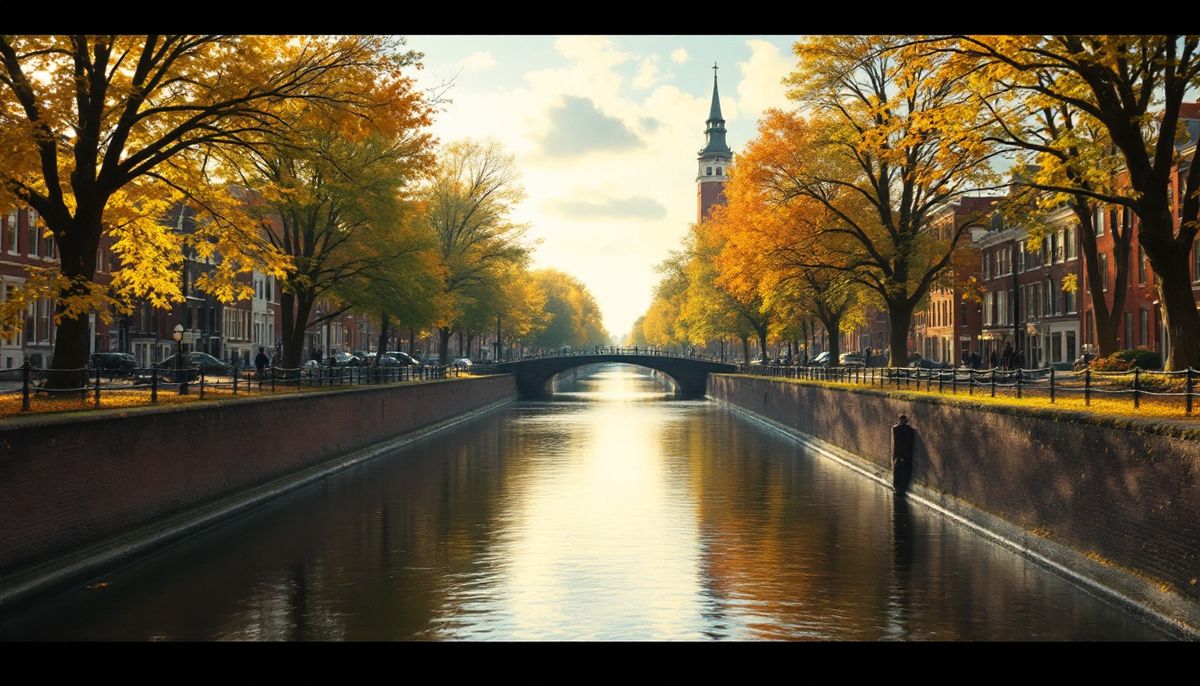
You probably learned about the Erie Canal for about ten minutes in school, hummed a song about a mule named Sal, and moved on. But this 363-mile ditch in upstate New York might be the most important construction project in American history that nobody talks about. People openly mocked it, called it a fool’s dream, and predicted it would bankrupt the state. Instead it built New York City, cracked open the entire continent, and got dug almost entirely by hand. Number 4 is the reason the song tells you to duck.
1. It was sneeringly nicknamed “Clinton’s Ditch” before it made everyone eat their words.
New York Governor DeWitt Clinton championed the canal so hard that critics mockingly named it after him — “Clinton’s Ditch” and “Clinton’s Folly” — convinced the whole thing was a doomed waste of money. Even President Thomas Jefferson reportedly thought it was bordering on madness. Then it opened, printed money, and made Clinton look like a genius. The lesson, as always: the people laughing loudest at the big idea are usually the ones who’ll be quietest later.
2. It opened in 1825 and ran 363 miles from the Hudson River to Lake Erie.
The canal officially opened on October 26, 1825, stretching about 363 miles across New York State — connecting the Hudson River at Albany all the way west to Lake Erie at Buffalo. For the first time, you could float goods from the Atlantic Ocean to the Great Lakes without ever leaving the water. When it was completed, it was the second-longest canal in the entire world, behind only China’s Grand Canal. Not bad for a “ditch.”
3. It cut shipping costs by roughly 95 percent.
Before the canal, hauling a ton of goods overland from Buffalo to New York City cost around $100 and took weeks. After the canal opened, that same ton cost about $6 and moved in a matter of days. That’s not an improvement — that’s a revolution. Suddenly Midwestern grain, lumber, and goods could reach the coast cheaply, and the whole economics of America tilted east-to-west in one stroke.
4. Boats were towed by mules and horses walking a “towpath” beside the water.
There were no engines. Instead, mules and horses plodded along a dirt path beside the canal — the towpath — pulling the boats by rope at a leisurely few miles per hour. A young driver, often a kid, walked alongside the animals keeping them moving. It was slow, steady, and shockingly effective. That patient mule team is exactly the image burned into the famous canal song, right down to a mule named Sal.
5. The song really does warn you about deadly low bridges.
That old tune — “Low Bridge, Everybody Down” — wasn’t just a catchy chorus. Bridges crossed the canal at heights so low that passengers riding on the roofs of boats genuinely had to flatten themselves on the deck to avoid getting smacked, knocked into the water, or worse. “Low bridge, everybody down” was a literal safety shout. The song was written by Thomas S. Allen around 1912, looking back fondly on the mule-and-barge era.
6. It climbed nearly 570 feet uphill using a staircase of locks.
Lake Erie sits far higher than the Hudson River — about 568 feet of elevation difference. To climb that grade, engineers built a series of locks: water-filled chambers that lift or lower a boat like a liquid elevator, step by step. The original canal had a remarkable 83 locks doing this work. Hand-built, in the 1820s, with no power tools — just math, muscle, and stubbornness.
7. The original canal was startlingly small — just 4 feet deep.
Picture a mighty waterway and you imagine something deep and wide. The original Erie Canal was only about 40 feet wide and a mere 4 feet deep. You could practically wade across it. It was later widened and deepened multiple times to handle bigger boats and heavier traffic, but the version that changed America was, by modern standards, barely more than a glorified creek with ambition.
8. It made New York City the dominant port in America.
Before the canal, several East Coast cities were jockeying to be the nation’s commercial capital. Once the Erie Canal made New York the cheapest gateway between the Atlantic and the interior, the contest was over. Goods funneled through New York harbor, money followed, and the city rocketed past rivals like Philadelphia and Boston to become the financial heart of the country — a crown it has never given back.
9. It supercharged America’s westward expansion.
The canal didn’t just move cargo — it moved people. Settlers poured west along the cheap, easy water route, and towns like Rochester, Syracuse, and Buffalo exploded into boomtowns almost overnight. Whole new regions of the Midwest opened up because suddenly there was a fast way to ship your harvest back east and a fast way to get out there in the first place. The canal helped pull the young nation’s center of gravity inland.
10. It paid for itself in under a decade.
Here’s the kicker for everyone who called it “Clinton’s Folly”: the canal cost about $7 million to build, a staggering sum at the time. The tolls it collected paid that entire debt off in just about ten years — and then it kept printing profit for the state of New York for decades. One of the boldest infrastructure bets in American history turned out to be one of the most profitable. Sometimes the crazy idea is the right one.
Which one got you — that they did it all by hand, or that the song was a real warning to duck? Forward this to the friend who thinks history is boring…
