July 6th
On the warm afternoon of July 6, 1957, a sixteen-year-old boy named John Lennon climbed onto a makeshift stage in a field behind St. Peter’s Church in Woolton, a leafy suburb of Liverpool, England. His skiffle band, the Quarrymen, was the entertainment at the parish garden fete — a homespun affair of bunting, lemonade, a crowned “Rose Queen,” and a brass band marching between the rose bushes. Nobody in that crowd had any idea they were watching the opening scene of the most important partnership in the history of popular music.
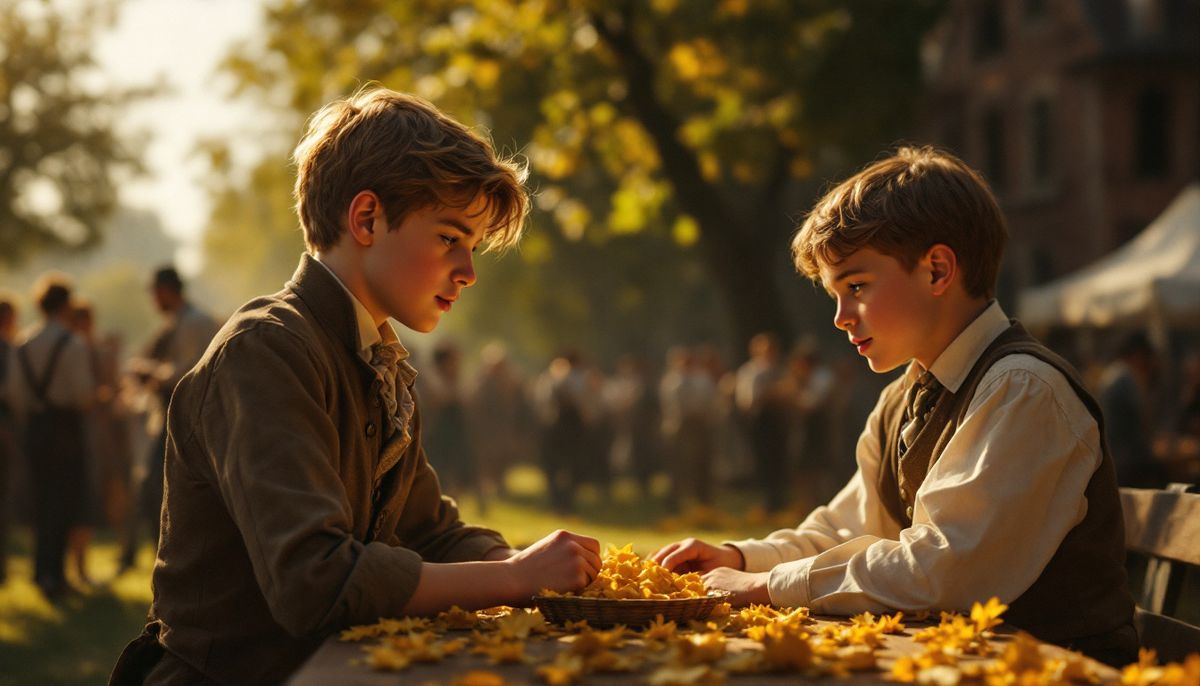
In the audience stood a fifteen-year-old named Paul McCartney, dragged along by a mutual friend, Ivan Vaughan. Paul watched John bluff his way through the lyrics of a song he didn’t quite know, improvising words on the fly, and was impressed by his nerve and charisma. After the set, in the cramped church hall where the Quarrymen were setting up for an evening performance, the two were introduced. Paul, eager to make an impression, picked up a borrowed guitar — flipped it upside down, since he was left-handed — and ripped through Eddie Cochran’s “Twenty Flight Rock,” then Gene Vincent’s “Be-Bop-A-Lula,” and a string of Little Richard numbers, complete with the screaming vocals.
John was floored. Here was a younger kid who actually knew the chords, knew the words, and could play. It put John in a genuine bind: inviting Paul into the band meant sharing the spotlight, and John liked being the leader. He stewed on it for two weeks. Then he sent word through a bandmate — Paul was in.
That single decision set everything else in motion. Paul soon brought in a quiet young guitarist named George Harrison. The band changed names, played grimy clubs in Hamburg and a sweaty Liverpool basement called the Cavern, swapped drummers, and finally became the Beatles. Within seven years of that church fete, John and Paul would be the most famous songwriters on the planet, fronting a group that would sell hundreds of millions of records and rewrite what music could be.
It all traced back to one ordinary summer afternoon in a Liverpool churchyard — a free concert, a chance introduction, and a teenager showing off with a borrowed guitar. History rarely announces itself. Sometimes it just walks in, plugs in, and starts to play.
Also On This Day…
1885 — A Country Doctor’s Gamble Defeats a Death Sentence On July 6, 1885, French scientist Louis Pasteur faced an agonizing choice. A nine-year-old boy named Joseph Meister had been savaged by a rabid dog — bitten fourteen times — and rabies, once symptoms appeared, was a virtual death sentence. Pasteur had been developing a vaccine but had never tried it on a human being, and he wasn’t even a licensed physician. With the boy almost certain to die otherwise, he took the risk, administering a series of thirteen injections over ten days. Young Joseph never developed the disease. Pasteur’s gamble launched the modern era of vaccination, saved untold millions of lives, and led to the founding of the famed Pasteur Institute.
1944 — Tragedy Under the Big Top On the afternoon of July 6, 1944, some 7,000 people — most of them women and children — packed the main tent of the Ringling Bros. and Barnum & Bailey Circus in Hartford, Connecticut. Midway through the show, a small fire flickered up the side of the canvas. The tent had been waterproofed with a deadly mixture of paraffin wax and gasoline, and within minutes the whole top was an inferno. At least 167 people perished and hundreds more were injured in one of the worst fire disasters in American history. The horror of that day forced sweeping reforms in fire safety, flameproofing, and emergency planning that protect crowds at public events to this very day.
1907 — One of the World’s Most Iconic Artists Is Born On July 6, 1907, Frida Kahlo was born in a blue house in Coyoacán, on the outskirts of Mexico City. As a teenager she survived both polio and a horrific bus accident that left her in lifelong pain — and it was during her long recovery, propped up in bed with a mirror above her, that she taught herself to paint. Kahlo turned her suffering into a body of unflinching, dreamlike self-portraits unlike anything that came before. Today she stands as one of the most recognized and beloved artists in the world, a symbol of resilience, originality, and turning pain into something beautiful.
From two Liverpool teenagers meeting in a churchyard, to a doctor’s desperate gamble, to an artist born into a life of pain who painted her way to immortality — July 6th is a reminder that the moments that change everything seldom look like much when they happen. They only become history later, once we see where they led.
