
July 10th
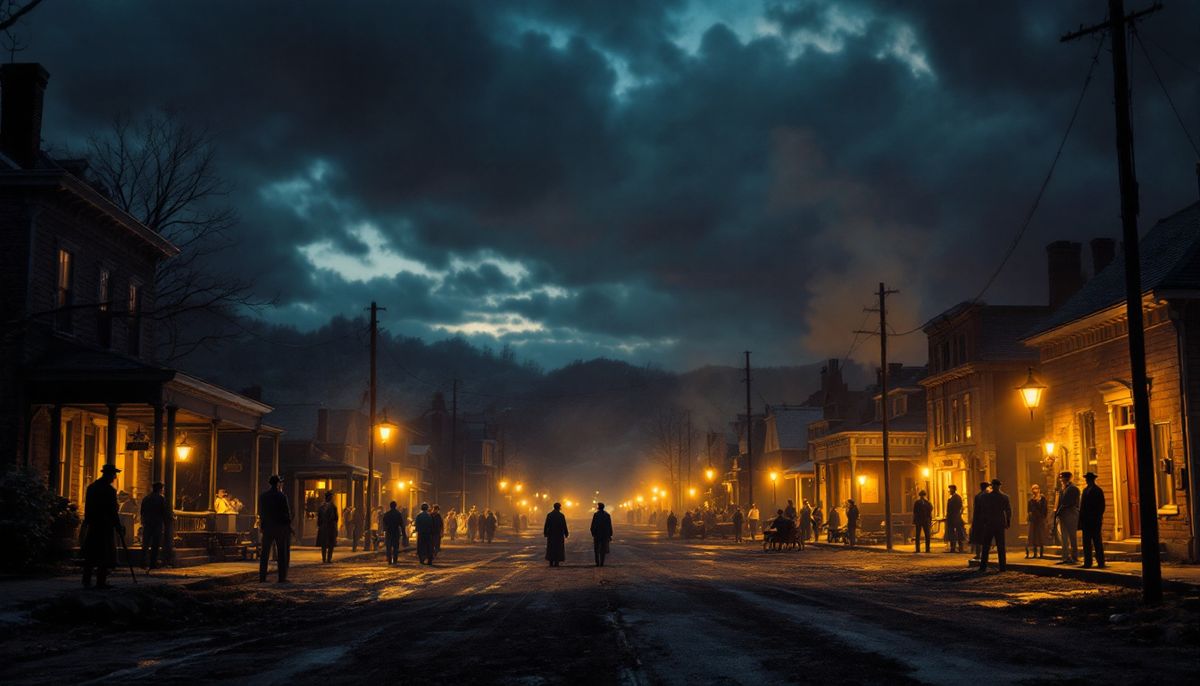
On the morning of July 10, 1925, the little town of Dayton, Tennessee — population about 1,800 — found itself at the center of the American universe. Inside the Rhea County Courthouse, a 24-year-old high school science teacher named John T. Scopes went on trial for the crime of teaching evolution, a violation of Tennessee’s brand-new Butler Act. The charge was small. The fight was enormous: science versus scripture, modern America versus old America, argued by two of the most famous men in the country.
At the defense table sat Clarence Darrow, the most celebrated criminal defense attorney in America and an avowed agnostic. Across the aisle, aiding the prosecution, stood William Jennings Bryan — three-time Democratic nominee for president and the thundering champion of Christian fundamentalism. From the moment the two giants agreed to face off, the “Monkey Trial” stopped being a local misdemeanor case and became a national spectacle.
And what a spectacle it was. Hordes of reporters and spectators descended on Dayton, where preachers pitched revival tents along the main street and vendors hawked Bibles, hot dogs, lemonade — and toy monkeys. One enterprising exhibit in town featured two live chimpanzees. Chicago’s WGN radio carried the proceedings live, making Scopes the first trial in American history broadcast on national radio. Millions of Americans leaned toward their sets to hear a courtroom argue about where human beings came from.
The verdict, when it came eleven days later, was almost an afterthought. Scopes was found guilty and fined $100 — about $1,850 in today’s money — and even that was overturned on a technicality, because the judge had set the fine instead of the jury. But nobody remembered the fine. They remembered Darrow and Bryan colliding in a sweltering Tennessee courtroom while the whole nation listened in — the moment America’s argument with itself went out over the airwaves for the very first time.
Also On This Day…
1890 — “We Will Stay Out of the Union a Hundred Years Rather Than Come In Without Our Women” On July 10, 1890, President Benjamin Harrison signed the bill making Wyoming the 44th state — and the first state in the Union where women could vote. Wyoming’s territorial legislature had granted women the vote back in 1869, and when Congress balked at admitting a state with women’s suffrage, Wyoming’s lawmakers fired back that they would stay out of the Union a hundred years rather than come in without their women. Congress blinked — the House vote was a nail-biting 139 to 127 — and the Equality State came in with its women voting. The rest of America took another thirty years to catch up.
1938 — Howard Hughes Takes Off to Lap the Planet At 7:19 p.m. on July 10, 1938, millionaire aviator Howard Hughes lifted off from Floyd Bennett Field in Brooklyn in a twin-engine Lockheed Super Electra, aiming to fly around the world faster than anyone ever had. Paris, Moscow, Omsk, Yakutsk, Fairbanks, Minneapolis — and then back to the very runway he’d left, just 91 hours and 14 minutes after takeoff. He’d nearly cut in half the record Wiley Post set five years earlier, and America had a new hero. A million New Yorkers showered him with a ticker-tape parade, and the flight earned Hughes and his crew the trophy now known as the Collier, aviation’s highest honor.
1940 — The Battle of Britain Begins On July 10, 1940, some 120 German bombers and fighters swarmed a British shipping convoy in the English Channel while 70 more bombers struck the dockyards of South Wales — the opening blows of the Battle of Britain. Outnumbered RAF Hurricanes and Spitfires scrambled to meet them, and by nightfall the Luftwaffe had lost 13 aircraft to the RAF’s six. For three and a half months, the fate of the free world hinged on a few hundred young pilots — while Americans followed every raid in their newspapers and radio broadcasts, watching a preview of the war that would soon be theirs too.
1962 — Telstar Rides a Rocket and Shrinks the World Before dawn on July 10, 1962, a Delta rocket roared off the pad at Cape Canaveral carrying Telstar 1 — a beach-ball-sized satellite built by Bell Labs, and the first privately sponsored launch in the history of spaceflight. Telstar was about to do something no machine had ever done: relay live television across the Atlantic Ocean. Within days it was beaming pictures between Andover, Maine and receiving stations in England and France, and within weeks Walter Cronkite was anchoring the first live transatlantic broadcast to two continents at once. Every satellite call, broadcast, and signal you use today traces back to that little sphere — which even inspired a #1 hit song called “Telstar.”
From a packed courtroom in Dayton to a rocket rising over Cape Canaveral, July 10th is the day America argued, voted, flew, fought, and broadcast its way into the future — usually with the whole world tuned in.
