
I thought horses were the one animal I had figured out. They run fast, they eat hay, they starred in every Western ever filmed. Then I started reading, and it turns out the horse is one of the strangest animals on four legs. It physically cannot throw up, it sleeps standing bolt upright thanks to built-in locking hardware, and the “wild mustangs” of the American West are actually a comeback story 10,000 years in the making. Here are five true things about horses that genuinely rearranged my brain.
Did you know horses are physically incapable of vomiting?
A horse cannot throw up. Not “doesn’t like to,” cannot. The muscular valve where the esophagus meets the stomach, the cardiac sphincter, is so powerful in horses that it’s essentially a one-way door: food goes in, and nothing comes back out. The esophagus also meets the stomach at an angle that pinches shut when the stomach is full, sealing the deal. This is why colic, a bellyache that would make most animals simply vomit and move on, is one of the leading medical killers of horses. If something toxic or blocked is in there, the horse has no eject button. A horse’s stomach can literally rupture before its body will let it throw up. Next time your dog vomits on the carpet, appreciate the feature.
Did you know horses sleep standing up using built-in leg locks, but still have to lie down to dream?
Horses come from the factory with a feature called the “stay apparatus,” a system of tendons and ligaments that snaps the legs into a locked position like a folding table. Once it’s engaged, the horse can doze standing up using almost no muscle effort, ready to bolt from a predator in an instant. It’s a brilliant survival design with one catch: it only covers light sleep. For REM sleep, the deep, dreaming kind, a horse’s muscles go slack, so it has to lie down, and horses need that lying-down REM sleep or they become sleep-deprived just like us. That’s why herds take turns: some lie flat-out snoring in the pasture while a buddy stands guard. That horse standing in the field with its eyes closed isn’t fully asleep. It’s in power-saving mode, waiting for its turn on the mattress.
Did you know horses evolved in North America, went completely extinct here, and were reintroduced by the Spanish?
The great irony of the American mustang: horses are originally from here. The horse family spent tens of millions of years evolving in North America, from dog-sized, multi-toed forest browsers all the way up to the modern one-toed grassland sprinter. Some spread across the Bering land bridge into Asia and beyond, and good thing they did, because around 10,000 years ago, horses vanished from their home continent entirely, wiped out along with mammoths and other Ice Age giants. For roughly ten millennia, the Americas had zero horses. Then Spanish ships arrived in the 1500s carrying the descendants of the emigrants, and the species set foot on its ancestral homeland again. The “wild” mustangs of the West aren’t invaders. They’re the family that moved back into the old house.
Did you know a horse named Old Billy lived to 62?
The average horse lives 25 to 30 years, which makes Old Billy the equine equivalent of a 150-year-old man. Foaled in England in 1760, Billy spent his career as a barge horse, towing boats along the canals near Manchester, which is famously not a cushy retirement gig. He just kept going: through the entire American Revolution, the French Revolution, and the Napoleonic Wars, hauling barges for decades before finally being retired to a farm. He died in 1822 at age 62, a record for horse longevity that still stands more than two centuries later. Locals treated him as a celebrity in his final years, his portrait was painted, and his head was preserved and is still on display in a Manchester museum. Not bad for a workhorse who outlived most of the people who owned him.
Did you know horses can see almost all the way around their body, except for two exact spots?
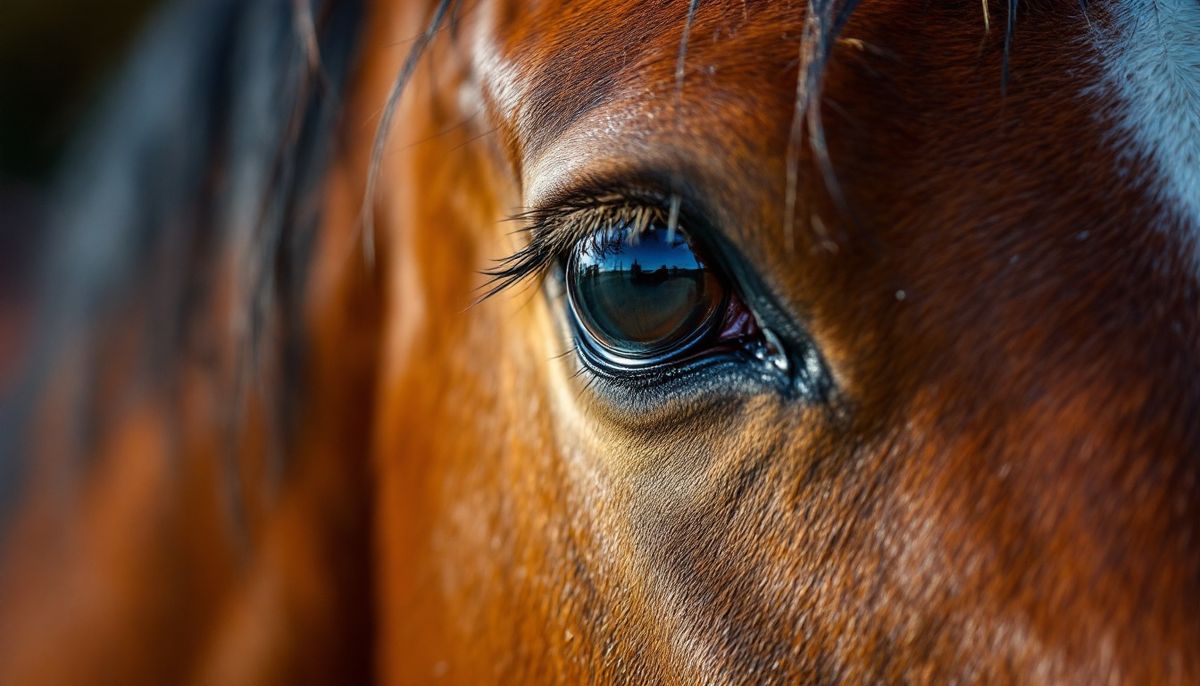
With eyes set on the sides of its head, and the largest eyes of any land mammal, a horse commands a field of vision approaching 350 degrees. It can graze with its head down and still monitor nearly everything on the horizon, which is exactly the hardware you want when everything with claws considers you lunch. But the system has two precise blind spots: directly in front of its nose and directly behind its tail. A horse literally cannot see the grass it’s eating or the fingers offering it a carrot at close range; it navigates those last few inches with its whiskers and lips. And that rear blind spot is the reason for the oldest rule in the barn: never walk up behind a horse unannounced. To the horse, you didn’t approach. You teleported. The kick isn’t malice, it’s a startle response with roughly 1,000 pounds behind it.
Send this to the horse lover in your life… then ask them if they knew Paul Revere didn’t even ride his own horse. (He borrowed her. The British kept her.)
