
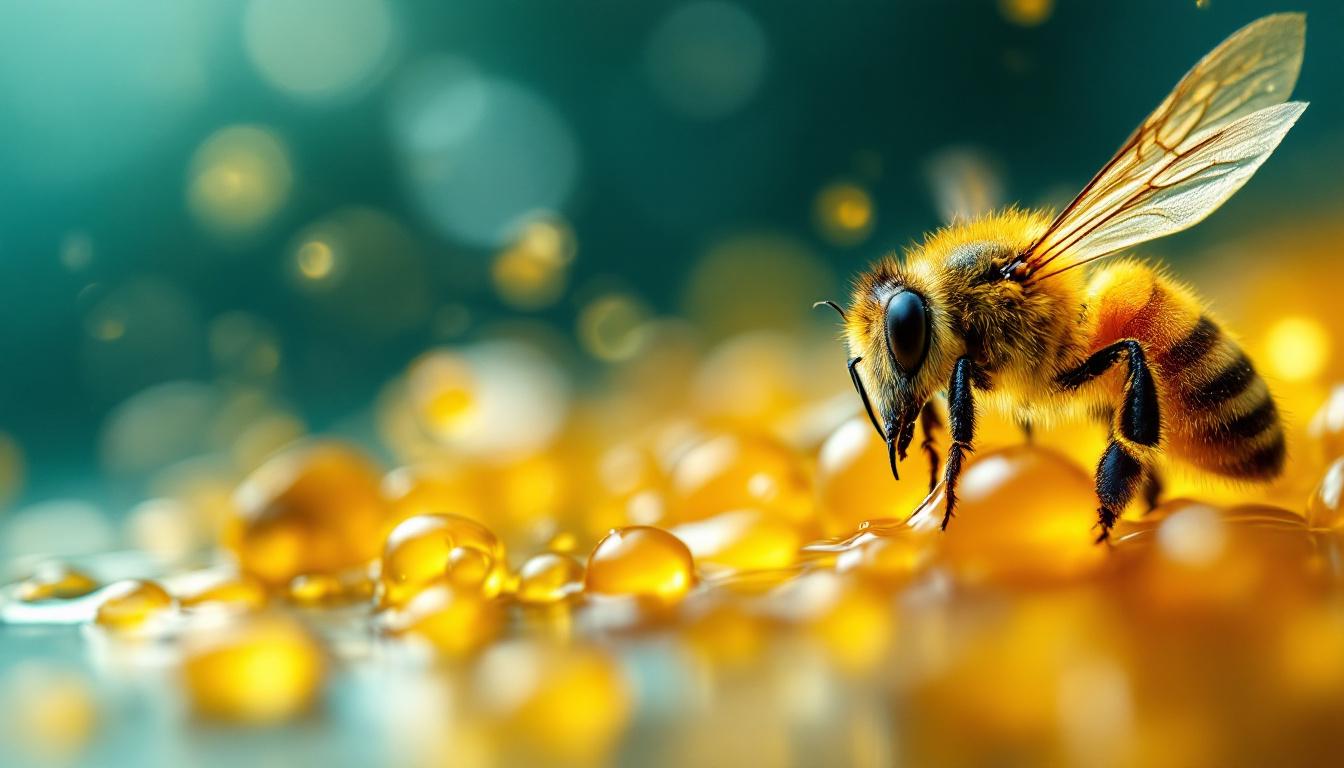
I have a jar of honey in my cabinet right now and I have been mildly suspicious of it for months. Turns out I owe that jar an apology. Honey is one of the strangest, most over-engineered foods on the planet — and most of us just squeeze it on toast without a second thought. Here are five facts that completely changed how I look at the bear-shaped bottle.
Did you know honey never expires — and we have 3,000-year-old proof?
Archaeologists digging through ancient Egyptian tombs have repeatedly found sealed pots of honey thousands of years old — and the honey inside was still perfectly edible. Some of it had been placed in King Tut’s tomb to sweeten his journey to the afterlife. The reason it lasts is pure chemistry: honey has almost no water, a low acidic pH, and a trace of natural hydrogen peroxide, which together make it a place where bacteria and mold simply cannot survive. As long as the lid stays on and no water gets in, honey is essentially immortal. I bought my jar in February. It will outlive me.
Did you know it takes about 55,000 miles of flying to make a single pound of honey?
To produce one pound of honey, a hive’s worker bees collectively fly roughly 55,000 miles — more than twice around the Earth — and visit around two million flowers. And here’s the part that stopped me cold: a single worker bee, over her entire six-week life of nonstop work, produces about one-twelfth of a teaspoon of honey. One twelfth. That means the teaspoon you stir into your tea is the complete life’s work of twelve bees. I will never look at a drizzle the same way again.
Did you know honey is technically made inside a bee’s stomach?
A bee doesn’t just collect honey — she manufactures it internally. Nectar gets sucked up into a special “honey stomach,” a holding sac separate from the one she digests food with. There, enzymes from her own glands start chemically transforming the nectar, splitting its sugars into simpler ones. She then brings it back up and passes it bee-to-bee, each one adding more enzymes, before it’s fanned with thousands of tiny wings to evaporate the water down from about 70% to under 19%. So yes — honey is partly a bee’s spit-and-enzyme project. It is also delicious. Both things are true and I’ve made my peace with it.
Did you know hospitals use honey as a real medical dressing — and the FDA approved it?
This isn’t folk medicine — it’s a product on the shelf in modern wound-care clinics. Medical-grade honey, sterilized and packaged, is used on burns, ulcers, and stubborn wounds that won’t heal. It works because honey actively pulls moisture out of bacteria and releases small amounts of hydrogen peroxide, killing germs that ordinary antibiotics sometimes can’t touch. Manuka honey was the first type to earn FDA clearance for wound treatment. People have been smearing honey on injuries since ancient Mesopotamia — turns out they were onto something.
Did you know honey was once so valuable it was used to pay rent?
Before refined sugar was cheap and everywhere, honey was treasure. In medieval Europe it served as a form of currency, and in 11th-century Germany, feudal lords valued it so highly — partly for sweetening beer — that they required their peasants to hand over payments in honey and beeswax. Your great-great-great-ancestors may have literally paid their landlord in the same stuff you keep next to the peanut butter. The bear-shaped bottle used to be a tax bill.
Send this to the person in your life with a forgotten jar of honey in the back of the cabinet — it’s fine, it’s always fine, that’s the whole point of honey.
