
May 22nd
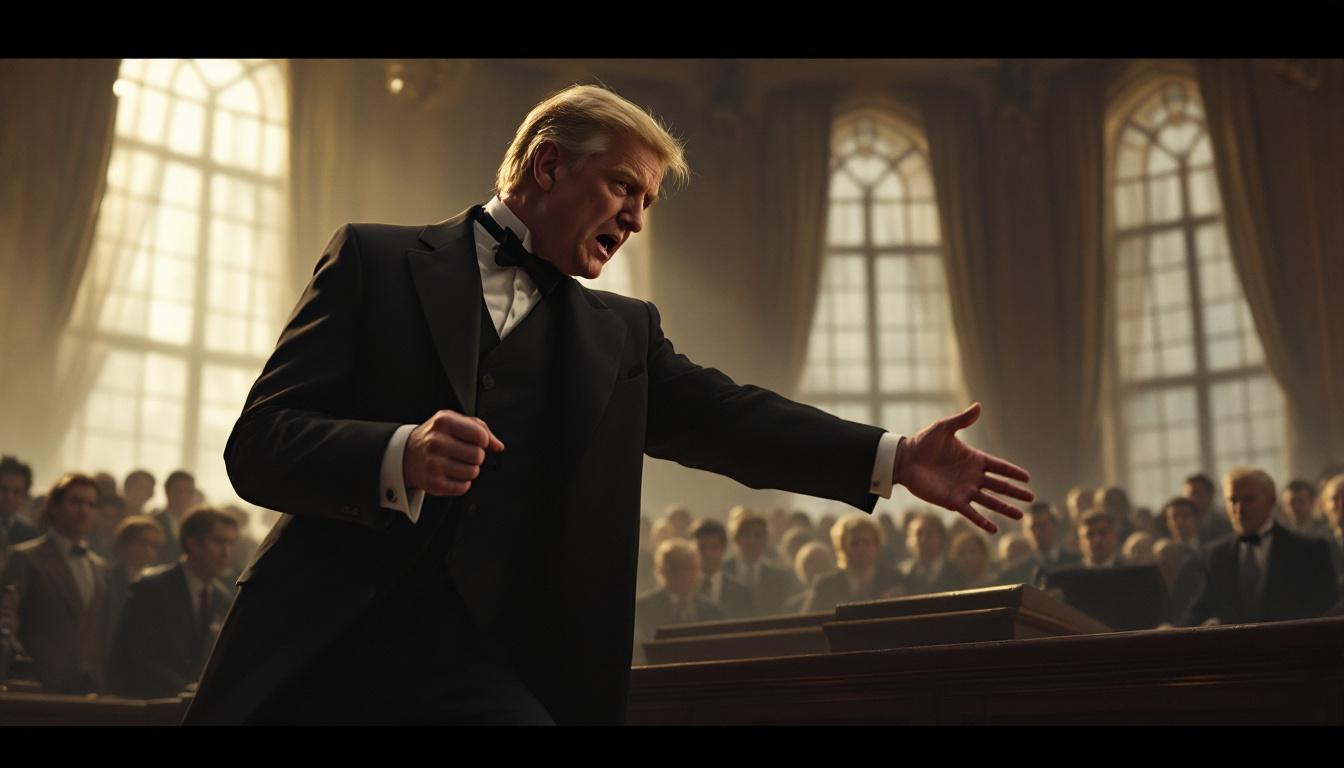
On the afternoon of May 22, 1856, the United States Senate had mostly emptied out. Senator Charles Sumner of Massachusetts was still at his desk, hunched over, franking copies of a speech he’d given two days earlier — a long, blistering attack on slavery in which he had personally mocked an elderly South Carolina senator named Andrew Butler. Sumner didn’t know it yet, but a relative of Butler’s had spent two days deciding what to do about that.
That relative was Preston Brooks, a congressman from South Carolina, and he had walked into the chamber carrying a cane. He’d waited, deliberately, until the galleries cleared of any women — whatever he was about to do, he didn’t want them to see it. He approached Sumner’s desk, said a few words about the speech being a libel on his state and his kinsman, and then began swinging. The first blow landed before Sumner could even stand. Sumner was a big man, but his desk was bolted to the floor, and as he tried to rise he was trapped underneath it. Brooks kept hitting. He hit him until the cane snapped in two, and then he kept hitting him with what was left.
Sumner finally wrenched the bolted desk clean out of the floor and staggered down the aisle, blinded by his own blood, before collapsing. It took him three years to recover enough to return to the Senate, and for that entire time the Massachusetts legislature refused to fill his seat — they left his empty desk sitting in the chamber as a kind of accusation. Brooks, for his part, was fined three hundred dollars and faced no jail time. Admirers across the South mailed him brand-new canes to replace the broken one. Some were inscribed with the words “Hit him again.” If you ever wondered how a country talks itself into a civil war, this is roughly the sound it makes.
Also On This Day…
1455 — Two flowers go to war in the streets of a small English town On May 22, 1455, Richard, Duke of York, and his army clashed with the forces of King Henry VI at St. Albans, a market town north of London. The fight lasted barely half an hour and killed fewer than sixty men — tiny, as battles go — but it captured the king and traditionally marks the start of the Wars of the Roses, the dynastic bloodbath between the houses of York and Lancaster that would chew up English nobility for thirty years. Unusually, the whole thing was fought in the town’s streets rather than an open field, which is a strange and intimate way to start a war.
1819 — A ship leaves Georgia and quietly invents the future On May 22, 1819, the SS Savannah left Savannah, Georgia, bound for Liverpool, and became the first steamship to cross the Atlantic Ocean. There’s an asterisk, though: the Savannah only ran its engine for about 80 hours of the 29-day voyage and sailed the rest of the way on wind power, because it couldn’t carry enough fuel. Skeptical sailors who spotted its smoke assumed the ship was on fire. Still, it counted — and in 1933 President Franklin Roosevelt designated May 22 as National Maritime Day in its honor.
1849 — A future president gets the only patent ever held by one On May 22, 1849, the U.S. Patent Office issued Patent No. 6,469 to a one-term former congressman from Illinois named Abraham Lincoln. His invention was a system of inflatable air chambers strapped to the sides of a boat, designed to buoy it up and over the shallow sandbars that snagged river traffic — an idea he’d had after his own boats got stuck more than once. It was never built, and historians doubt it would have worked. But it makes Lincoln the only U.S. president, before or since, to hold a patent.
1906 — The Wright brothers finally get it in writing On May 22, 1906, more than two years after their famous flight at Kitty Hawk, Orville and Wilbur Wright were granted U.S. Patent No. 821,393 for their “Flying Machine.” The patent didn’t actually cover the engine or the wings — it covered their system for controlling an aircraft in the air, the warping of the wing surfaces to keep it balanced. They had figured out that the hard part of flight was never getting off the ground. It was steering.
1960 — The strongest earthquake ever recorded shakes the entire planet On May 22, 1960, a magnitude 9.5 earthquake struck off the coast of Valdivia, Chile. It remains the most powerful earthquake ever measured, and the ground shook for a full ten minutes. The quake unleashed an 80-foot tsunami that crossed the entire Pacific Ocean — it killed people in Chile, then struck Hawaii 15 hours later, and slammed into Japan some 22 hours after that, more than 10,000 miles from where the earth first moved. A disaster that started on one continent finished its work on another.
1992 — Johnny Carson says goodnight for the last time On May 22, 1992, after almost thirty years behind the desk, Johnny Carson hosted his final episode of The Tonight Show. He chose to have no celebrity guests at all — just his longtime sidekick Ed McMahon, bandleader Doc Severinsen, and a room full of clips from three decades. An estimated 50 million people tuned in, the largest audience the show ever had. For a generation of Americans, Carson had been the last voice they heard before sleep nearly every night of their adult lives, and on this night he simply said goodnight and meant it.
It’s a wide spread for one date — a thirty-minute war that lasted thirty years, a ship that crossed an ocean mostly by accident, the planet’s most violent earthquake, and a man saying goodnight to fifty million people — but the one that lingers is a quiet afternoon in the Senate, when a country still telling itself it could talk its way out of trouble heard the cane come down.
