
May 31st
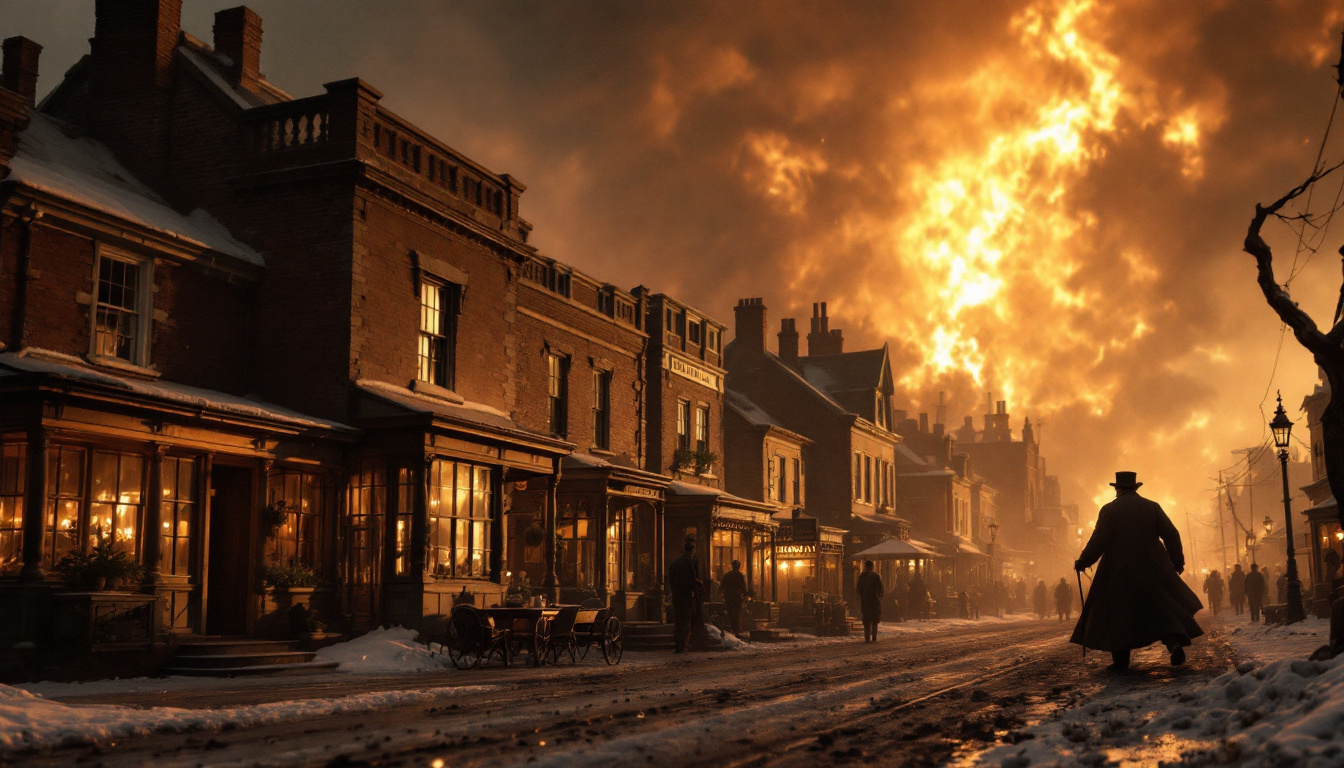
Fourteen miles up the valley from Johnstown, Pennsylvania, there was a lake. A big one — a private resort lake held back by an old earthen dam, where wealthy industrialists from Pittsburgh came to fish and relax in the summer. Most people in Johnstown knew the dam was up there. A few of them even worried about it out loud. But it had held for years, and people have a way of getting used to the thing that’s going to kill them. On May 31, 1889, after a punishing storm dumped historic amounts of rain on the region, the South Fork Dam stopped holding.
When it let go, around 3:10 in the afternoon, it released roughly 20 million tons of water all at once. To put a number on that: for the few minutes it lasted, the flow coming down that narrow valley temporarily equaled the average flow of the entire Mississippi River. A wall of water somewhere between 35 and 40 feet high came roaring toward Johnstown at around 40 miles an hour, and because the valley funneled it, the wave didn’t spread out and weaken — it stayed tall and stayed fast. It picked up everything in its path on the way down: trees, houses, livestock, locomotives, miles of barbed wire from a wire works it destroyed. By the time it reached town, the flood wasn’t just water. It was a churning mass of debris that flattened whatever the water alone hadn’t.
The people of Johnstown got almost no warning. Some accounts describe a low roar and a dark mist rising over the valley moments before it hit — call it under a minute to understand what was coming and try to run uphill. Most couldn’t. When it was over, 2,209 people were dead. It was, at that moment, the deadliest single day in American civilian history. Whole families were simply erased; 99 entire families died, and 900 of the victims were never identified, buried instead beneath a monument to the “unknown dead.” One of the most haunting details: a massive pile of wreckage jammed up against a stone railroad bridge downtown, and then it caught fire, trapping survivors who had ridden the debris that far only to face the flames.
And then something happened that, in its own way, became as important as the disaster. A relatively new organization showed up to help — the American Red Cross, led by a 67-year-old former Civil War nurse named Clara Barton. Johnstown was the Red Cross’s first major peacetime disaster relief operation. Barton arrived with her volunteers, set up “hotels” for the homeless, distributed supplies, and stayed for five months. The way America responds to a catastrophe — the idea that an organized, professional relief effort rushes in to help strangers — got one of its foundational tests in the mud of Johnstown.
There was no good villain to punish, either, which made it worse for a grieving country. The dam had been owned by an exclusive club whose members included some of the richest men in America, and questions about how well it had been maintained hung over everything. But the courts ultimately found no one legally liable. The water came, it took 2,209 people in an afternoon, and the law shrugged. What changed instead was slower and bigger: Johnstown helped push America toward taking dam safety, engineering accountability, and disaster response seriously. A lesson learned the hardest possible way.
Also On This Day…
1819 — America’s poet is born on Long Island On May 31, 1819, Walt Whitman was born in West Hills, New York, the second of nine children. He worked as a printer, a teacher, and a newspaperman before self-publishing a slim, strange book of poems in 1855 called Leaves of Grass — no rhyme, no meter, just long sprawling lines about America, the body, and the ordinary working person. Critics weren’t sure what to make of it. He spent the rest of his life revising and expanding it, and today he’s considered one of the most influential poets the country has ever produced. Not bad for a book he had to print himself because nobody else would.
1859 — Big Ben rings out over London for the first time On May 31, 1859, the great bell at the top of the clock tower beside the Houses of Parliament chimed for the very first time. The clock itself was a marvel of accuracy for its day. The bell, though, had a rough start — barely four months later it cracked, and rather than recast the whole thing, the solution was to rotate the bell a quarter-turn so the hammer struck a fresh spot, and lighten the hammer. That crack is still there. The famous deep, slightly imperfect bong of Big Ben that the whole world recognizes? That’s the sound of a flaw nobody ever fixed.
1902 — The Boer War finally ends in South Africa On May 31, 1902, representatives of Great Britain and the two Boer republics signed the Treaty of Vereeniging in Pretoria, ending a brutal three-and-a-half-year war. It had been a far harder, far uglier fight than the British Empire expected — featuring guerrilla tactics, scorched-earth retaliation, and concentration camps where tens of thousands of Boer civilians died of disease and starvation. The Boers laid down their arms and accepted British sovereignty, but the war’s bitter legacy shaped South Africa for generations. It was a sobering preview of how costly and modern warfare was about to become in the new century.
It’s a heavy date, this one — a town wiped out in an afternoon, a long war ground to an exhausted halt. But there’s a poet born here too, and a bell still ringing in London after more than 160 years. May 31 holds both the worst of what people build and the best of what they make.
