
June 6th
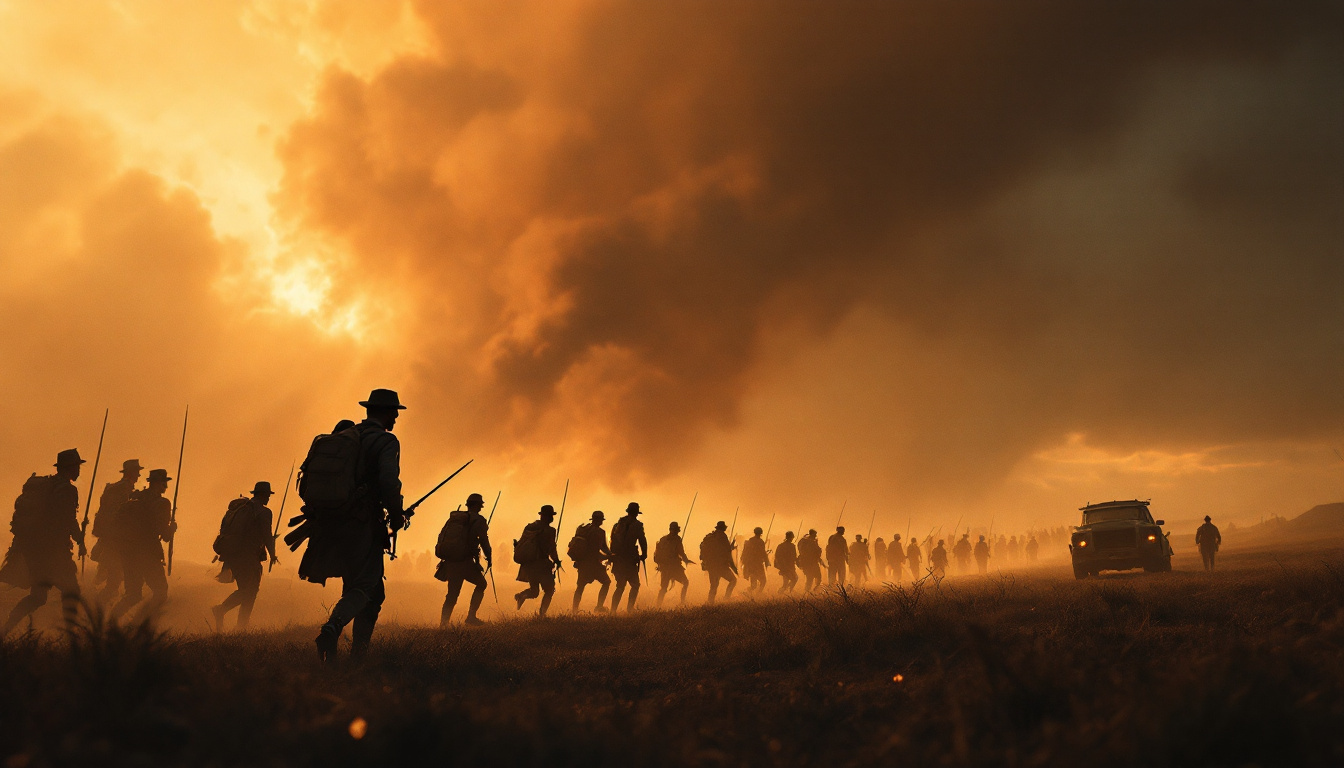
In the cold gray hours before dawn on June 6, 1944, the largest armada ever assembled in human history lay waiting in the rolling swells of the English Channel. Nearly 7,000 ships and landing craft stretched across the horizon, packed with young men who had been training for this single morning for months — boys from Iowa farms and Brooklyn tenements and Texas ranch towns, many of whom had never seen the ocean until the war put them on it. Above them, more than 13,000 paratroopers had already leapt into the darkness over Normandy, scattered across the French countryside in the black, jumping into enemy territory with rifles, grenades, and prayers. The free world’s gamble had begun.
It had nearly not happened at all. For days, brutal weather had churned the Channel, and General Dwight D. Eisenhower, the man who carried the weight of the entire invasion on his shoulders, had been forced to postpone. On the night of June 5, with a narrow break in the storm forecast, Eisenhower stood among his commanders and uttered three quiet words that launched the liberation of Europe: “OK, let’s go.” He had already written a letter accepting full blame should the invasion fail — a note he tucked into his wallet, never needing to send it. No one knew yet whether the beaches would become a triumph or a slaughter.
At first light, the bombardment opened. Battleship guns roared and shook the sea, and then the ramps dropped. On a five-mile stretch of sand codenamed Omaha, the men waded into a wall of machine-gun fire pouring down from German bunkers built into the bluffs. Some drowned under their packs before they reached shore. Some fell the instant the ramps came down. The water turned red, and the survivors crawled forward over the bodies of friends, clawing across open sand with nowhere to hide and only one direction to go — forward, into the guns. It was, by any measure, one of the most terrible mornings any American soldier has ever endured.
And yet they took the beach. Inch by bloody inch, leaderless squads and lone riflemen and exhausted demolition crews found the courage to stand, to advance, to climb the bluffs and silence the guns one by one. By nightfall, more than 156,000 Allied troops had landed across five beaches, and the great wall Hitler had boasted would never be breached had been cracked open. The cost was staggering — thousands of Allied casualties in a single day — but the foothold held.
That foothold became the road to Paris, to the Rhine, and ultimately to Berlin and the end of the Nazi nightmare. The men who gave everything on those beaches now rest beneath rows of white crosses overlooking the very sand they stormed, a silent army of heroes who never saw the peace they purchased. June 6, 1944, earned its name — “the longest day” — and it remains one of the most consequential mornings in the history of human freedom. We owe them a debt that can never be repaid, only remembered.
Also On This Day…
1918 — The Marines Make Their Legend at Belleau Wood Twenty-six years before Normandy, at 5:00 in the evening on June 6, 1918, U.S. Marines charged across an open wheat field into a dense French woodland held by German machine gunners. More than 1,000 Marines fell on that first day alone — more casualties than the Corps had suffered in its entire 143-year history up to that point. When a French officer suggested they retreat, Captain Lloyd Williams famously shot back, “Retreat? Hell, we just got here.” Over three brutal weeks the Marines took the wood, and German reports reportedly nicknamed them “Devil Dogs” — a name the Corps wears with pride to this day. Belleau Wood announced to the world that America had arrived as a fighting power.
1925 — Walter Chrysler Builds an American Empire On June 6, 1925, a former railroad mechanic named Walter P. Chrysler reorganized the struggling Maxwell Motor Company into the Chrysler Corporation, planting the seed of one of Detroit’s “Big Three” automakers. Chrysler had risen from greasy machine shops to the boardroom through sheer mechanical genius and relentless drive, and he poured that engineering obsession into his cars. Within just over a decade, the company he founded had climbed to second place in American auto sales. Chrysler would go on to build the gleaming Art Deco skyscraper that still bears his name on the New York skyline. It was a quintessentially American story — a working man’s ambition turned into an industrial giant.
1933 — America Goes to the Movies in Its Car On June 6, 1933, Richard Hollingshead opened the world’s first drive-in movie theater on Admiral Wilson Boulevard in Camden, New Jersey. Inspired, the story goes, by his mother’s difficulty fitting comfortably into cramped theater seats, Hollingshead rigged a projector to his car hood and tacked a screen between the trees in his own driveway to test the idea. He charged a quarter per car and a quarter per person — never more than a dollar a carload — and advertised it as fun for the whole family. The opening-night feature, a comedy called Wives Beware, played to a packed lot of automobiles. It launched a beloved slice of Americana that would define summer nights for generations.
June 6th is a date soaked in American courage and American character — from the Marines who would not retreat at Belleau Wood, to the GIs who stormed the beaches of Normandy and changed the fate of the world, to the inventors and dreamers who built cars, companies, and a uniquely American way of life. It is a day that reminds us freedom is never free, and that the bold, the brave, and the restless have always been willing to pay its price.
