
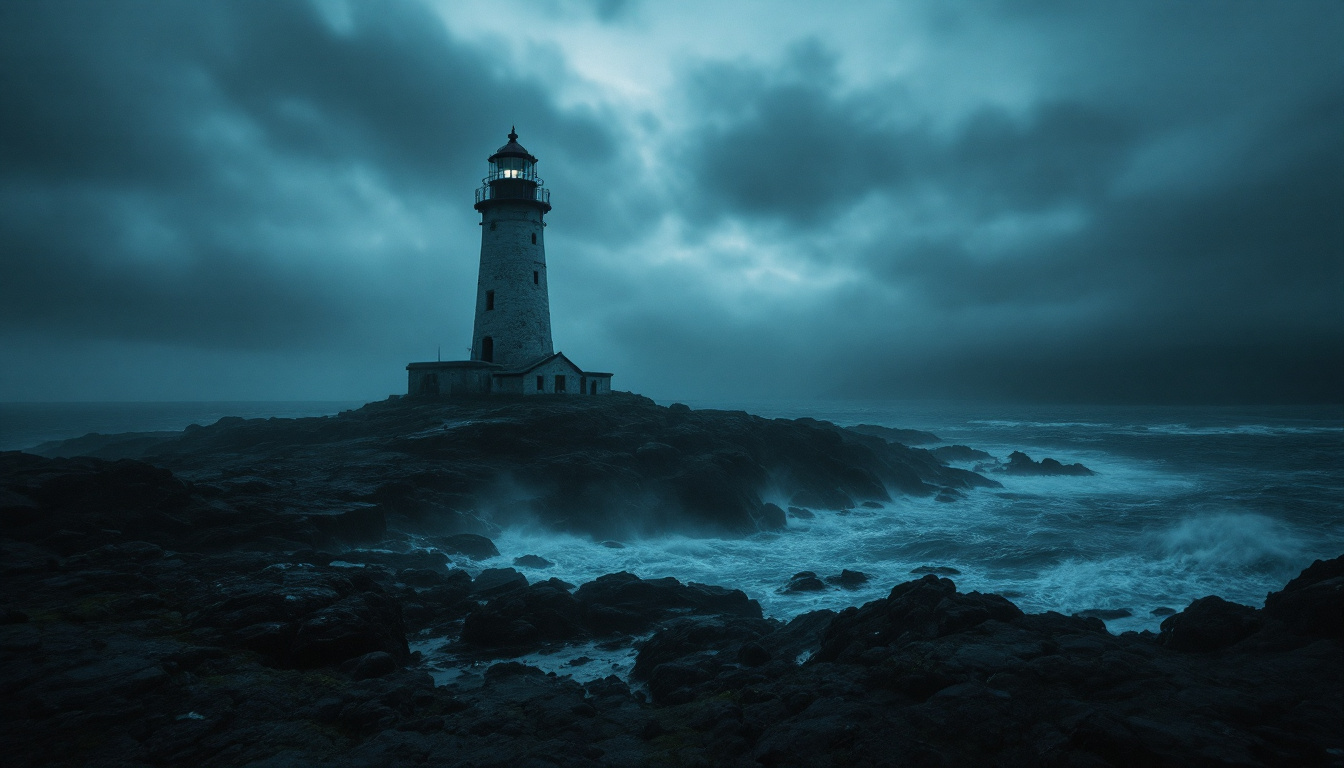
Let me set the scene for you, because this one has stayed with me for years. Picture a lump of black rock thrust up out of the cold Atlantic, twenty miles west of the Outer Hebrides of Scotland. The locals called the place the Seven Hunters, and the largest island, Eilean Mòr, had a reputation older than the lighthouse. Shepherds who grazed sheep there refused to spend the night. They said the island belonged to the “little men.” When the Northern Lighthouse Board finished building a lighthouse on the highest point in 1899, they sent three men to live there in shifts, tending a lamp that could be seen for miles. And on a December night in 1900, that lamp went out — and the three men went out with it.
Here is what we know for certain, because I want to be honest with you from the start about where the facts end and the ghost stories begin. On the night of 15 December 1900, a passing steamer called the Archtor noted in its log that the Flannan light was dark in foul weather. That was strange — a lighthouse exists for exactly that kind of night — but the message took days to reach the right hands. The relief vessel, the lighthouse tender Hesperus, was supposed to sail on the 20th to swap out a keeper. Storms kept her pinned in harbor. She didn’t reach Eilean Mòr until noon on Boxing Day, 26 December. And when she arrived, no one came down to the landing to meet her. No flag flew from the pole. The boxes of provisions that should have been waiting on the jetty were never put out. The island was silent.
The relief keeper, a man named Joseph Moore, climbed the steps alone. The entrance gate was shut, the door was closed. Inside the lighthouse, the kitchen clock had stopped. The fire was long dead. Two of the three oilskin coats were missing from their pegs — but one set remained, and that single detail has gnawed at people for over a century. The beds were unmade. A chair lay overturned by the table. And the three men — James Ducat, the principal keeper; Thomas Marshall; and Donald McArthur, the “Occasional” brought in to fill out the crew — were simply gone. No bodies. No blood. No note explaining anything. Just an empty house at the top of the world with the lamp gone cold.
Now, the official explanation is almost mundane, and I’ll give it to you straight because it’s probably the truth. When investigators examined the west landing, they found real devastation. A storm of tremendous violence had clearly battered that side of the island. A wooden box mounted in a crevice a full 110 feet above the high-water mark had been smashed open and its contents scattered. Iron railings were bent flat. A length of iron track had been ripped out of its concrete bed. Captain Harvie of the Hesperus sent a grim telegram: the men “must have been blown over the cliffs or drowned trying to secure a crane.” The leading theory is that two keepers went down to the west landing to lash down equipment before a coming storm, a freak wave swept in, and the third man — McArthur, who left his coat behind — saw it from the lighthouse and ran out coatless into the gale to help, only to be taken by a second wave. It’s plausible. Eilean Mòr is a brutal place, and the sea there can do things you wouldn’t believe.
But here’s where I have to be careful with you, because this is exactly where the legend has done its best work. You may have heard the eerie details — the entries scrawled in the logbook describing a storm that grew so terrible it reduced the hardened keeper Thomas Marshall to tears, Ducat “praying,” and McArthur, a tough former soldier, crying like a child, before a final entry read “Storm ended, sea calm. God is over all.” It is a genuinely chilling story. It is also almost certainly fiction. The investigative writer Mike Dash dug into this for the Fortean Times and found that those famous log entries don’t appear in any official record — they were invented and grafted onto the tale by later storytellers. The real last entries were ordinary, ending on 13 December, with weather readings noted on a slate for the morning of the 15th. The genuine record is far quieter, and somehow that makes it worse.
And then there’s the poem. In 1912, a balladeer named Wilfrid Wilson Gibson published “Flannan Isle,” a haunting piece of verse that cemented the mystery in the public imagination and added the unforgettable image of a meal left untouched on the table — an overturned chair, a half-eaten supper. That detail of the abandoned meal isn’t in the original reports either, friend. It came from the poem. So much of what people “remember” about this case was written by men who were never there, dreaming the horror into being decades after the fact. The truth is thinner and colder: three competent, experienced men, one storm, and an ocean that gave nothing back.
So what really took them? Maybe it was simply the sea — the obvious answer, and probably the right one. But I’ll leave you with the questions that the rational explanation never quite swallows. Why would all three experienced keepers be down at a dangerous landing at once, when standing orders required at least one man to stay with the light? Why was the storm damage so severe when the official weather records for those days near the island were relatively calm — the worst of it seeming to come after the men had already vanished? And why did one man walk out into the teeth of an Atlantic gale without his coat? The Northern Lighthouse Board closed the file with “lost by drowning.” The island kept its silence. The little men, the old shepherds would tell you, kept their secret. And the lamp on Eilean Mòr still turns, out there in the dark, over a rock that has never once explained what it did with James Ducat, Thomas Marshall, and Donald McArthur on the night the light went out.
Unsolved Mystery
