
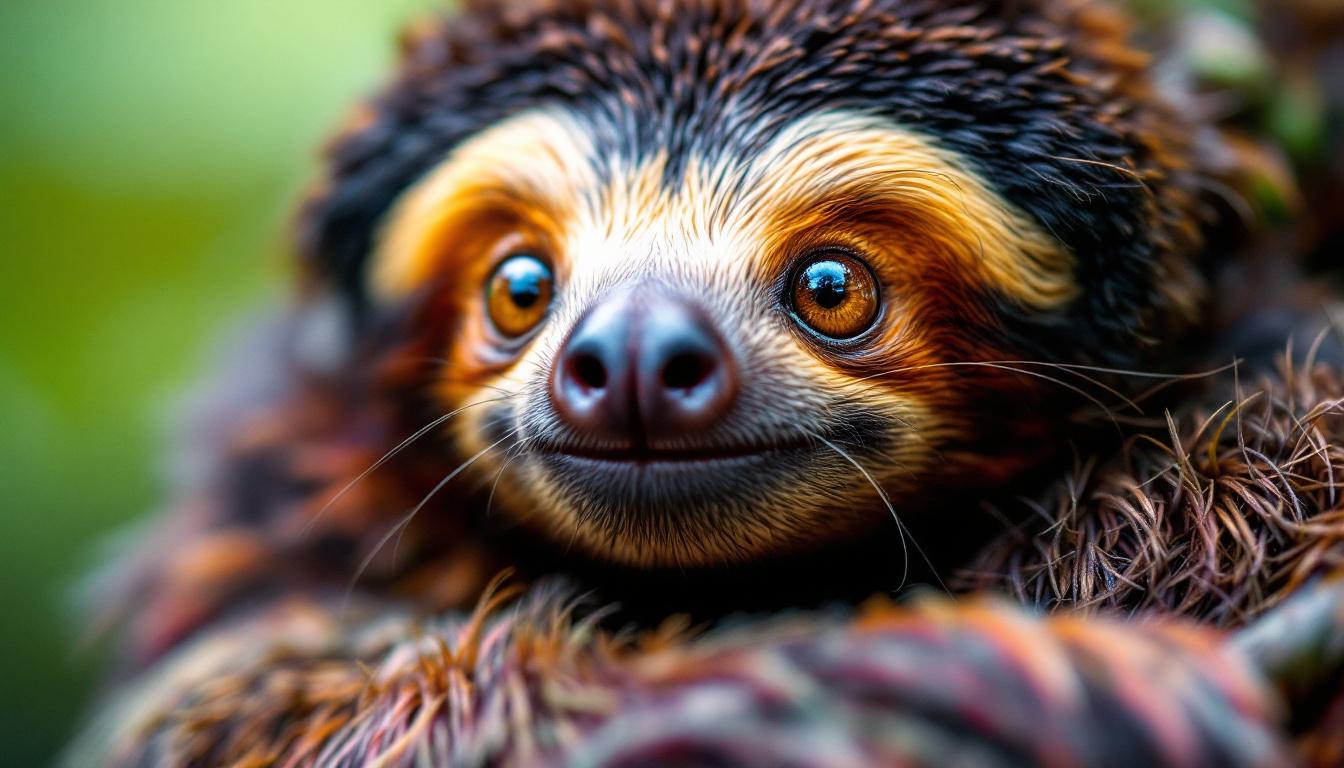
You think you know sloths. You don’t. I didn’t either until about an hour ago, and now I have to tell somebody, so it’s you.
Did you know a sloth falls out of a tree about once a week — and survives every time?
The Sloth Conservation Foundation tracked this. On average, a wild sloth takes a 100-foot tumble out of the canopy roughly once a week for its entire life. They are anatomically built for it. Their bodies absorb the impact, they hit the forest floor, they shake it off, they climb back up. I sprained my ankle stepping off a curb in October.
Did you know sloths are about three times stronger than humans, with 30% less muscle?
This sounds like a typo. It is not. Sloths have significantly less muscle mass than other mammals their size, but their muscle fibers are arranged at an angle instead of running straight, which turns them into a kind of biological pulley system. The result is a creature that looks like a damp throw pillow and could win an arm-wrestling contest with you. Newborn sloths can lift their entire body weight with one arm. Newborn.
Did you know it can take a sloth up to a month to digest a single leaf?
Sloths have the slowest metabolism of any non-hibernating mammal on Earth. Their four-chamber stomach is permanently full and accounts for up to 30% of their body weight — imagine carrying a third of yourself around in groceries you haven’t put away yet. Because the digestion takes so long, sloths only need to use the bathroom about once a week, at which point they lose nearly a third of their body weight in a single visit and reportedly do a little dance about it. I am not editorializing. Scientists call it the “poop dance.”
Did you know a sloth isn’t really one animal — it’s a tiny walking rainforest?
Sloths move so slowly that their fur becomes a working ecosystem. Algae grows in tiny cracks along each hair, which is what gives wild sloths their greenish tint and helps them blend into the canopy. Moths live in there too, laying their eggs in sloth dung and apparently fertilizing the algae, which the sloth then snacks on directly off its own arm. And here’s the part scientists are most excited about: some of the fungi found on sloth fur have shown activity against bacteria, parasites, and certain cancer cells. The cure for something might literally be living on a sloth somewhere right now.
Send this to the friend who keeps calling sloths lazy. They’re not lazy. They’re the most efficient animal on the planet, they’re stronger than you, and they may be carrying lifesaving medicine in their armpit hair.
