
May 13th
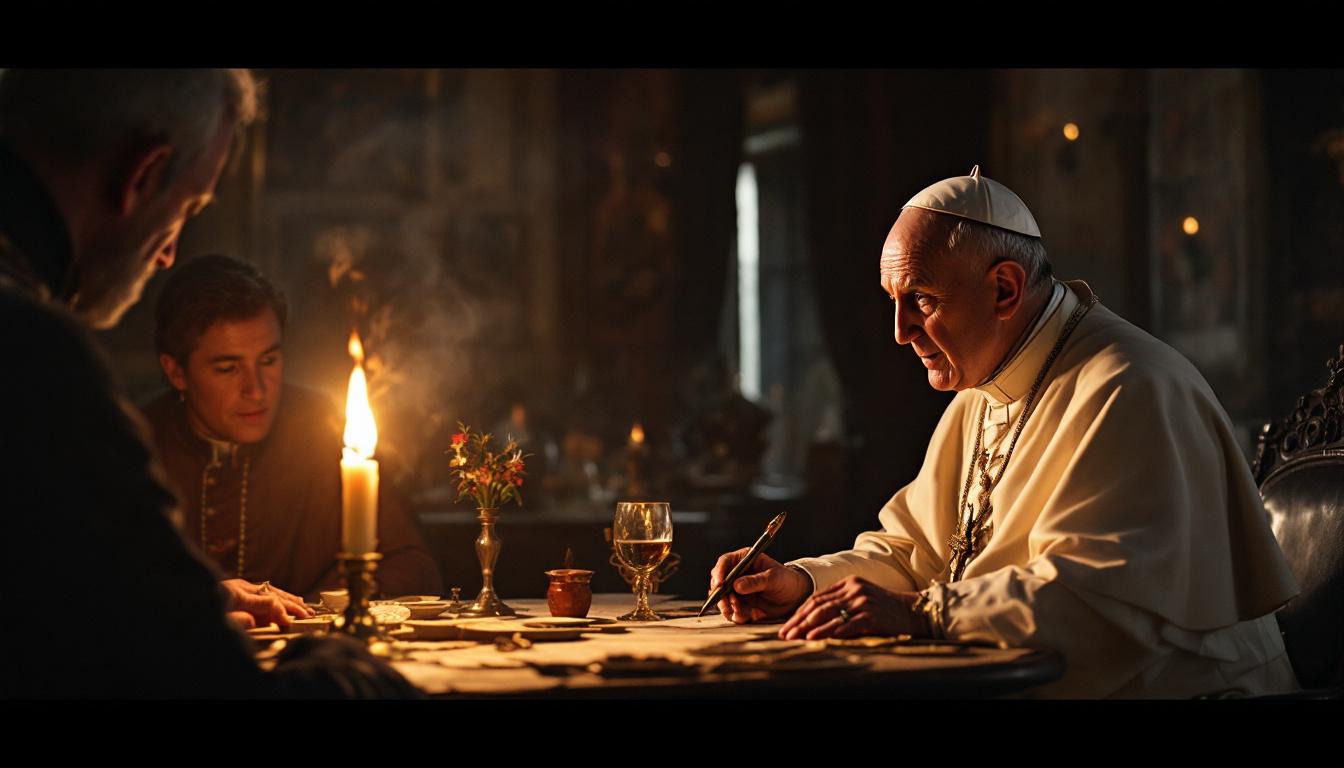
At 5:17 in the afternoon on May 13, 1981, Pope John Paul II was standing up in the back of an open-top white jeep, rolling through a crowd of 10,000 people in St. Peter’s Square. He had just handed a little girl back to her mother. He was smiling. And a 23-year-old Turkish gunman named Mehmet Ali Agca, standing about 20 feet away, raised a 9mm Browning pistol and fired four shots.
Two of those bullets hit the Pope. One tore through his abdomen, narrowly missing the abdominal aorta — the kind of wound that usually kills a man in minutes. He lost three-quarters of his blood on the operating table. He coded. Surgeons worked on him for five and a half hours. He survived. And from his hospital bed four days later, he publicly forgave the man who shot him — and would later visit Agca in his prison cell and sit with him like an old friend.
But here’s the part that still stops people cold. Exactly 64 years earlier, on May 13, 1917, three Portuguese children — ages 7, 9, and 10 — were tending sheep in a field called the Cova da Iria when they reported seeing “a Lady, clothed in white, brighter than the sun.” It was the first apparition of what would become known as Our Lady of Fatima. John Paul II, lying in that hospital bed in 1981, was certain he knew why he was still alive. “One hand fired the bullet,” he later said. “Another guided it.” He had the bullet that nearly killed him placed in the crown of the statue of Our Lady of Fatima in Portugal. It’s still there. Same date. Sixty-four years apart. Make of it what you will.
Also On This Day…
1607 — The English land at Jamestown After two weeks of poking around the Chesapeake looking for a defensible spot, three small ships — the Susan Constant, the Godspeed, and the Discovery — anchored at a marshy peninsula on the James River. The 105 colonists came ashore the next morning. It would become the first permanent English settlement in North America. Of those original 105, more than half would be dead within the year. The country we live in started with a bad campsite and a brutal first winter.
1637 — Cardinal Richelieu invents the table knife (allegedly) Tired of watching his dinner guests pick their teeth with the points of their daggers — and occasionally stab each other with them mid-meal — Cardinal Richelieu reportedly ordered his household to grind the points off all the dinner knives. Whether the story is literally true is debated, but every table knife you own has a rounded tip for a reason, and that reason is one French cardinal who was sick of bad manners. The most influential man in 17th-century Europe and his contribution to your kitchen drawer is a knife that can’t stab anything.
1846 — The U.S. declares war on Mexico After a skirmish on the disputed Texas border, Congress voted to declare war on Mexico. Two years later, the U.S. would walk away with what is now California, Nevada, Utah, Arizona, New Mexico, and chunks of Colorado and Wyoming — roughly a third of the country. A young Army officer named Ulysses S. Grant fought in that war and later wrote that he considered it “the most unjust war ever waged by a stronger nation against a weaker.” He’d go on to wage a few more himself.
1917 — Three children see something in a field in Portugal On the same day, 1,800 miles from the future site of Wrigley’s vines and Wrigley’s gum, three shepherd children in rural Portugal said a luminous Lady appeared to them above a small oak tree and asked them to return on the 13th of every month. By October, an estimated 70,000 people showed up to that field to see what would happen. What they reported seeing — the so-called “Miracle of the Sun” — is the most witnessed alleged supernatural event in modern history. Yes, this is the same date as the lead story. That’s the whole point.
1958 — A man finishes driving around the world. In a jeep. That floats. Ben Carlin, an Australian engineer, completed the only successful circumnavigation of the globe in an amphibious vehicle — a modified Ford GPA jeep he named Half-Safe. The trip took ten years. He traveled 39,000 miles on land and another 11,000 miles by sea, including crossing the Atlantic, in what was essentially a leaky military jeep with a propeller bolted to the back. His wife went with him for part of it and then, understandably, went home. The vehicle is now displayed in a glass case at a school in Australia, which is exactly where it belongs.
1973 — The Mother’s Day Massacre Bobby Riggs, a 55-year-old former tennis champion who had loudly declared women’s tennis was a joke, played 30-year-old Margaret Court — the reigning world No. 2 and winner of 22 Grand Slam titles. The match was on Mother’s Day. Riggs handed Court a bouquet of roses at the net before the first serve. Then he beat her 6-2, 6-1 in 57 minutes. The result made Sports Illustrated AND Time magazine covers in the same week, and lit the fuse that would lead to the much more famous “Battle of the Sexes” against Billie Jean King four months later. (King won that one. Easily.)
1981 — A Pope is shot in St. Peter’s Square See the lead. We’ll let this one breathe.
1985 — A 12-year-old future R&B legend is already 35 years old On May 13, 1950, a boy named Stevland Hardaway Judkins was born six weeks premature in Saginaw, Michigan. He was placed in an incubator with too much oxygen, which destroyed his retinas. He would grow up blind, sign with Motown at age 11 as “Little Stevie Wonder,” and go on to win 25 Grammys. So while May 13 is technically not his birthday-anniversary in a round number this year, the man has been making music for so long it feels weird not to mention him. Also born this day: Joe Louis (1914) and Bea Arthur (1922). It’s a stacked birthday.
Some days in history rhyme, and some days in history loop back on themselves so precisely it makes the hair on your arms stand up. May 13 is the second kind.
