
May 17th
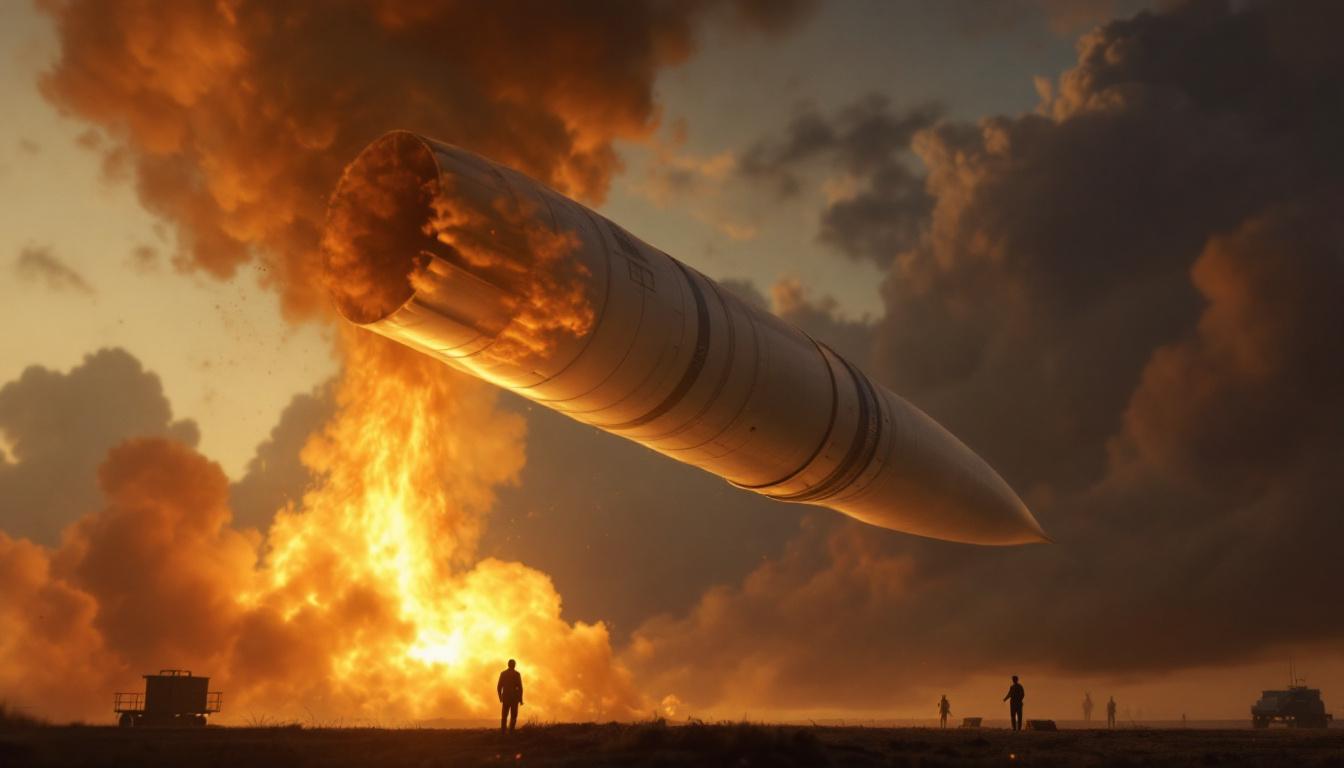
It was a calm evening in the Persian Gulf on May 17, 1987, and the crew of the USS Stark had no real reason to be afraid. The Iran-Iraq War was raging, but the United States wasn’t in it. The Stark, a Navy frigate, was a neutral ship doing neutral things. When a radar contact appeared and turned toward them, the Stark did exactly what it was supposed to do — it radioed the aircraft and asked it to identify itself. Twice. There was no answer either time. There also was no alarm, because nobody on board believed they were a target.
They were a target. The aircraft fired two French-made Exocet missiles. The first one punched through the hull eight feet above the waterline and tore a flaming channel straight through the ship — through the berthing spaces where men were sleeping, through the post office, through the ship’s store — spraying burning rocket propellant the whole way. It blazed at 3,500 degrees. And then it did something almost unbelievable: it skidded to a stop in a corner of the chiefs’ quarters and simply failed to explode. The second missile, hitting five feet farther forward, was not so merciful. It detonated exactly as designed, and the fire it started burned for nearly a full day, gutting the crew’s quarters and the combat information center — the brain of the ship.
Thirty-seven American sailors died that night. The strangest part came later. The U.S. Navy’s board of inquiry concluded the attack couldn’t have come from the Iraqi fighter jet everyone assumed — that plane could only carry a single missile. It had actually been fired from a Dassault Falcon 50, a French-built business jet, modified to launch Exocets. Iraq apologized, called it a mistake — the pilot, they said, thought the Stark was an Iranian tanker — and eventually paid more than $27 million in compensation. To this day it remains the only successful missile attack ever carried out against a U.S. Navy warship. And it was a corporate executive’s airplane that did it.
Also On This Day…
1792 — The most powerful financial market on Earth started under a tree On May 17, 1792, twenty-four New York stockbrokers signed a short, simple document outside 68 Wall Street — by legend, under a buttonwood tree where they’d been doing deals all along. The whole agreement was basically two rules: trade only with each other, and charge a standard commission. It was a reaction to a market crash a few months earlier, an attempt to make people trust investing again. That little handshake-of-a-contract became the New York Stock Exchange. Trillions of dollars now move through an institution that began as two sentences and some shade.
1814 — A nation wrote a constitution in a panic — and it’s still in use By 1814, Norway had just been handed over to Sweden, its longtime enemy, in a treaty it had no say in. The Norwegians were furious, so they did something audacious: they raced to write their own constitution and declare themselves an independent nation before anyone could stop them. They signed it at Eidsvoll on May 17, 1814. The gambit didn’t fully work — Norway still ended up in a union with Sweden — but the constitution survived everything that came after it. It’s the third-oldest written constitution still in use anywhere in the world, and May 17 is still Norway’s national day.
1875 — The first Kentucky Derby, and the jockey history almost forgot The very first Kentucky Derby was run on May 17, 1875, in front of 10,000 spectators at the track that would become Churchill Downs. A 19-year-old jockey named Oliver Lewis rode a colt called Aristides to victory by two lengths, in record time. Here’s the detail that gets me: Aristides wasn’t even supposed to win. His own owner had entered a second, faster horse and told Lewis to just set the pace and tire everyone out. The other horse flopped, Lewis kept going, and won the whole thing. Of the fifteen jockeys in that first Derby, thirteen were African American — including Lewis himself.
1900 — The first copy of “The Wizard of Oz” was assembled by hand On May 17, 1900, the very first copy of “The Wonderful Wizard of Oz” rolled off the press. Author L. Frank Baum didn’t wait for a fancy ceremony — he assembled that first book by hand himself and gave it to his sister. The public wouldn’t get it until that fall, when it promptly became the best-selling children’s book in America. The initial print run was a then-enormous 10,000 copies, and they sold out so fast that 15,000 more were gone within months. A whole American mythology — ruby slippers, yellow brick road, “there’s no place like home” — started with one man gluing a book together for his sister.
1939 — The first sporting event ever televised was a college baseball game On May 17, 1939, NBC pointed a single television camera — perched on a wobbly wooden stand — at a college baseball game between Columbia and Princeton. It was the first televised sporting event in U.S. history. The “audience” was fewer than 400 TV sets in the whole New York area, and the picture was reportedly so murky you could barely follow the ball. Princeton won 2-1 in ten innings. NBC liked the result enough to try a Major League game three months later. That blurry little college doubleheader is the ancestor of every Super Bowl broadcast you’ve ever watched.
1954 — Nine justices, one opinion, and the end of “separate but equal” On May 17, 1954, Chief Justice Earl Warren read the Supreme Court’s decision in Brown v. Board of Education. It was unanimous — 9 to 0 — that racial segregation in public schools violated the Constitution, overturning a “separate but equal” doctrine that had stood for nearly 60 years. The unanimity was not an accident. Warren had spent five months quietly working the other justices, because he understood that on a question this enormous, a divided Court would have been a weak one. He got every single vote. It became one of the most consequential rulings in American history.
Some days are quiet and some days are loud, but May 17 has been swinging a hammer for centuries — a market born under a tree, a nation born in a panic, a court that changed everything with one voice, and a missile that, against every law of how missiles work, just decided not to go off.
