
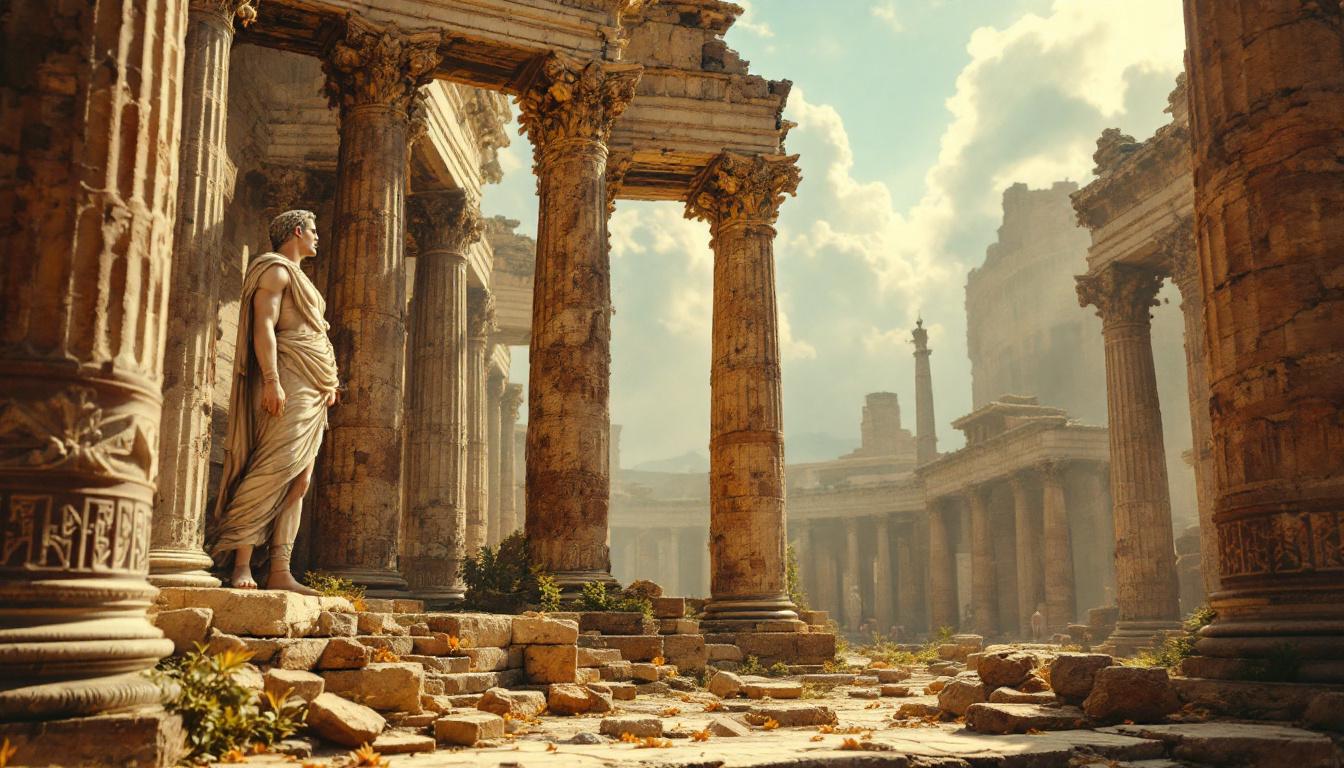
I figured I had Ancient Rome basically sorted: togas, gladiators, Caesar, the Colosseum. Then I found out the togas were barely worn, the statues weren’t white, and a Roman emperor once funded the government by taxing pee. The most famous empire in history is hiding a lot of weird stuff in plain sight.
1. Roman statues weren’t white — they were painted in loud, vivid colors.
That clean white-marble look we associate with classical art? It’s an accident of time. Roman (and Greek) statues were originally covered in bright paint, gold leaf, and intricate patterns — skin tones, colored eyes, the works. The paint flaked off over centuries of burial, and when the statues were rediscovered, museums and restorers actually scrubbed the surviving traces of color off to match the “pure white” look everyone had come to expect. We essentially invented a myth and then bleached the evidence to fit it.
2. Ancient Rome ran on collected urine — and an emperor taxed it.
Roman laundries (called fullonicae) cleaned clothes by soaking them in stale urine, because the ammonia worked like a powerful detergent. Pots were left on street corners for passersby to fill, and the contents got hauled off and sold. Emperor Vespasian saw a revenue stream and slapped a tax on it. When his son complained that the money was disgusting, Vespasian held up a gold coin and said “Pecunia non olet” — “money doesn’t stink.” Romans also used urine to whiten their teeth, which is a sentence I did not enjoy typing.
3. The Pantheon’s dome is still the largest unreinforced concrete dome on Earth.
Built around 125 AD under Emperor Hadrian, the Pantheon’s dome has held the world record for nearly 1,900 years — no rebar, no steel, no support. It’s 142 feet across and still standing, still in use, still doing its job. Modern engineers can build bigger domes, but only by reinforcing them. Nobody has out-domed the Romans with plain concrete since.
4. Most gladiators didn’t fight to the death — and many got rich.
Hollywood sold us the kill-or-be-killed arena, but the reality was closer to pro sports. Gladiators were expensive to train and feed, so owners wanted them alive — only about 10 to 20 percent died in any given match. Top fighters were genuine celebrities who endorsed products and drew adoring crowds. One famous gladiator, Flamma, was offered his freedom four separate times and turned it down every time, because he was winning and the money was good.
5. Romans wore togas about as often as we wear tuxedos.
The toga is the costume-shop shorthand for “ancient Roman,” but actual Romans found it hot, heavy, and a hassle to wrap. For most of Rome’s history it was strictly formalwear — saved for ceremonies and official occasions. Day to day, people wore simple tunics. A Roman could realistically go years between togas, and there’s a decent chance the last one they ever wore was the one they were buried in.
6. Two months on your calendar are named after Roman rulers.
July and August aren’t ancient nature words — they’re celebrity branding. The month was originally called Quintilis (“the fifth”) until it was renamed Iulius to honor Julius Caesar, who was born in it. A few decades later, Sextilis (“the sixth”) became Augustus in honor of the emperor Augustus. So every time you write a summer date, you’re quietly name-dropping two of the most powerful men who ever lived.
7. The Roman road network stretched far enough to wrap the planet several times.
At its height, Rome’s road system ran for roughly 250,000 miles, with about 50,000 of those miles fully stone-paved. That’s enough road to circle the Earth ten times over. Some recent surveys push the total even higher when you count smaller secondary routes. Many of those roads were built so well that their routes are still used by highways today.
8. The word “sinister” comes from the Latin word for “left.”
In Latin, dexter meant “right” and sinister meant “left.” Roman fortune-tellers read omens partly by which side of the sky birds appeared on, and over time the left side picked up an unlucky, ominous reputation. That superstition got baked right into the language — which is why “sinister” now means menacing instead of just “the non-dominant hand.” Left-handed people have been getting linguistically slandered for about 2,000 years.
9. Ancient Rome was a city of a million people with running water in the fountains.
By the first century AD, Rome’s population had hit roughly one million — a scale no Western city would reach again for well over a thousand years. Eleven aqueducts fed the city, supplying more than 1,200 fountains and around 900 public baths. At peak capacity, the system could deliver more water per person than many modern cities manage today. They built a metropolis, then made sure it never went thirsty.
10. The Romans flooded the Colosseum and staged actual naval battles inside it.
In 80 AD, during the opening games of the Colosseum, Roman engineers filled the arena floor with water and put on a naumachia — a mock sea battle with small boats and costumed fighters. Ancient writers like Cassius Dio describe it directly. The Romans even built separate, purpose-made arenas elsewhere just for staging full-scale water battles, one of them over 1,800 feet long with its own dedicated aqueduct. They wanted a sea fight downtown, so they simply made the ocean show up.
Which one made you rethink the whole empire? Send this to the friend who’s still picturing those statues bright, gleaming white.
