
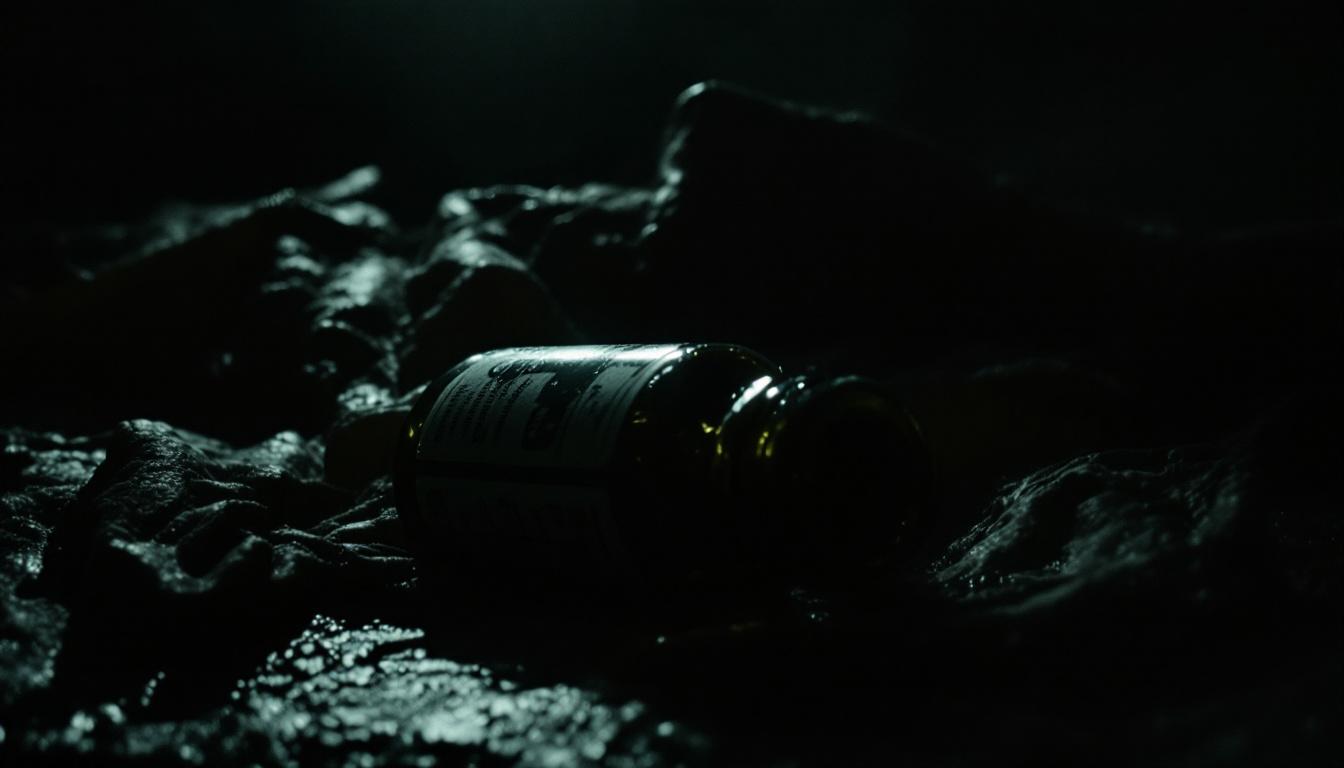
On the morning of December 20, 1820, a farmer named John Bell was found dead in his bed in Adams, Tennessee. There was nothing strange about a man dying in his sleep on the Tennessee frontier. People did it all the time. What was strange was the small vial sitting next to him — a vial of dark liquid that nobody in the family recognized and nobody admitted to putting there. According to the story passed down ever since, one of John Bell’s sons took a straw, dipped it in that vial, and wiped a drop of it inside the mouth of the family cat. The cat, they said, was dead before it hit the floor.
Now sit down, because this one is going to take a minute. I want you to hear me out before you decide what you believe, because the Bell Witch is not a story somebody made up for a haunted hayride. It’s the most documented haunting in American history, it has a 320-page book written about it, a future President of the United States is tangled up in it, and the state of Tennessee — to this day — treats it as the only case on its books where a human being’s death was officially attributed to something not human. I’m not telling you that’s true. I’m telling you that’s how the story comes down to us, and the story is the thing.
John Bell was a farmer from North Carolina who moved his wife Lucy and their children to Robertson County, Tennessee, and bought a few hundred acres of good land along the Red River. For about thirteen years, the Bells lived a perfectly ordinary frontier life. Then, sometime in the summer of 1817, John Bell saw something walking the edge of one of his cornfields — an animal that looked like a dog but wasn’t quite a dog. He raised his gun. It vanished. And that, the legend says, was the beginning.
What came after the cornfield is where the story stops being a ghost story and becomes something harder to file away. It started small — knocking on the walls at night, scratching at the windows, a sound like a chain being dragged across the floor. Then it started pulling the blankets off the children’s beds. Then it found its voice. The Bells and their neighbors described an invisible presence that could talk — a voice that quoted scripture, sang hymns, repeated word-for-word sermons it claimed to have heard at two different churches miles apart on the same Sunday, and held entire conversations with anyone who’d sit in that farmhouse and listen. And plenty of people did sit and listen. The Bell home became, in its strange way, the most visited address in the county.
The thing reserved its real cruelty for two people. One was John Bell himself. The other was his youngest daughter, Betsy. The entity slapped Betsy, pinched her, stuck her with pins, and pulled her hair so hard witnesses said her feet left the floor — and in the morning her family found hand-shaped welts standing up red on her skin. As for John Bell, his health came apart in pieces. He developed a twitching, swelling paralysis in his face and mouth, a stiffness in his tongue that made it hard to eat or speak, spells that left him unable to do either for days at a time. The voice in the house never let him forget who was responsible. It announced, flatly and often, that it intended to kill him — that it would torment John Bell to the end of his life. And then in December of 1820, it did. When the family found the vial by his bed, the voice was reported to have crowed: “I gave Ol’ Jack a big dose of that last night, and that fixed him.” At the funeral, the largest the county had ever seen, the voice was said to have sung a drinking song over the grave until the last mourner left.
Here’s the part that makes the Bell Witch different from every other porch-and-cornfield ghost story in America — the part with the President in it. Andrew Jackson, before he was President, was a general and a Tennessee man, and several of John Bell’s sons had served under him at the Battle of New Orleans. So in 1819, the story goes, Jackson decided to ride out to Adams with a party of men and see this famous haunted farm for himself. He never made it cleanly. As his wagon approached the Bell property, it stopped dead — wheels locked, horses straining, men pushing, nothing moving. Jackson is said to have stepped down, looked around at woods that held no obstacle, and announced, “By the eternal, boys, it is the witch.” A voice answered out of the air, told them they could pass now, and said it would see them again that night. The wagon rolled free on its own. That night, the legend says, a man in Jackson’s party who’d bragged he was a “witch tamer” got slapped, kicked, and run out of the house by something nobody could see. Jackson and his men left the next morning. The line attributed to him afterward is the one everybody remembers: he’d rather fight the entire British Army again than spend another night with the Bell Witch.
So what do we actually know, separate from what the legend says? Here’s where I have to be straight with you. The Bell family was real — John, Lucy, Betsy, the sons, the farm on the Red River, John Bell’s death in December 1820. That much is on the public record. The haunting itself comes down to us almost entirely through one book: An Authenticated History of the Bell Witch, written by a Tennessee newspaper editor named Martin V. Ingram and published in 1894 — more than seventy years after John Bell died. Ingram built his book around a document he said was the diary of John Bell’s son, Richard Williams Bell, titled Our Family Troubles. That diary has never been independently produced or verified. No original survives that anyone can examine. And the famous detail that the witch called herself “Kate” — supposedly after a sharp-tongued neighbor named Kate Batts, who’d quarreled with John Bell over a land deal and was whispered to dabble in witchcraft — doesn’t appear anywhere until Ingram’s book put it there. Historians today are genuinely split. Some call Ingram’s work outright historical fiction. Others call it an honest, early attempt at folklore study — a real and faithful record of what people in that valley actually believed. Skeptics have a quieter explanation for the whole thing: that John Bell most likely died of a degenerative neurological disease nobody in 1820 had a name for, and that a frightened, grieving family found it easier to give that suffering a face, and a voice, and a reason. Sometimes a witch is less terrifying than no explanation at all.
But the legend never needed a verdict to keep going. There’s a cave on the old Bell property, down near the river, and the stories cling to it the way fog clings to a hollow — including one about Betsy Bell and some friends exploring it as children, a boy getting wedged in a crawl space, and a voice in the dark saying “I’ll get him out” before unseen hands shoved him free. The Bell Witch Cave is open to the public today. You can pay your admission, follow a guide and a lantern down into the dark, and stand in the place where the story says it all started. People still come out with photographs they can’t explain and a feeling they can’t shake. Adams, Tennessee leans into all of it now — a festival, a play performed in a tobacco barn, road signs. And here’s the thing about a legend like this one. You don’t have to believe a single word of it. But two hundred years later, a town still tells it, a state still has it on the books, and a vial of dark liquid still sits in the story right where somebody left it — and nobody, in two centuries, has ever stood up and said that one was mine.
Haunted
