
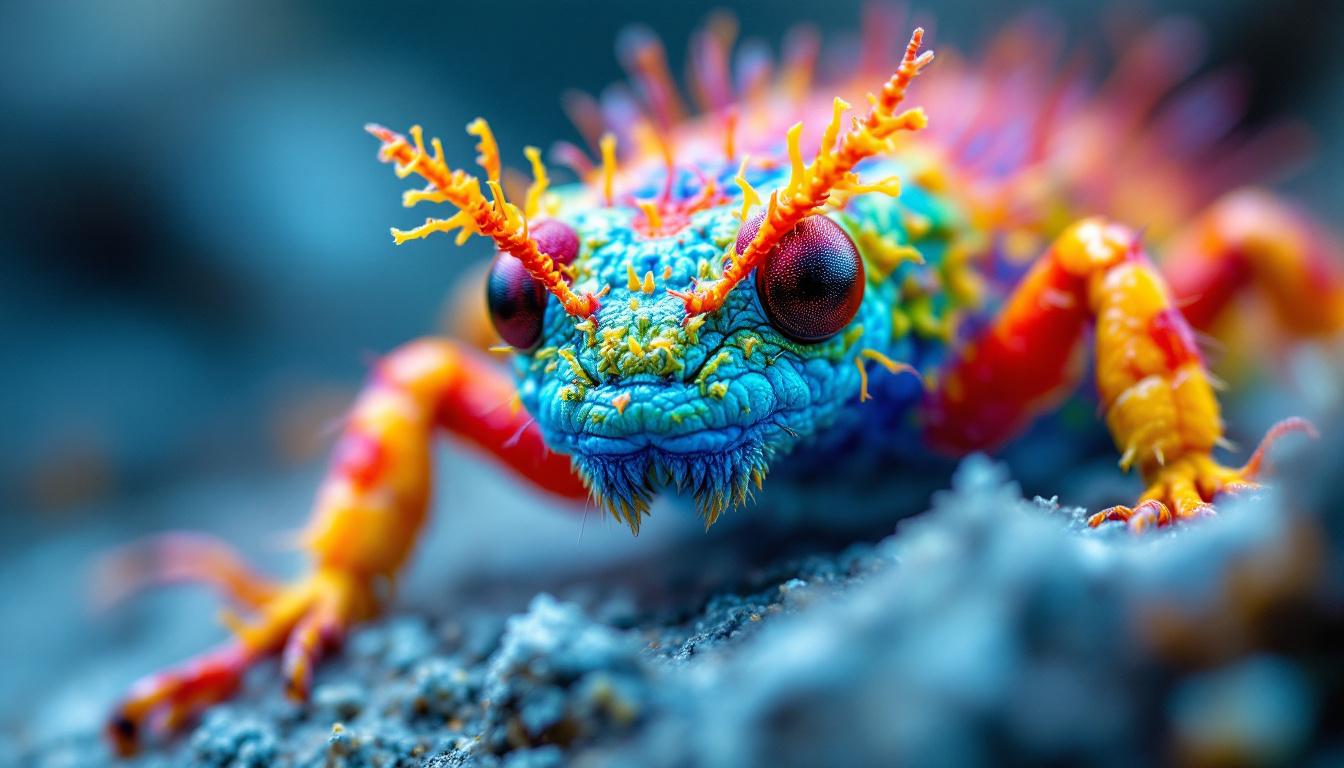
I learned about tardigrades expecting a cute microscopic critter and instead found out about a creature that has, no exaggeration, beaten everything the universe has thrown at it. They’re nicknamed “water bears,” they’re smaller than a grain of salt, and they are quietly the toughest animals on Earth. Here are five facts that genuinely rearranged my understanding of what “indestructible” means.
Did you know there are probably tardigrades in your backyard right now?
You don’t need a trip to Antarctica to find one of these things — you need a patch of moss. Tardigrades live in damp moss, lichen, and leaf litter pretty much everywhere on the planet, and the moss on a shed roof, a garden wall, or the cracks of a sidewalk is one of the most reliable places to find them. On a good clump of moss they can reach densities of over two million tardigrades per square meter. So the next time you walk past a green fuzzy patch on a curb, understand that you are walking past a thriving metropolis. I have been ignoring entire civilizations my whole life.
Did you know a tardigrade isn’t a worm, an insect, or a bug — it’s its own thing entirely?
It looks like a tiny chubby caterpillar, so you’d assume it slots in somewhere near insects or worms. It doesn’t. Tardigrades get their own branch of the animal kingdom — an entire phylum, Tardigrada, all to themselves — and their closest relatives are arthropods and velvet worms, not anything you’d guess by looking. They have four pairs of stubby legs ending in tiny claws, and the nickname “water bear” comes from the fact that they lumber along exactly like a bear does. A microscopic, eight-legged, claw-footed bear that walks the bear walk. Nature built that and just… didn’t tell anyone.
Did you know a tardigrade can squeeze 99% of the water out of its own body to survive?
When conditions get hostile — drought, deep freeze, no food — a tardigrade does something genuinely unsettling. It pulls in its head and legs, expels up to 99% of the water in its body, and curls into a dehydrated little barrel called a “tun.” In this state its metabolism can drop to less than 0.01% of normal. It is not technically dead, but it is doing a remarkably convincing impression of it. Drop water on the tun later and the tardigrade just… reinflates and walks off like nothing happened. It’s less an animal and more a save file.
Did you know scientists revived a tardigrade that had been frozen for over 30 years — and it then laid eggs?
In 1983, researchers collected a moss sample in Antarctica and stuck it in a freezer. It sat there, untouched, for more than three decades. In 2014 they thawed it out — and a tardigrade inside slowly stirred back to life. It took about two weeks to fully recover, and then it did something incredible: it laid 19 eggs, and 14 of them hatched. Think about that. An animal pressed pause in 1983, skipped the entire rest of the 20th century, and woke up to start a family in 2014. It missed everything and didn’t care.
Did you know there are very likely tardigrades sitting on the Moon right now?
In 2019, an Israeli spacecraft called Beresheet was carrying a “lunar library” — a tiny archive of human knowledge — and tucked inside were thousands of dehydrated tardigrades in their tun state. Beresheet then crash-landed on the Moon. The library was built from thin sheets of nickel to survive for millions of years, and scientists believe it likely held together through the impact. Which means there is a real chance our toughest little animal is currently sitting on the surface of the Moon, dried out, dormant, and patiently waiting for water that is never coming. We accidentally colonized the Moon with microscopic bears, and somehow that is one of the lesser-known facts about 2019.
Send this to the friend who thinks cockroaches would inherit the Earth — they wouldn’t, the water bears already have the lease.
