
May 25th
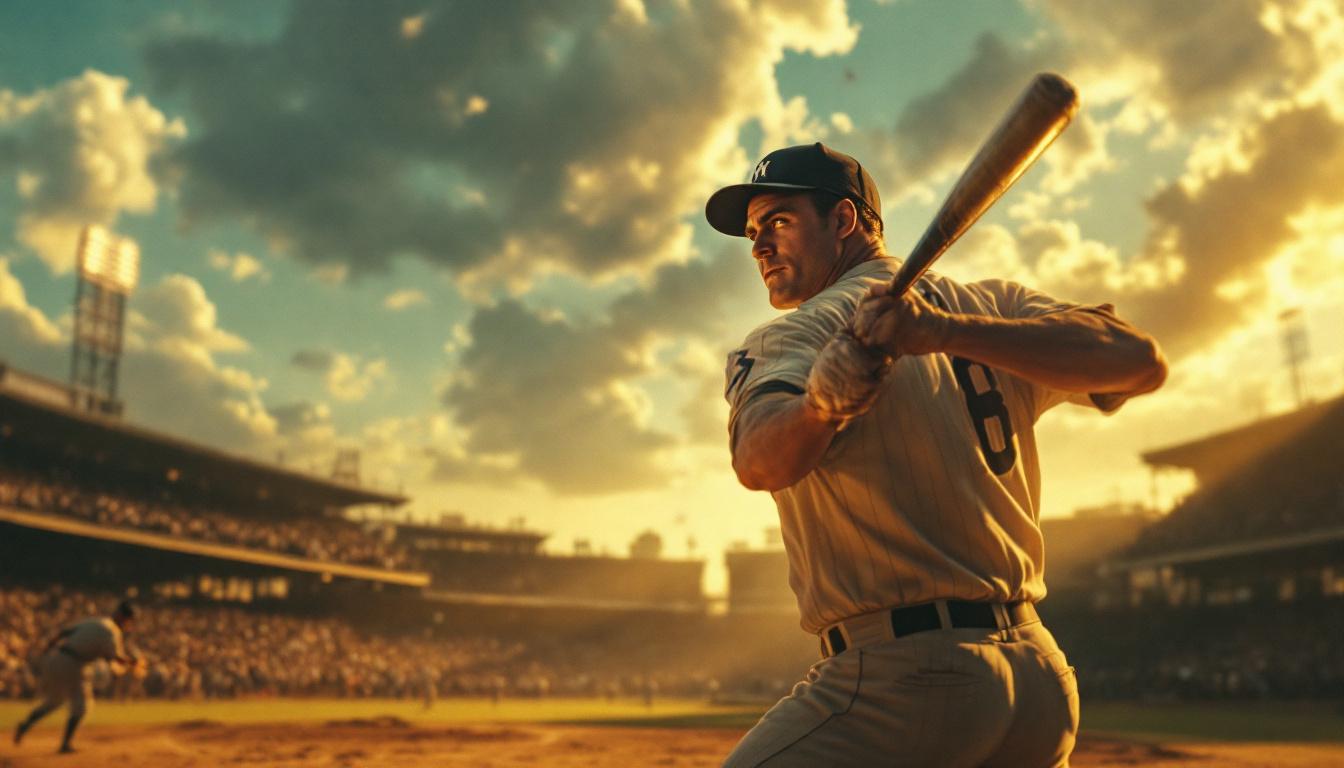
By the spring of 1935, Babe Ruth was 40 years old, slow, heavy, and finished. The Yankees had let him go in February — cast their own legend adrift — and he’d signed with the Boston Braves, a last-place National League club that mostly wanted his name on the ticket. He’d been hitting almost nothing for weeks. Everyone in baseball, including Ruth, knew the end had arrived. He just hadn’t said it out loud yet.
Then came the afternoon of May 25, 1935, at Forbes Field in Pittsburgh. Ruth came to the plate four times that day and got a hit every single time. He hit a home run. Then another. Then, in the seventh inning, on a 3-1 count off Pirates pitcher Guy Bush, he hit a third — and this one didn’t just leave the park, it cleared the right field roof entirely. In the 26 years Forbes Field had stood, no one had ever done that. Not once. The aging, washed-up old man had just hit a ball over a roof that nobody in baseball history had reached.
It was the 714th home run of his career, and it would be his last. The record stood for almost 40 years, until Hank Aaron passed it in 1974. Ruth played a few more games — none of them good — and then quietly retired eight days later. He’d spent his whole career being the most spectacular player anyone had ever seen, and somehow, on a random Saturday in Pittsburgh, with nothing left in the tank, he found a way to go out by doing something no human being had done before.
Also On This Day…
1787 — A meeting to “fix” the government quietly decided to replace it On May 25, 1787, enough delegates finally trickled into Philadelphia’s State House to form a quorum, and the Constitutional Convention officially began. The stated mission was modest: tweak the creaky Articles of Confederation. The delegates promptly elected George Washington to preside, drew the curtains, swore everyone to secrecy, and then — instead of tweaking anything — scrapped the whole framework and drafted an entirely new Constitution. They’d been sent to do repairs. They built a new house.
1953 — The Army fired an atomic shell out of a cannon On May 25, 1953, in the Nevada desert, the U.S. Army did something that sounds like a tall tale: it loaded a nuclear warhead into an artillery gun and fired it. The 280-millimeter cannon, nicknamed “Atomic Annie,” launched the shell seven miles downrange, where it detonated in midair with the force of 15,000 tons of TNT. It worked exactly as planned — and it remains, to this day, the only nuclear artillery shell ever actually fired anywhere in the world.
1961 — A president promised the Moon before anyone knew how to get there On May 25, 1961, John F. Kennedy stood before a joint session of Congress and committed the nation to “landing a man on the Moon and returning him safely to the Earth” before the decade was out. It was a staggering thing to promise. America had a grand total of 15 minutes of human spaceflight experience at that point — one short, suborbital hop by Alan Shepard. Kennedy was pledging the Moon. The bet paid off with eight years to spare.
1963 — Thirty-two African nations decided to stand together On May 25, 1963, leaders from 32 newly independent African states gathered in Addis Ababa, Ethiopia, and founded the Organization of African Unity. The continent was still shaking off the last of colonial rule, and the new alliance pledged to defend one another’s sovereignty and push the remaining colonial powers out for good. The date stuck: it’s still celebrated across the continent every year as Africa Day.
1977 — A movie nobody believed in opened in 32 theaters On May 25, 1977, a space movie from a young director named George Lucas opened in just 32 theaters across the country. Expectations were so low that 20th Century Fox had to strong-arm theater owners into showing it — if you wanted another Fox film that summer, you also had to take this weird sci-fi thing. That weird sci-fi thing was Star Wars. By the end of its run it had outgrossed every movie ever made, and the world has not really stopped talking about it since.
1994 — A man took his Corvette to the grave. Literally. On May 25, 1994, in Irwin, Pennsylvania, the ashes of George Swanson were buried in the driver’s seat of his beloved 1984 white Corvette. He’d planned it for years — even bought twelve burial plots to make sure the car would fit. The cemetery resisted, then relented, on the condition the car be drained of fluids and the burial kept private. With his favorite song cued up on the cassette deck, a crane lowered the man and his machine into a grave for one last ride.
From a secret meeting that rewrote a nation, to a 40-year-old hitting a ball over a roof, to a man buried behind the wheel of his Corvette — May 25 has never been a day for doing things halfway.
