
May 20th
At 2:30 in the morning on May 20, 1927, a 25-year-old airmail pilot named Charles Lindbergh rode through the misty dark from a Long Island hotel to a muddy airfield. He had barely slept. He had no radio, no parachute that could save him over open ocean, and no copilot — he’d left the second seat out and built a fuel tank where it should have been. To see straight ahead, he had to use a periscope, because the only way to fit enough gasoline into the Spirit of St. Louis was to block the front windshield entirely with a tank. He was about to attempt something six experienced aviators had already died trying to do: fly nonstop, alone, from New York to Paris.
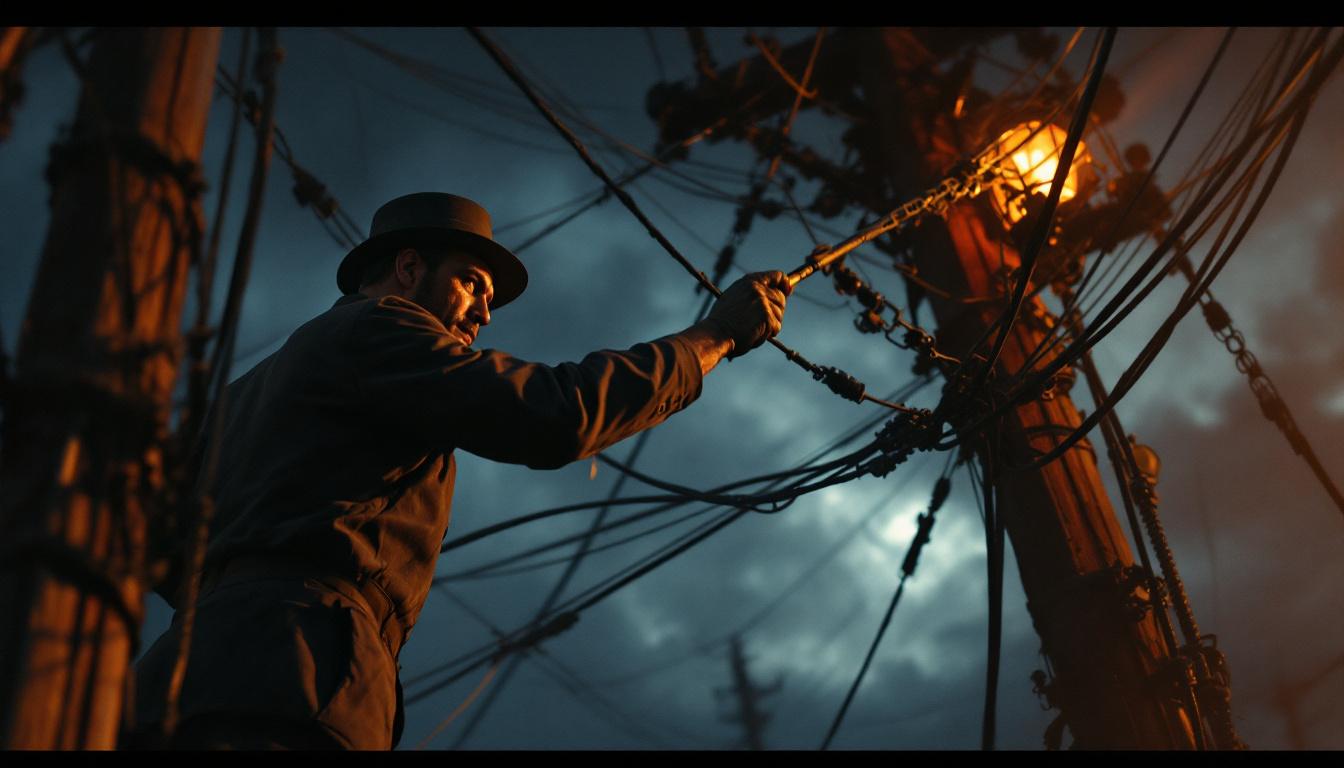
At 7:51 that morning, on a rain-soaked runway, he opened the throttle. The plane was so heavy with 450 gallons of fuel that it didn’t want to fly. It bounced. It lumbered. It used nearly the entire length of the field. At the very end of the runway stood a line of telephone wires, and the Spirit of St. Louis cleared them by about twenty feet. Twenty feet between the most famous flight in aviation history and a fireball in a Long Island field.
Thirty-three and a half hours later — fighting fog, ice, and a sleep deprivation so severe he later said he saw ghostly shapes drifting through the cabin — Lindbergh dropped out of the night sky over Le Bourget field outside Paris. He expected a quiet landing. Instead, an estimated 150,000 people had stormed the airfield to meet him. They mobbed the plane, carried him on their shoulders for half an hour, and tore souvenir scraps off the fuselage. He had taken off an unknown mail pilot. He landed the most famous man on Earth.
Also On This Day…
1498 — Vasco da Gama reached India by sea After ten months at sea, Portuguese explorer Vasco da Gama dropped anchor at Calicut on the southwest coast of India — the first European to reach India by sailing around the bottom of Africa. It cracked open a sea route to the spice trade that didn’t depend on overland middlemen, and it made Portugal, a small country on the edge of Europe, suddenly very rich. The voyage was brutal: da Gama lost more than half his crew, most of them to scurvy, before he ever saw home again.
1570 — The first modern atlas went on sale On May 20, 1570, the cartographer Abraham Ortelius published Theatrum Orbis Terrarum — “Theatre of the World” — in Antwerp. It’s considered the first true atlas: a bound book of uniform maps designed to be used together, rather than a pile of mismatched charts. People wanted it badly. It became a runaway bestseller of its day and went through dozens of editions in multiple languages, which is a strange thing to say about a book of maps, but there it is.
1862 — Lincoln gave away the West, 160 acres at a time In the middle of the Civil War, on May 20, 1862, Abraham Lincoln signed the Homestead Act. The deal was almost unbelievably generous: any head of household — including women and freed slaves — could claim 160 acres of public land essentially for free, as long as they lived on it and farmed it for five years. Over the following decades, the law transferred about 270 million acres of public land into private hands. It is, quite literally, the reason a huge slice of the American Midwest and West got settled.
1873 — A patent for a pair of pants changed the world On May 20, 1873, a Nevada tailor named Jacob Davis and a San Francisco dry-goods merchant named Levi Strauss were granted U.S. Patent No. 139,121 for putting copper rivets at the stress points of work trousers — the pocket corners, the base of the fly. It sounds like the most boring patent ever issued. It is also the birth certificate of blue jeans. Pretty much every pair of jeans on Earth today traces back to that one document.
1902 — Cuba became a republic On May 20, 1902, the American military governor Leonard Wood formally handed power to Tomás Estrada Palma, Cuba’s first elected president, and the Republic of Cuba was born. The United States had taken the island from Spain in the Spanish-American War; now it was letting go — mostly. The catch was the Platt Amendment, baked into Cuba’s new constitution, which gave the U.S. the right to step back in militarily. Independence came with an asterisk, and Cubans have argued about that May 20 ever since.
1916 — A 22-year-old painted his first magazine cover On May 20, 1916, The Saturday Evening Post ran a cover by an unknown 22-year-old illustrator: a boy in his Sunday best, sheepishly pushing a baby carriage past two friends in baseball gear. The artist was Norman Rockwell, and he was paid $75 for it. He’d go on to paint 321 more covers for the Post over the next 47 years and become the artist who, more than anyone, defined how mid-century America pictured itself.
1927 — Lindbergh’s flight inspired a different kind of takeoff Here’s a connection nobody expects. Lindbergh’s flight didn’t just thrill the public — it lit a fire under a hotel businessman from Texas. Newspaper coverage of “Lucky Lindy” convinced an entrepreneur named Conrad Hilton that aviation was about to make the whole world travel, and travelers would need somewhere to stay. The flight that crossed an ocean helped kick off a hotel empire on the ground. History rarely moves in a straight line.
It’s a fitting roster for one date — a sailor reaching India, a tailor’s rivets, a magazine cover, a country becoming a country — but the image that sticks is a young man in a rain-soaked plane he could barely see out of, clearing a telephone wire by twenty feet, and flying straight into legend.
