
May 23rd
A little after nine in the morning on May 23, 1934, a stolen tan Ford V8 came tearing down a quiet stretch of rural highway in Bienville Parish, Louisiana, near the town of Sailes. Behind the wheel was Clyde Barrow, driving in his socks. Beside him sat Bonnie Parker, a sandwich in her hand. For two years they had been the most hunted criminals in America — bank robbers, killers, and, thanks to a string of breathless newspaper stories and a few snapshots Bonnie had posed for with a cigar and a pistol, genuine celebrities. They had slipped every trap the law had set. They would not slip this one.
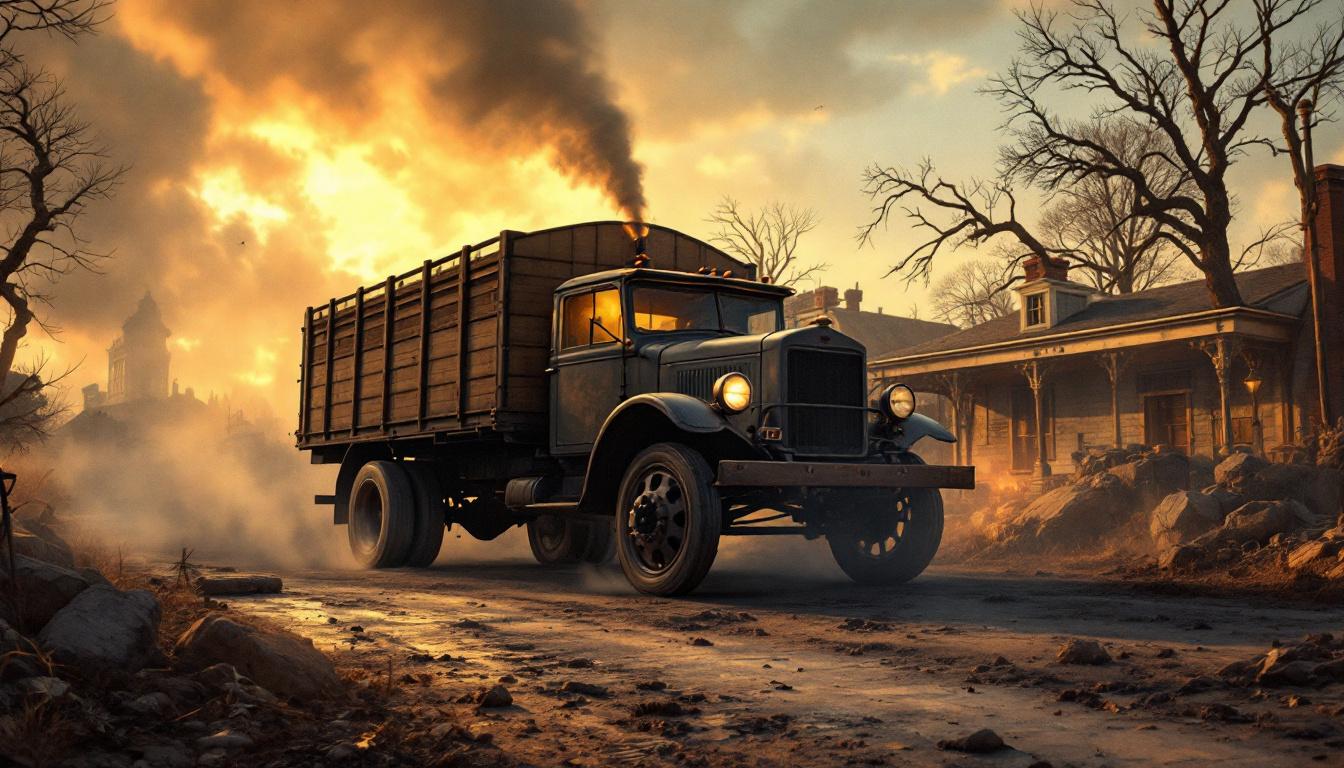
Hidden in the brush along the roadside were six lawmen who had been lying in wait for two days and two nights. The man who organized them was Frank Hamer, a legendary former Texas Ranger pulled out of semi-retirement for the single purpose of ending the Barrow gang. Hamer knew the couple was trying to reconnect with a gang member named Henry Methvin, and he knew where Methvin’s father lived. So the posse staged a piece of bait that no good outlaw could resist: they parked Ivy Methvin’s truck on the shoulder of the road and quietly removed one of its wheels, so it would look like a friend was stranded and needed a hand.
Clyde slowed the Ford to help. That was all the posse needed. The six men opened fire, and they did not stop quickly — investigators later counted around 167 rounds poured into the car. Bonnie and Clyde were killed almost instantly, ages 23 and 25. The bullet-riddled Ford became a grim traveling attraction, hauled around the country and shown at fairs for years. Two kids from the Dallas slums had wanted to be famous more than anything. They got their wish, and it cost them everything — undone, in the end, by a truck missing one wheel.
Also On This Day…
1430 — Joan of Arc ran out of luck She was 18 years old and had already done the impossible — rallied a broken French army, lifted the siege of Orléans, watched a king crowned because of her. On May 23, 1430, leading a charge outside the town of Compiègne, Joan of Arc stayed behind to cover the rear guard as her troops retreated across a river. She was pulled off her horse by Burgundian soldiers and captured. The Burgundians sold her to the English for 10,000 livres. A year and a week later, she was burned at the stake. She was about 19.
1785 — Benjamin Franklin solved his own glasses problem In a letter dated May 23, 1785, Benjamin Franklin described a fix for an annoyance that had plagued him for years. He was tired of swapping between two pairs of spectacles — one for reading, one for distance — so he had a lens-maker cut both kinds of lens in half and mount them together in a single frame, near vision on the bottom, far vision on top. He had essentially invented bifocals to stop himself from juggling eyewear at the dinner table. The man could not stop solving things.
1865 — The army marched one last time, then went home Six weeks after the Civil War ended, Washington threw the largest parade the city had ever seen. On the morning of May 23, 1865, a signal gun fired a single shot, and General George Meade led an estimated 80,000 men of the Army of the Potomac down Pennsylvania Avenue. It was the first day of the Grand Review of the Armies — a two-day procession of more than 200,000 soldiers ordered to honor the troops and lift a capital still grieving Lincoln. When the marching was over, the largest army in the world simply dissolved back into farms and towns and ordinary life.
1900 — A flag-bearer’s Medal of Honor, 37 years late At the Battle of Fort Wagner in 1863, Sergeant William Harvey Carney of the 54th Massachusetts saw the color guard fall and grabbed the American flag before it could touch the ground. Shot multiple times, he carried it forward, then back, and reportedly said the flag never touched the earth. On May 23, 1900 — nearly four decades later — Carney finally received the Medal of Honor, becoming the first Black American to earn the nation’s highest military decoration for valor.
1911 — A marble palace for books opened in New York On May 23, 1911, President William Howard Taft stood before a crowd of 15,000 people to dedicate the New York Public Library’s grand new building at Fifth Avenue and 42nd Street. The Beaux-Arts structure had taken a decade to build and was, at the time, the largest marble building in the United States. More than a million books had been shelved inside for the occasion. When the doors opened to the public the next day, more than 50,000 people walked in — to a library guarded, then as now, by two stone lions.
1934 — DuPont patented a fiber that changed everything On the same day Bonnie and Clyde died in Louisiana — though the patent itself was filed slightly later — chemist Wallace Carothers and DuPont were closing in on a synthetic miracle. Nylon, the first fully synthetic fiber, would soon explode out of the lab and into stockings, parachutes, toothbrush bristles, and seemingly everything else. It proved that the things we wear and use didn’t have to come from a plant or an animal — they could be invented from scratch.
A captured teenage warrior, an old man inventing bifocals at his desk, an army marching itself out of existence, and two kids in a stolen Ford stopping to help with a missing wheel — May 23 is a day for people who got exactly what they were chasing, and learned what it cost.
