
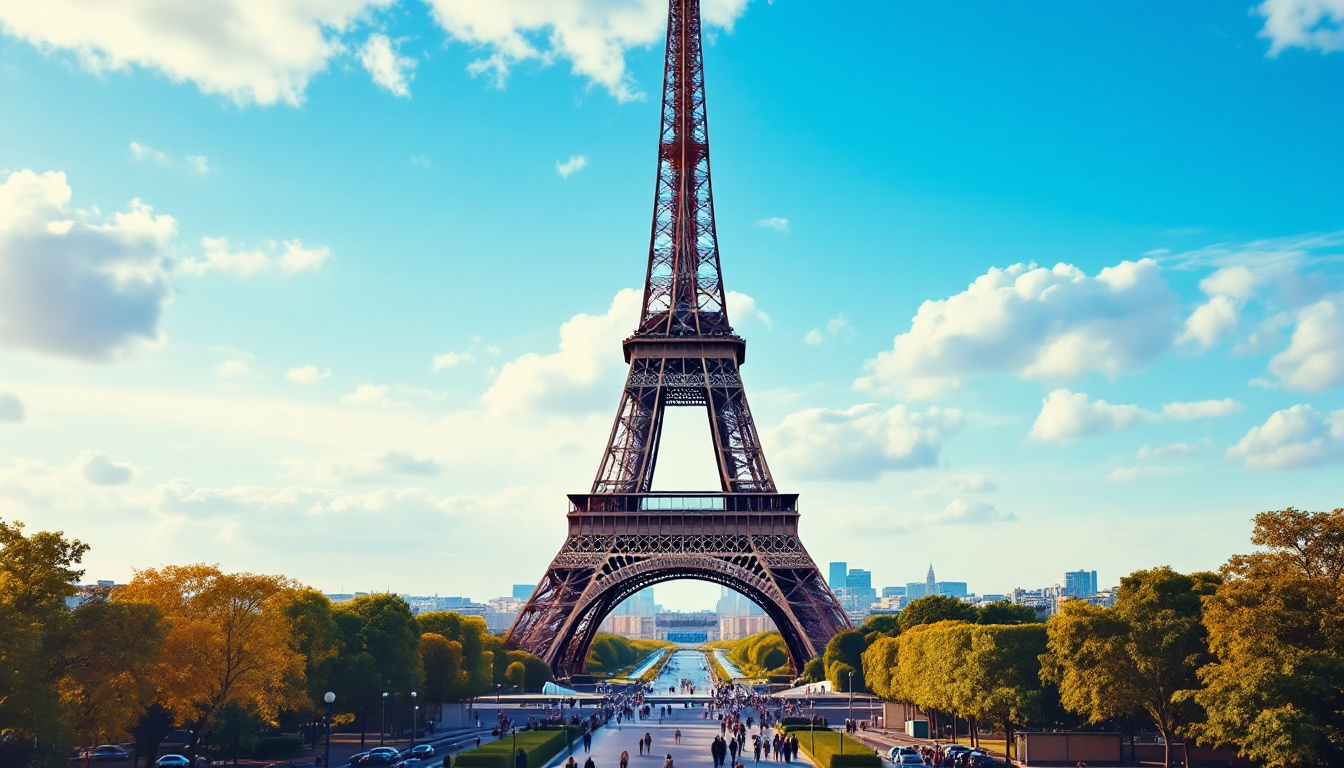
I figured the Eiffel Tower was a settled subject: tall, French, romantic, been there forever, everybody loves it. Turns out Paris originally hated it, it was supposed to get demolished, it literally grows taller in summer, and there’s a secret apartment hidden at the top that the man himself built for entertaining guests. The most photographed monument on the planet has been quietly hiding a lot.
1. Parisians despised it, and 300 of them signed a petition begging to have it torn down.
When the tower went up for the 1889 World’s Fair, the artistic and intellectual elite of Paris were horrified. A group of 300 writers, painters, and architects — including Guy de Maupassant and Charles Gounod — published a furious open letter calling it a “useless and monstrous” tower, a “hateful column of bolted sheet metal.” They thought it would humiliate the city. Today around seven million people a year pay to climb the thing they tried to kill.
2. The man who hated it most ate lunch inside it every day.
Author Guy de Maupassant reportedly dined in the tower’s restaurant constantly — not because he’d changed his mind, but because, as the story goes, it was the one spot in all of Paris where he didn’t have to look at the tower. That’s the kind of pettiness I can fully respect. If you can’t beat the eyesore, just stand inside it.
3. It was only ever supposed to stand for 20 years.
The Eiffel Tower was built as a temporary exhibition piece. The permit gave it a 20-year lifespan, after which the city of Paris owned it and fully intended to scrap it for the metal. What saved it was the most unromantic thing imaginable: radio. The tower turned out to be a perfect antenna, the military started using it for wireless transmission, and suddenly tearing down a giant iron broadcast tower seemed like a bad idea. It got to live because it was useful, not because it was beautiful.
4. The tower actually grows about six inches taller in the summer.
Iron expands when it heats up, and the Eiffel Tower is 7,300 tons of it. On a hot Paris day the metal swells enough that the tower’s height increases by roughly six inches, and the whole structure can even lean slightly away from the sun as the sunny side expands more than the shady side. So the official height depends on the weather. The most famous landmark in France is technically a different size in July than in January.
5. Gustave Eiffel built a secret private apartment at the very top.
Near the summit, Eiffel constructed a small, cozy apartment for himself — and unlike the cold iron everywhere else, it was warmly decorated with wallpaper, wooden furniture, and even a piano. Wealthy Parisians were reportedly desperate to be invited up, and the offers to rent it were enormous, but Eiffel never let it go. He famously hosted Thomas Edison there. You can still see the recreated apartment today, complete with mannequins of Eiffel and Edison mid-conversation.
6. Gustave Eiffel didn’t actually design it.
The man whose name is on the most famous tower in the world didn’t come up with it. The concept was drawn up by two engineers at his company, Maurice Koechlin and Émile Nouguier, with help from architect Stephen Sauvestre. Eiffel initially wasn’t even that into it — but once he got on board, he bought the patent rights and championed it so hard that it became the Eiffel Tower instead of the Koechlin Tower. Branding matters, folks.
7. A con man “sold” the Eiffel Tower for scrap metal. Twice.
In 1925, a swindler named Victor Lustig posed as a government official, gathered Paris scrap-metal dealers in a fancy hotel, and explained that the city secretly planned to demolish the costly tower and sell it off. He took a hefty bribe from one eager dealer and skipped town. The victim was so embarrassed he never even reported it — so Lustig came back to Paris and tried to pull the exact same scam a second time. He’s the same guy who once “sold” a money-printing box to people.
8. When the Nazis occupied Paris, someone cut the elevator cables so Hitler would have to climb.
During the German occupation in 1940, the story goes that French resisters sabotaged the tower’s elevator cables, leaving them mysteriously impossible to repair under occupation. The result: if Hitler wanted to reach the top, he’d have to climb 1,600-some steps on foot. He visited Paris but never went up. As the saying went afterward, Hitler conquered France, but he never conquered the Eiffel Tower. Wonderfully, the elevators were reportedly working again within hours of the city’s liberation.
9. It gets repainted entirely by hand — using about 60 tons of paint.
There are no shortcuts and no spray rigs here. Every few years, a crew of painters covers the entire tower by hand with brushes, using around 60 tons of paint per job to protect all that iron from rust. It’s also not actually one flat color — the tower is painted in three graduated shades, darker at the bottom and lighter toward the top, so it looks uniform against the sky. It has even worn different colors over its life, including a reddish-brown and a yellowish hue.
10. You’re not allowed to photograph it at night without permission.
Here’s one that trips up tourists. The tower itself has been in the public domain for over a century, so daytime photos are totally fine. But the dazzling light show installed in 1985 — those sparkling lights that twinkle on the hour — is considered a separate artistic work that’s still under copyright. Technically, publishing a commercial photo of the illuminated tower at night requires permission. In practice nobody’s coming for your vacation selfies, but the rule is real, and it means the single most photographed object on Earth has a “do not photograph” asterisk hiding in the dark.
Which one surprised you most — the petition, the scam, or the six inches it grows every summer? Send this to the friend who thinks they already know Paris.
