
June 3rd
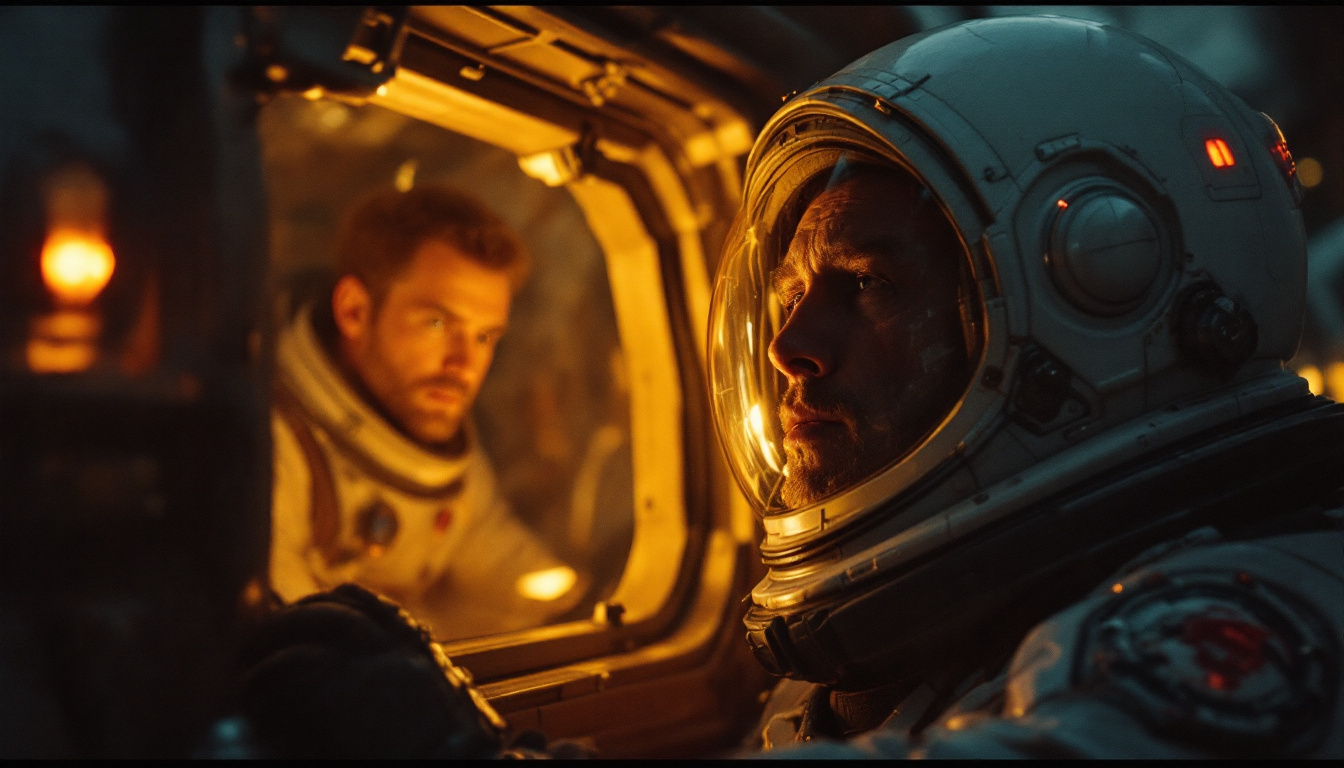
On June 3, 1965, a Titan II rocket lifted off from Cape Kennedy carrying two astronauts, James McDivitt and Ed White, on a mission called Gemini 4. The Americans had a lot of catching up to do. Less than three months earlier, a Soviet cosmonaut named Alexei Leonov had become the first human being to leave his spacecraft and float freely in the vacuum of space. The Space Race was on, the Soviets were ahead, and NASA badly wanted to show it could do the same thing — only better.
So on the third orbit, with the capsule streaking over the Pacific Ocean near Hawaii at roughly 17,000 miles per hour, Ed White opened the hatch and pushed himself out into nothing. He became the first American to walk in space. And here’s the part that gets me: he was tethered to the ship by a 25-foot umbilical line wrapped in gold tape, and he had a little handheld jet gun — basically an oxygen-powered zip gun — that he used to push himself around. He fired it, drifted to the end of his tether, and floated back. He did this a few times. Then the gun ran out of fuel after about three minutes, and White just kept maneuvering by twisting his body and tugging on the cord, like a kid figuring out a swimming pool for the first time.
He loved it. He genuinely, completely loved it. While Leonov’s spacewalk had been a tense, dangerous ordeal — his suit ballooned so badly he barely got back inside — White was up there having the time of his life. “I feel like a million dollars,” he radioed down. He spent 23 minutes outside, twice as long as Leonov, drifting over the Gulf of Mexico with the whole planet rolling beneath his boots. When mission control finally ordered him to come back inside, he didn’t want to. As he climbed back into the capsule, White said it was “the saddest moment of my life.” A grown man, a fighter pilot, floating above the entire Earth, and his biggest complaint was that it had to end.
It’s one of the great moments in American history, and it almost didn’t happen on schedule. Bad weather had pushed the launch back a day, and the hatch gave the crew real trouble both opening and closing — a problem that, in space, is not a minor inconvenience. But it worked. Gemini 4 went on to orbit the Earth 66 times over four days, and the photographs of White tumbling weightless against the blue planet became some of the most famous images NASA ever produced. The country that had been losing the Space Race had just put a man outside his ship who didn’t want to come home.
Also On This Day…
1888 — The most famous strikeout in American literature was printed for the first time On June 3, 1888, the San Francisco Examiner ran a poem called “Casey at the Bat,” buried in the paper under the simple pen name “Phin.” The author was a young writer named Ernest Thayer, and he was paid five dollars for it. Nobody made a fuss. But the poem about the mighty Casey — the slugger everyone counted on, who let two strikes go by and then struck out with the game on the line — slowly became one of the best-known pieces of writing America ever produced. “There is no joy in Mudville” is still a phrase people use without knowing where it came from. Not bad for a throwaway five-dollar poem.
1937 — A man who gave up a throne for love finally got his wedding On June 3, 1937, the Duke of Windsor married Wallis Simpson at a chateau in France, in front of about 16 guests. Six months earlier this same man had been Edward VIII, King of England — until he decided he would rather marry a twice-divorced American woman than keep the crown, which the British government and the Church of England flatly refused to allow. So he abdicated, walked away from the most famous throne on Earth, and married her anyway. The royal family largely stayed away. The new bride was even denied the title “Her Royal Highness.” It remains one of the most dramatic “I choose her over the job” stories in modern history.
1769 — Captain Cook sailed halfway around the world to watch a dot cross the sun On June 3, 1769, Captain James Cook and a team of scientists, perched in a fort on the island of Tahiti, watched the planet Venus pass directly in front of the sun. This sounds like a small thing. It was not. Measuring this “transit of Venus” from different points on Earth was, at the time, the best hope astronomers had of calculating the distance between the Earth and the sun — so the Royal Society sent Cook on an enormous voyage across the Pacific just to see it. They got their observation, though a blurry optical effect made the exact timing maddeningly hard to pin down. The British turned a planet crossing the sun into an excuse to go explore the entire South Pacific.
It’s a fun spread of a date — the first American to float free in space loving every second of it, a five-dollar poem that outlived its author, a king who gave up everything for love, and a sea captain chasing a planet across the sun. June 3 has a real soft spot for people who reached for something bigger than the rulebook said they should.
