
May 30th
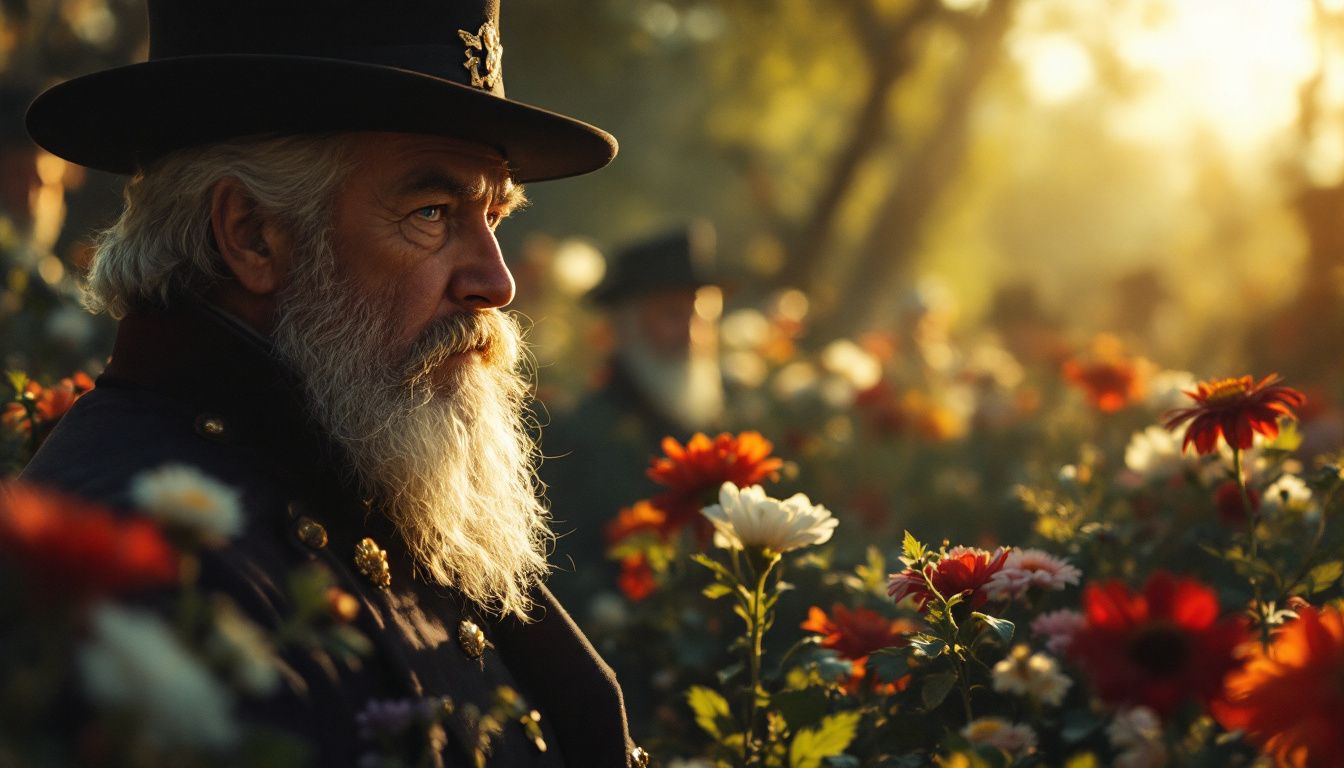
If you’ve ever wondered why Memorial Day landed at the end of May — why it’s the unofficial start of summer, the cookout weekend, the date everyone circles for the long break — the answer traces back to one man and one very practical reason. On May 30, 1868, the United States held its first nationwide Decoration Day, and the whole thing happened because a Civil War general wanted to make sure there’d be enough flowers.
His name was John A. Logan. He’d been a Union general, and by 1868 he led the Grand Army of the Republic, a massive organization of Union veterans. A few weeks earlier, he’d issued an order calling for a day to decorate the graves of the soldiers who had died in the war — and he specifically chose May 30. Why that date? It wasn’t the anniversary of any battle. Logan picked it, in his own words, so that the “choicest flowers of springtime” would be in bloom across the entire country. He wanted to be sure that no matter where you lived, North or South, East or West, you could find something growing to lay on a grave. That’s the kind of detail that sticks with you. A general planned a national day of mourning around the growing season.
The first ceremony was held at Arlington National Cemetery, on land that had once belonged to Robert E. Lee. A future president, James Garfield, gave a speech. And then roughly 5,000 people walked the rows and decorated the graves of more than 20,000 Civil War soldiers buried there — Union and Confederate alike, including many who lay under stones marked simply “unknown.” It was a staggering scene: a country that had just spent four years tearing itself apart, standing together in a field of the dead, covering enemy and friend alike in spring flowers.
Decoration Day caught on fast and never really stopped. For decades it stayed put on May 30, exactly where Logan placed it. It wasn’t until 1971 that Congress officially renamed it Memorial Day and moved it to the last Monday in May to create a guaranteed three-day weekend — which is why the date now drifts around a bit each year. But the original, the real one, the day a general chose so the flowers would be ready, was May 30. So this weekend, somewhere between the grill and the lawn chair, it’s worth remembering that the whole thing started with a man who thought hard about when the springtime blooms.
Also On This Day…
1431 — A 19-year-old was burned at the stake, then later made a saint On May 30, 1431, Joan of Arc was burned at the stake in the marketplace at Rouen, France. She was just 19 years old. A teenage peasant girl who said she heard the voices of saints, she had led French armies to real victories before being captured, sold to the English, and put on trial for heresy — with one of the formal charges being that she wore men’s clothing. It took nearly 500 years for history to fully reverse its verdict on her. The same church that condemned her canonized her as a saint in 1920. From heretic to saint is a long road, and Joan walked all of it after she was already gone.
1911 — A race car got the first rearview mirror, and won On May 30, 1911, Ray Harroun won the very first Indianapolis 500, finishing the 500-mile grind in 6 hours and 42 minutes at an average speed of about 74.6 miles per hour. But the lasting story isn’t the win — it’s how he did it. Every other car carried two men: a driver and a riding mechanic whose job was partly to watch for cars coming up behind. Harroun ditched the second seat to go lighter and faster, and to see behind him, he bolted a mirror to his car. People still argue over whether he invented the rearview mirror, but he’s the reason one ended up on a race car that day, and the reason it eventually ended up on yours.
1922 — Lincoln’s only surviving son watched his father’s memorial open On May 30, 1922, the Lincoln Memorial was dedicated in Washington, D.C., before a crowd of around 50,000 people. Former President William Howard Taft handed it over to President Warren Harding, and the whole speech was carried on an experimental Navy radio broadcast — cutting-edge technology for its day. But the most moving guest sat quietly in the crowd: 79-year-old Robert Todd Lincoln, Abraham Lincoln’s only son to survive into adulthood. He had been a young man when his father was assassinated in 1865, and now, 57 years later, he lived to see the giant marble figure of his father unveiled. It was one of his last public appearances.
It’s a fitting roster for the weekend the country pauses to remember its fallen — a general choosing a day for flowers, a memorial to a martyred president, a teenage girl who refused to back down. May 30 has always been a date about honoring the people who came before us, whatever it cost them.
