
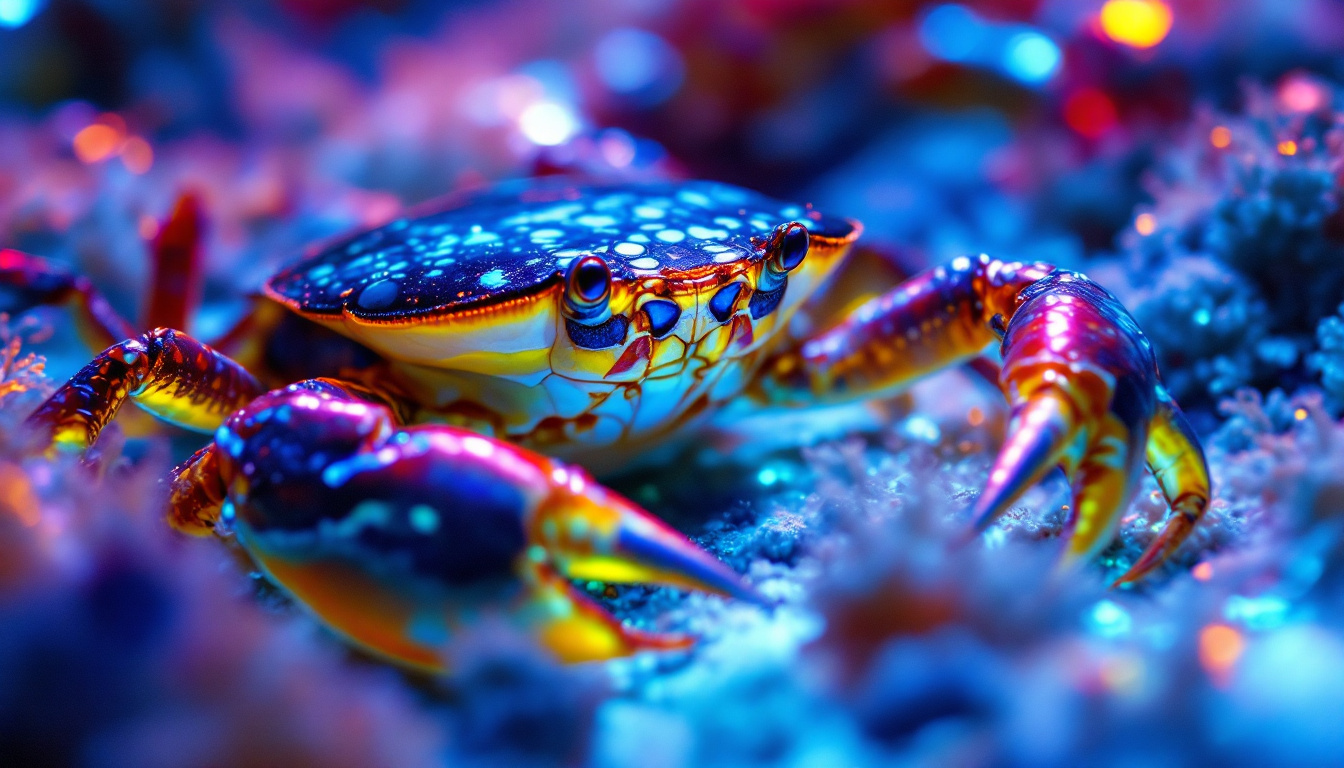
I’ll be honest with you. I always assumed that by now, with all our satellites and submarines and billionaires building rockets, somebody had gone down and checked out the bottom of the ocean. Turns out we know more about the surface of the Moon than we know about our own seafloor. The five facts below cured me of the notion that there’s nothing left on Earth to discover. There’s a whole alien world down there, and most of it has never seen a human being.
Did you know there’s a deadly underwater lake at the bottom of the Gulf of Mexico that kills and embalms almost anything that swims into it?
Scientists nicknamed it the “Jacuzzi of Despair,” and the name is grimly accurate. About 3,300 feet down sits a pool of brine so salty and dense that it doesn’t mix with the seawater around it. It just sits there on the seafloor like a lake within the ocean, complete with its own shoreline and gentle waves. Anything that wanders in — crabs, amphipods, the occasional unlucky fish — gets killed by the toxic mix of super-salt, methane, and hydrogen sulfide, then pickled and preserved by the brine. There are actual mussels living happily around its edges, surviving on bacteria that turn the poison into food. An underwater lake, with a beach, that embalms its victims. On planet Earth.
Did you know we have better maps of the Moon and Mars than we do of our own ocean floor?
As of recent NOAA figures, only about 20 percent of the seafloor has been mapped in any real detail. That means roughly 80 percent of the bottom of our own planet is less understood than the surface of worlds millions of miles away. We’ve landed rovers on Mars and photographed craters on the Moon, but the terrain right under the waves remains mostly a question mark. Part of the problem is that water blocks the satellite tools we use to map dry land, so the ocean floor has to be scanned the slow way, boat by boat. There could be mountain ranges and canyons down there bigger than anything on land, and we just haven’t gotten around to finding them yet.
Did you know that in parts of the deep ocean, roughly 80 percent of the animals make their own light?
Between about 650 and 3,300 feet down, in a band scientists call the twilight zone, an estimated 80 percent of the animals are bioluminescent. They glow. Fish, squid, jellyfish, comb jellies, and creatures that are mostly just water all produce their own light. Some use it as a lure to draw in dinner, dangling a glowing bait off their heads like a living fishing rod. Others flash to confuse predators or to signal a mate in the pitch black. When the sunlight runs out, life down there simply decided to bring its own.
Did you know there’s a stretch of ocean so deep it’s called the Midnight Zone, where sunlight has never reached?
Below about 3,300 feet, in a layer that runs down to around 13,000 feet, you enter the bathypelagic zone, better known as the Midnight Zone. Not a single ray of sunlight makes it that far down. It’s permanently, absolutely black, and brutally cold, with crushing pressure on top of all of it. The only light that exists is the glow the animals produce themselves. It’s the largest living space on the entire planet, and it’s a place no sunbeam has ever touched in the history of Earth.
Did you know the bottom of the Mariana Trench has pressure equal to about 50 jumbo jets stacked on top of you, yet only about two dozen people have ever been there?
The Mariana Trench bottoms out at the Challenger Deep, nearly 36,000 feet down, deeper than Mount Everest is tall. The water pressure at the bottom is roughly 1,000 times what you feel standing on a beach, the equivalent of about 50 jumbo jets pressing down on you. The first humans to reach it did so back in 1960, and even now, fewer than 30 people total have ever made the trip down. That’s right, more people have walked on the Moon than have stood at the deepest point in our own oceans. And against all odds, even down there, scientists have found living things that call it home.
Send this to the friend who thinks there’s nothing left to explore on Earth. The wildest frontier we have is right under the waves, and we’ve barely scratched it.
