
June 11th
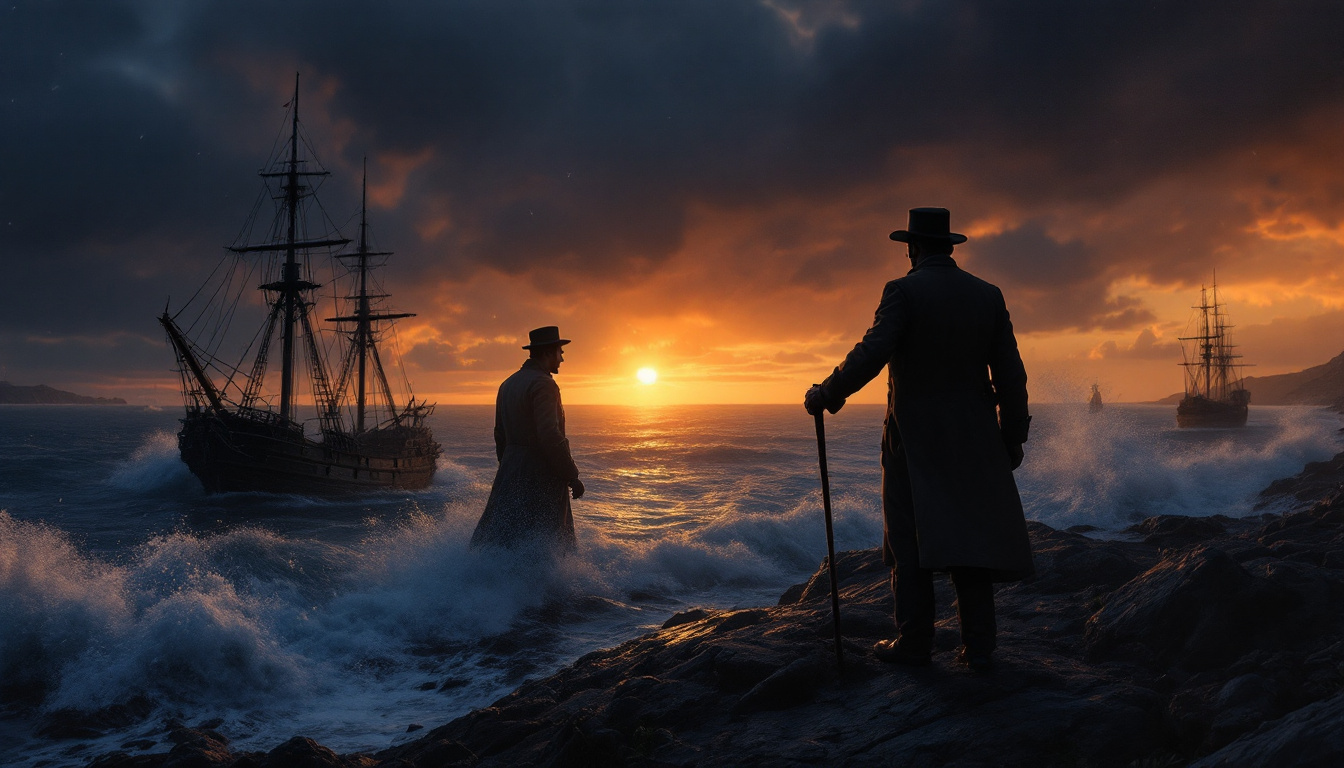
For five years, the United States government had told the world that no one could escape from Alcatraz. The Rock sat in the middle of San Francisco Bay, ringed by frigid, churning water and currents strong enough to drag a strong swimmer out to sea. The cellblock walls were concrete. The guards were the best in the federal system. It held Al Capone, “Machine Gun” Kelly, and the worst the country had to offer. And on the night of June 11, 1962, three of those men simply walked off the island and were never seen again.
Frank Morris was the brains. With an IQ said to top 130, he and brothers John and Clarence Anglin had spent more than six months quietly clawing their way to freedom. Using spoons stolen from the dining hall and a makeshift drill fashioned from a vacuum cleaner motor, they widened the small ventilation grilles at the backs of their cells, chipping away at the crumbling concrete a little at a time. To cover the noise, Morris played his accordion during the evening music hour. Behind the walls lay an unguarded utility corridor the prisoners turned into a secret workshop, where they built their tools for escape by hand.
The genius was in the deception. In their workshop they crafted dummy heads out of soap, toilet paper, and concrete dust, painted them flesh-toned, and topped them with real human hair collected from the prison barbershop. On the night of the break, they tucked the lifelike heads into their bunks under the blankets. When guards swept their flashlights across the cells during the night counts, they saw three sleeping men. They saw nothing wrong at all.
Meanwhile, the real Morris and the Anglins were gone. They squeezed through the holes they had carved, climbed a maze of pipes up to the roof, slipped down a 50-foot kitchen vent pipe to the ground, and scaled the perimeter fence. At the water’s edge they inflated a raft they had stitched together from more than fifty stolen raincoats, sealing the seams with the heat of steam pipes. Then they pushed off into the black, freezing water of the bay and disappeared into the night.
By morning the dummy heads had been discovered, and one of the largest manhunts in American history was underway. But the trail went cold almost immediately. No bodies were ever recovered. A few scraps of debris and a soggy wallet washed up, but the three men themselves seemed to have evaporated. In 1979 the FBI concluded they had most likely drowned. The U.S. Marshals Service was not so sure, and to this day the case remains open and active.
More than six decades later, the question still haunts America. Did the cold bay claim them, as the official story holds? Or did three ordinary criminals pull off the impossible, beat the unbeatable prison, and quietly live out their days as free men somewhere far away? Family members swear they received postcards. Sightings have trickled in for years. Nobody knows. And the legend of the men who escaped from Alcatraz only grows.
Also On This Day…
1776 — Congress Picks Five Men to Write the Nation Into Existence On June 11, 1776, with war already raging and independence still just a dangerous dream, the Continental Congress appointed a “Committee of Five” to put America’s case to the world on paper. The members were a who’s-who of the founding generation: Thomas Jefferson, John Adams, Benjamin Franklin, Roger Sherman, and Robert Livingston. Recognizing the young Virginian’s gift with a pen, the committee handed the assignment to Jefferson, who would spend the next two weeks drafting the document at a small writing desk. The result, polished by Adams and Franklin, became the Declaration of Independence. The words that defined a nation began with a quiet vote on this day.
1963 — A President Calls Civil Rights a Moral Issue On the evening of June 11, 1963, President John F. Kennedy went on live national television and changed the course of the country. Earlier that day, federal force had compelled the University of Alabama to admit two Black students over a governor’s defiance. That night, Kennedy set aside the language of law and spoke instead of right and wrong, telling Americans that the nation was founded on the principle that all men are created equal. He announced he would ask Congress to pass sweeping civil rights legislation. The speech, drafted in frantic hours by Ted Sorensen, laid the foundation for the Civil Rights Act of 1964.
1979 — America Says Goodbye to “The Duke” On June 11, 1979, John Wayne, the swaggering icon of the American Western, died at age 72 after a long fight with cancer. Born Marion Morrison in Winterset, Iowa, in 1907, he rose from bit parts and football fields to become one of the most recognizable faces in the world. Across four decades and well over a hundred films, his trademark drawl and rolling walk came to embody a certain rugged American ideal of grit, courage, and standing your ground. His final public appearance came at the Academy Awards just two months before his death. When the Duke passed, the nation lost a piece of its own self-image.
June 11 is a date stitched together by daring and conviction. It is the day five patriots set out to define a nation in words, the day a president dared to call equality a matter of the soul, and the day a country mourned its most American of heroes. And it is the night three desperate men slipped off an island prison and into legend, leaving behind a riddle the United States has never solved. Defiance, declaration, and the unsolved dark of the bay all share this single day.
