
June 14th
In the summer of 1777, the thirteen United States were barely a nation at all. They were a fragile alliance of colonies in open rebellion against the most powerful empire on earth, bleeding men and money in a war that few outsiders expected them to win. Their soldiers marched under a confusing patchwork of banners — regimental flags, state flags, even a “Grand Union” standard that still carried the British crosses in its corner. An American army was fighting for independence beneath a flag that still bore the marks of the king they were trying to throw off.
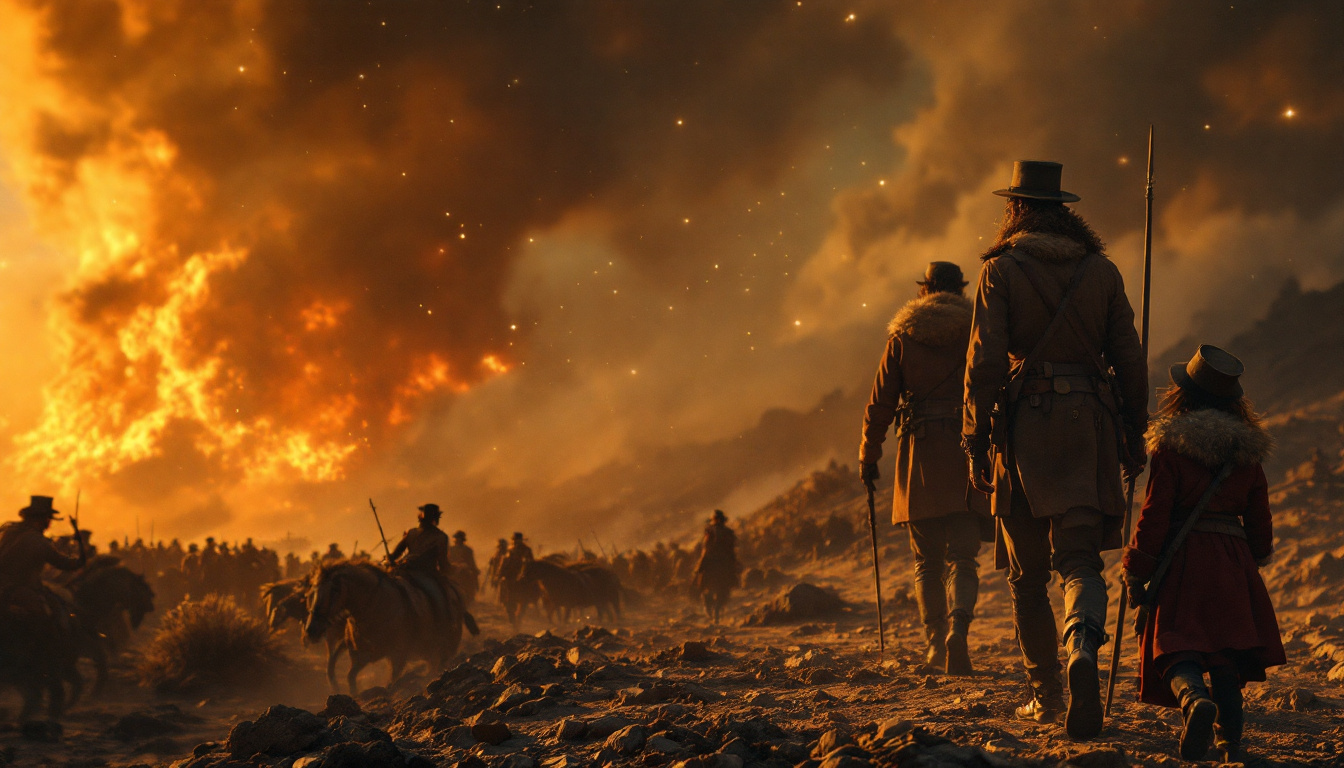
On June 14, 1777, the Second Continental Congress, meeting in Philadelphia, decided that would no longer do. Tucked between resolutions about naval matters, the delegates passed a single, almost offhand sentence that would echo for centuries: “Resolved, That the flag of the thirteen United States be thirteen stripes, alternate red and white; that the union be thirteen stars, white in a blue field, representing a new constellation.” With those few words, the Stars and Stripes was born.
The language was no accident. A “new constellation” — a fresh arrangement of stars never before seen in the heavens — was exactly how these revolutionaries saw themselves. They were not merely thirteen colonies anymore. They were a new order rising in the sky, equal stars on a field of blue, each one sovereign yet bound together into something greater. The thirteen stripes honored where they had come from. The stars declared what they intended to become.
Legend would later give the honor of stitching that first flag to a Philadelphia seamstress named Betsy Ross, who supposedly persuaded George Washington to favor a five-pointed star because it could be cut with a single snip of the scissors. Historians have never been able to prove the tale — it surfaced nearly a century later, told by her grandson — but it captured something true about that moment. The flag did not come down from kings or generals. It rose up out of ordinary hands, workshops, and the stubborn faith of common people who believed a self-governing republic was possible.
The banner adopted that day was crude by modern standards, and for years its design varied wildly from maker to maker — stars in circles, stars in rows, stars scattered like real constellations. But the idea was fixed forever. As the nation grew, the stripes stayed at thirteen to honor the founders, while a new star was added for every state that joined the union, until the field of blue held fifty.
More than a century and a half later, in 1949, Congress finally made June 14 a national day of observance — Flag Day — so that Americans would forever remember the afternoon a young, embattled, improbable republic looked up and declared itself a new constellation.
Also On This Day…
1775 — The Birth of the United States Army Exactly two years before the flag was adopted, on June 14, 1775, the same Continental Congress voted to create the Continental Army — the direct ancestor of today’s United States Army, which still claims this date as its official birthday. With British troops bottled up in Boston and roughly 22,000 New England militiamen camped outside the city, Congress decided the colonies needed a true national force rather than a loose collection of local militias. It authorized ten companies of “expert riflemen” from Pennsylvania, Maryland, and Virginia and adopted the New England troops as a Continental establishment. The very next day, June 15, the delegates unanimously chose a Virginia planter named George Washington to command it. From that single vote grew the army that would win independence and, in time, become the most powerful in the world.
1846 — A Grizzly Bear Declares a Republic Early on a Sunday morning in 1846, a band of more than thirty American settlers rode into the sleepy Mexican outpost of Sonoma, north of San Francisco, and seized its garrison without firing a shot. They surrounded the home of the retired Mexican general Mariano Vallejo — who, ironically, actually favored American annexation — and after a long, oddly friendly negotiation, arrested him anyway. Then, with a scrap of cotton sheet and some red paint, they fashioned a crude flag bearing a lone star, the words “California Republic,” and a clumsily drawn grizzly bear, and declared California independent of Mexico. The so-called Bear Flag Revolt lasted only weeks before U.S. forces took over, but its homemade banner lived on. Today a polished version of that grizzly-bear flag flies as the official state flag of California.
1954 — “One Nation, Under God” On Flag Day in 1954, President Dwight D. Eisenhower signed a bill adding two words to the Pledge of Allegiance: “under God.” The original pledge, written back in 1892, had contained no mention of religion at all. But amid the Cold War, with American leaders eager to draw a sharp moral line between a faith-rooted United States and “godless” Soviet communism, the push to add the phrase gained powerful momentum. Eisenhower had been moved months earlier by a Washington sermon on the subject. Signing the bill, he declared that from that day forward millions of schoolchildren would daily proclaim “the dedication of our nation and our people to the Almighty” — fittingly, on the very day Americans honor their flag.
There is something fitting about how June 14 stacked itself across history. An army born in 1775. A flag adopted in 1777. A homemade republic raised under a grizzly in 1846. Two sacred words added beside the flag in 1954. Each was an act of declaration — ordinary people on an ordinary date deciding, against long odds, what kind of nation they meant to be. That is the real meaning of Flag Day: not the cloth itself, but the new constellation it has always stood for.
