
July 11th
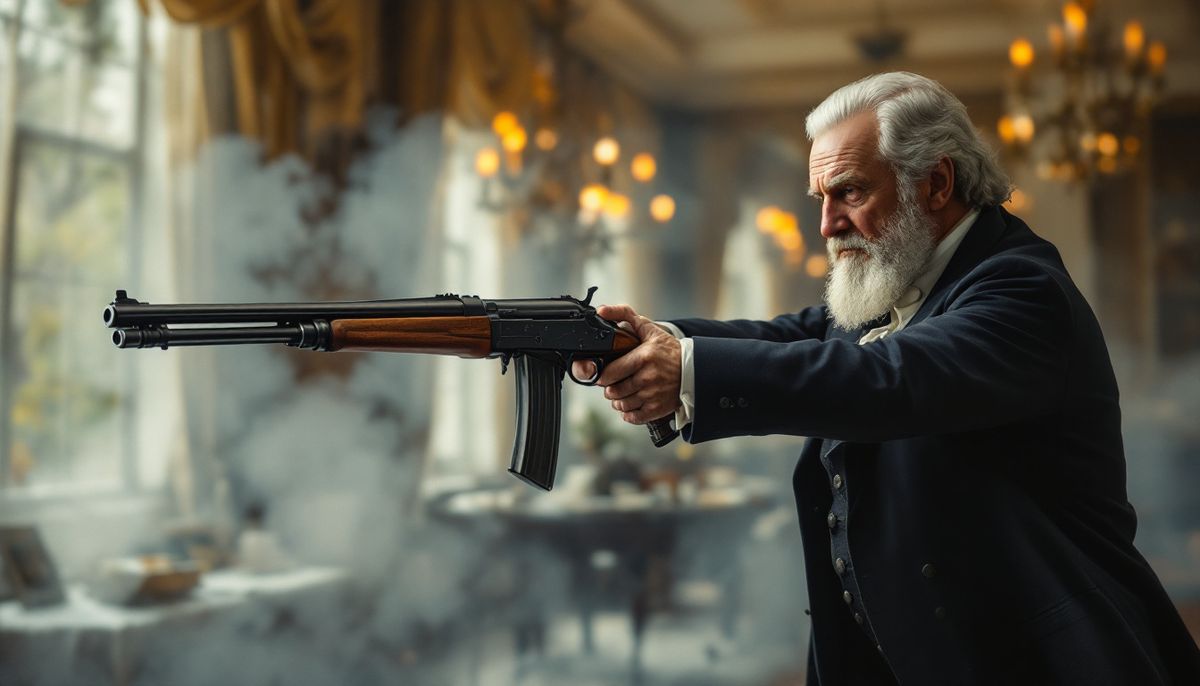
At dawn on July 11, 1804 — 222 years ago today — two rowboats slipped across the Hudson River from Manhattan to a narrow ledge beneath the cliffs of Weehawken, New Jersey. In one boat sat Aaron Burr, the sitting Vice President of the United States. In the other sat Alexander Hamilton, the first Secretary of the Treasury and the man whose face would one day grace the ten-dollar bill. They were coming to that lonely ledge for a reason: it could only be reached from the water, which made it the perfect place to do something illegal. They were coming to fight a duel.
The feud between them had been simmering for years. Hamilton had helped block Burr’s path to the presidency in the deadlocked election of 1800, then worked against him again when Burr ran for governor of New York in 1804. The breaking point came when a newspaper printed a letter claiming Hamilton had called Burr “a dangerous man” — and held an even “more despicable opinion” of him besides. Burr demanded an apology. Hamilton refused. Under the honor code of the day, that left pistols at ten paces.
On the ledge, the two men took their positions and fired. Hamilton’s ball sailed high, snapping a tree branch above and behind Burr’s head. Burr’s ball did not miss. It tore into Hamilton’s abdomen, fractured a rib, ripped through his liver and diaphragm, and lodged in his spine. The most brilliant financial mind of the founding generation was rowed back across the Hudson to Greenwich Village, where he died the next afternoon with his family around him.
Here’s the part they don’t teach you in school: Burr got away with it. He was indicted for murder in both New York and New Jersey — and never tried in either state. Instead, the Vice President of the United States calmly returned to Washington and resumed his constitutional duty of presiding over the Senate, where months later he oversaw the impeachment trial of a Supreme Court justice. A man wanted for murder in two states sat in judgment at the highest trial in the land. His political career, however, was as dead as Hamilton. The duel that was supposed to save Burr’s honor destroyed it forever.
Also On This Day…
1767 — A President Is Born to a Future President On July 11, 1767, in a farmhouse in Braintree, Massachusetts, Abigail Adams gave birth to a boy she and John named John Quincy, after her grandfather — the same man the town of Quincy is named for. That baby would grow up to become the sixth President of the United States, the only son of a president to win the office until George W. Bush. And he never stopped serving: after leaving the White House, John Quincy Adams did something no other ex-president has matched, winning election to the House of Representatives and battling against slavery there for 17 years until he collapsed at his desk in the Capitol in 1848 — still on the job at age 80.
1798 — The Marines Are Back, By Order of President Adams Exactly 31 years later — on his son John Quincy’s birthday — President John Adams signed “An Act for Establishing and Organizing a Marine Corps.” The Continental Marines had been disbanded after the Revolution, but with an undeclared naval war against France heating up, America needed her sea soldiers again. The next day Adams appointed William Ward Burrows the Corps’ first Major Commandant, and the Marines have stood watch ever since. The Corps still celebrates its birthday on November 10, 1775, when the first Continental Marines were raised — but it was the stroke of Adams’ pen on July 11, 1798 that made the United States Marine Corps permanent.
1955 — “In God We Trust” Goes on Every Dollar The words had appeared on most American coins since the Civil War, when Treasury Secretary Salmon P. Chase first ordered them struck in metal. But it took nearly a century more for them to reach your wallet’s paper money. On July 11, 1955, President Dwight D. Eisenhower signed a bill — introduced by Congressman Charles Bennett of Florida and passed with bipartisan support — requiring “In God We Trust” on all U.S. currency, coin and paper alike. The first dollar bills carrying the motto rolled out in 1957, one year after Congress made those four words the official national motto of the United States.
1960 — A Small-Town Alabama Story Conquers the World On July 11, 1960, a 34-year-old first-time novelist named Nelle Harper Lee — she dropped the “Nelle” so nobody would call her “Nellie” — published To Kill a Mockingbird. Her publisher had bought the original manuscript for $1,000, then asked her to spend two years rewriting it around the childhood scenes. The gamble paid off beyond imagination: half a million copies sold in the first year, the Pulitzer Prize in 1961, an Oscar for Gregory Peck’s Atticus Finch in 1962, and more than 40 million copies sold worldwide. And then the famously private Lee simply stopped — she wouldn’t publish another book for 55 years.
1979 — The Day the Sky Fell on Australia America’s first space station came home on July 11, 1979 — just not where anyone planned. Skylab, the 77-ton orbital laboratory, was supposed to break up over the ocean south of Africa, but a 4 percent calculation error scattered flaming debris across the Australian Outback near the town of Esperance. Nobody was hurt, and 17-year-old Stan Thornton got rich quick: he grabbed charred fragments off his family’s property, hopped a flight to California, and collected a $10,000 prize from the San Francisco Examiner for delivering the first authentic piece of Skylab. The town of Esperance, meanwhile, cheekily fined NASA $400 for littering. The ticket went unpaid for 30 years — until a California radio host raised the money and settled America’s tab in 2009.
From a sitting Vice President firing the shot that killed a Founding Father, to a president’s pen bringing back the Marines on his own son’s birthday, to a space station raining down on the far side of the world — July 11th is a reminder that history rarely goes according to plan. The duel meant to restore a reputation destroyed one, and the spacecraft aimed at an empty ocean found a small town instead. Aim carefully.
