
July 21st
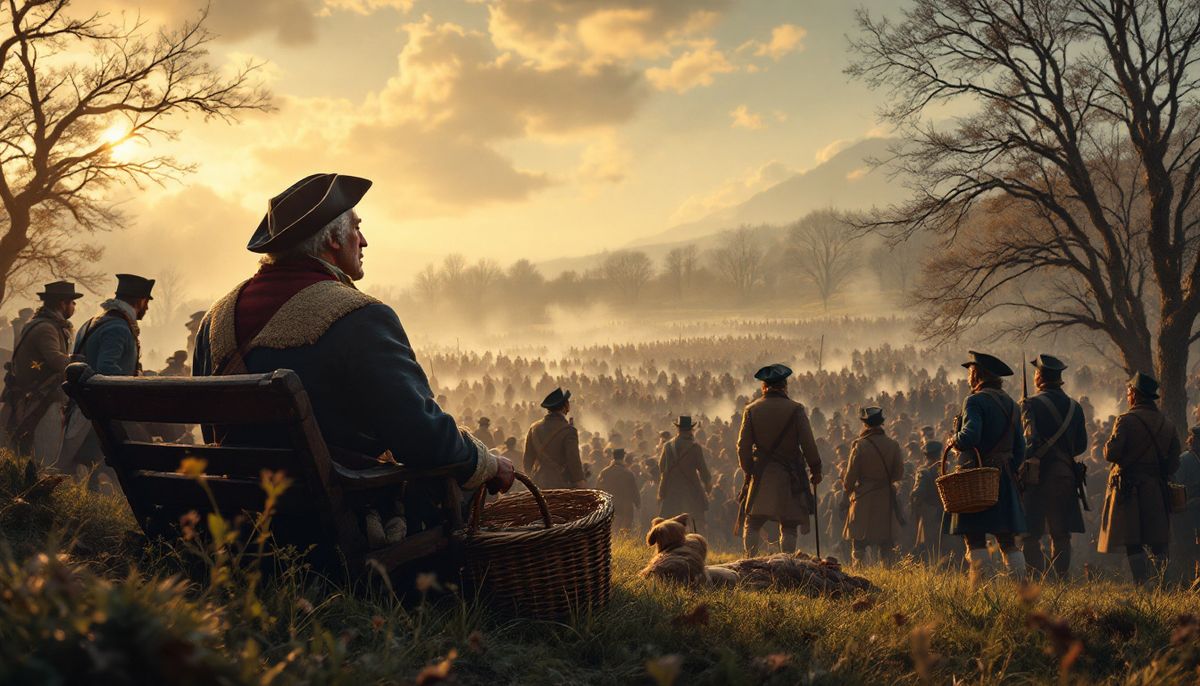
On the morning of July 21, 1861, hundreds of Washington’s finest citizens loaded up carriages with picnic baskets, champagne, and opera glasses and rode out toward Manassas Junction, Virginia — about 25 miles from the capital — to watch a battle. Congressmen and senators were among them. The war between North and South was three months old, hardly a shot had been fired in earnest, and nearly everyone on both sides believed one good fight would settle the whole thing. So they came to see the show.
For most of the day, the show looked like a Union victory. General Irvin McDowell’s green troops pushed the Confederates back across the fields near a creek called Bull Run. But on a rise called Henry House Hill, a Virginia brigade under Thomas J. Jackson refused to break. Confederate General Barnard Bee, rallying his men, shouted that Jackson was standing “like a stone wall” — and one of the most famous nicknames in American military history was born on the spot.
Then it all came apart. Fresh Confederate troops arrived — some rushed to the field by railroad, one of the first times in history trains had been used to swing a battle — and the exhausted Union line collapsed. Retreat turned to panic. Fleeing soldiers slammed into the carriages of the picnicking spectators clogging the road back to Washington, and the whole tangled mass of congressmen, cavalry horses, and overturned buggies stampeded north in what newspapers mockingly called “the Great Skedaddle.” One New York congressman, Alfred Ely, wandered too close to the action and was captured — he spent nearly six months in a Confederate prison.
The picnic was over in every sense. Nearly 900 men lay dead on the first great battlefield of the Civil War, and both sides finally understood this would not be a ninety-day lark. Within days, Lincoln signed legislation to raise hundreds of thousands of additional troops for the long, terrible war that had just announced itself — in full view of an audience that came expecting entertainment.
Also On This Day…
356 BC — The Man Who Burned a Wonder to Be Remembered By tradition, on the night of July 21, 356 BC, a man named Herostratus set fire to the Temple of Artemis at Ephesus — one of the Seven Wonders of the Ancient World — for one stated reason: so his name would live forever. The furious Ephesians executed him and passed a law making it a crime even to speak his name. It didn’t work; a historian wrote it down anyway, which is why you’re reading it now. Legend adds one eerie detail: Alexander the Great was said to have been born that very night, and the ancients joked that Artemis was too busy attending his birth to save her own temple.
1873 — Jesse James Derails His First Train On July 21, 1873, the James-Younger Gang pulled off its first train robbery, near Adair, Iowa. The outlaws loosened a rail on the Rock Island line and yanked it out of place as the train approached, toppling the locomotive into the ditch and killing engineer John Rafferty. They’d been tipped that a huge gold shipment was aboard — but the gold had been delayed, and the masked gang rode off with only about $3,000 from the safe and the passengers’ pockets. Botched haul or not, the Adair job pushed Jesse James from Missouri stickup man to national legend, and railroads across the West suddenly had a brand-new nightmare.
1899 — A Doctor’s Son Named Ernest Arrives in Oak Park Ernest Hemingway was born on July 21, 1899, in Oak Park, Illinois, the son of a country doctor and a music teacher. Before the novels came a cub reporter’s job at the Kansas City Star, where the paper’s style sheet ordered: “Use short sentences. Use short first paragraphs. Use vigorous English.” Hemingway later called those the best rules he ever learned for writing. Add a wound on an Italian battlefield at 19, a Pulitzer for The Old Man and the Sea, and a Nobel Prize in 1954, and that Oak Park birthday becomes one of the most consequential in American literature.
1954 — A Line Is Drawn Across Vietnam On July 21, 1954, negotiators in Geneva concluded the accords that ended France’s long war in Indochina — and split Vietnam in two at the 17th parallel. The division was supposed to be temporary, a pause before nationwide elections planned for 1956. Those elections never happened. The “temporary” line hardened into a border between North and South, and the arrangement signed that day in Switzerland quietly set the stage for the war that would consume America a decade later.
2011 — The Wheels Stop on the Shuttle Era Two weeks after Atlantis thundered off the pad in front of a million spectators, she came home. In the pre-dawn darkness of July 21, 2011, the shuttle glided out of the black sky and touched down at Kennedy Space Center, ending mission STS-135 — the 135th and final flight of the Space Shuttle program. “Mission complete, Houston,” radioed commander Chris Ferguson after wheels stop. Thirty years, 355 astronauts, the Hubble telescope, and a space station built piece by piece — and it all ended quietly on a Florida runway before sunrise.
From spectators fleeing a battle they came to watch with picnic baskets, to a man burning a Wonder of the World just to be remembered, to a spaceplane rolling to its final stop in the dark — July 21st keeps proving that history rarely ends the way the audience expects.
