
July 23rd
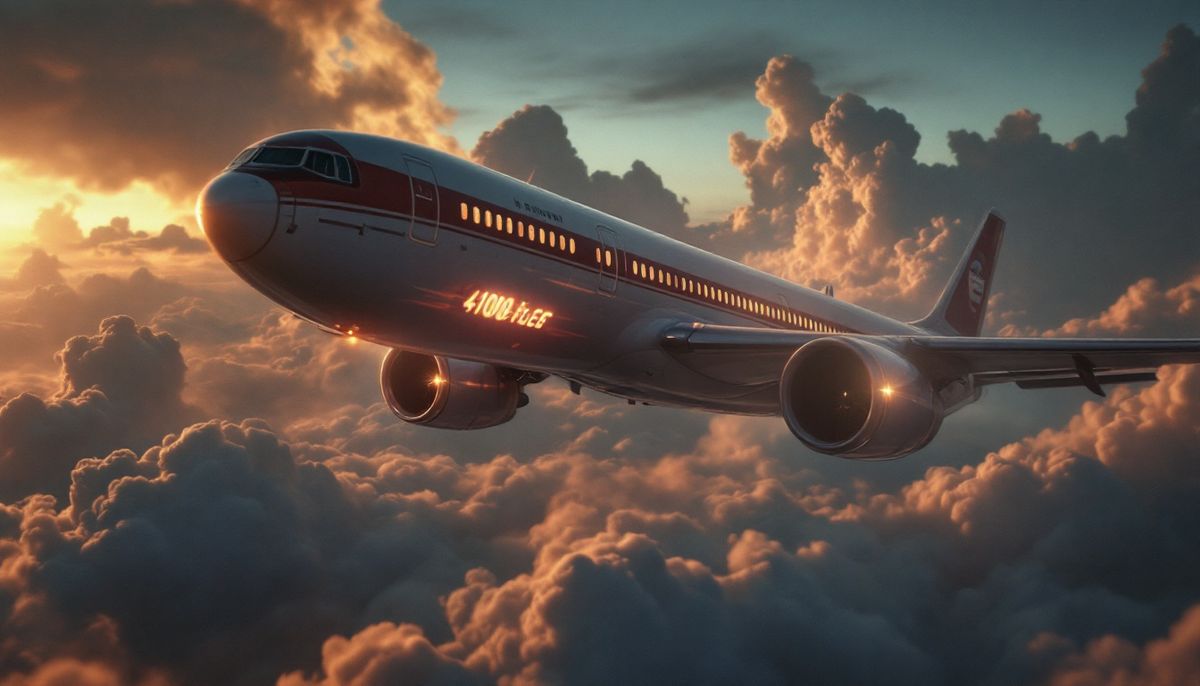
On the evening of July 23, 1983, Air Canada Flight 143 was cruising 41,000 feet over Ontario, bound for Edmonton with 61 passengers aboard, when a warning chime sounded in the cockpit. Then another. Then both engines went silent. The brand-new Boeing 767 — one of the most advanced jetliners in the world — had run completely out of fuel, halfway to its destination. The cockpit screens went dark, and Captain Bob Pearson found himself flying a 132-ton glider.
The reason was almost absurd. Canada was in the middle of switching to the metric system, and the 767 was one of the first metric aircraft in the fleet. With the fuel gauges out of service that day, the ground crew calculated the fuel load by hand — in pounds instead of kilograms. Flight 143 had taken off with barely half the fuel everyone thought was on board.
What happened next is why pilots still study this flight. Pearson happened to be an experienced glider pilot, and First Officer Maurice Quintal happened to know of a decommissioned Air Force runway within gliding range — a base at Gimli, Manitoba, where he’d once served. What neither of them knew was that Gimli’s runway had been converted into a drag strip, and that July 23 was race day. Families were camped along the pavement as a silent, engineless airliner dropped out of the sky toward them.
Coming in too high and too fast with no engines and no way to go around, Pearson did something almost unheard of in a commercial jet: he threw the 767 into a sideslip — a glider maneuver — to bleed off altitude, then flared onto the old runway. The nose gear collapsed, the plane ground to a smoking halt, and every single person on board walked away. The kids at the drag races got the show of a lifetime, and aviation got one of its greatest legends: the Gimli Glider.
Also On This Day…
1962 — The Broadcast We Promised You Two weeks ago we told you about the launch of Telstar, the first TV satellite — and teased the broadcast that changed everything. Here it is. On July 23, 1962, Walter Cronkite and Chet Huntley anchored the first formal live transatlantic television program, beamed through Telstar to some 100 million viewers in Europe. The show opened with a split screen of the Statue of Liberty and the Eiffel Tower, and when President Kennedy’s press conference wasn’t ready, producers cut to a Phillies-Cubs game at Wrigley Field — making a routine day at the ballpark the first live baseball Europe ever saw. Europe answered with its own tour, from Big Ben to the Sistine Chapel. Live global television was born that night.
1829 — The Machine That Would Replace the Pen On July 23, 1829, a Michigan surveyor named William Austin Burt received a patent — signed by President Andrew Jackson himself — for a wooden contraption he called the “typographer.” It was slow, clunky, and slower than handwriting, but it was America’s first patent for a typewriting machine, the great-granddaddy of every typewriter and keyboard that followed. The original patent document burned in the great Patent Office fire of 1836, but Burt’s idea proved fireproof: within a century, the descendants of his typographer sat on every desk in America.
1885 — Grant Wins His Last Race by Four Days Ulysses S. Grant, the general who saved the Union and served two terms as president, died of throat cancer on July 23, 1885 — just days after finishing the final pages of his memoirs. Broke and swindled in his final years, Grant had raced death itself to finish the book and leave his family something. His friend Mark Twain published it, and the gamble paid off beyond imagination: Julia Grant received royalty checks totaling around $450,000 — a fortune at the time — and Grant’s memoirs are still considered among the finest ever written by an American president.
1995 — Two Strangers Find the Same Comet On the night of July 23, 1995, amateur astronomer Thomas Bopp was stargazing with friends in the Arizona desert while professional astronomer Alan Hale watched the sky from his driveway in New Mexico. Neither knew the other existed — but within minutes of each other, both spotted the same faint smudge near a star cluster. It turned out to be a monster comet, discovered while it was still beyond Jupiter’s orbit. Two years later, Comet Hale-Bopp blazed across the sky for a record 18 months, becoming perhaps the most-watched comet in human history.
1996 — One Vault on One Good Ankle In the team gymnastics final at the Atlanta Olympics on July 23, 1996, American Kerri Strug landed her first vault badly and felt her ankle give way. With the gold medal seemingly hanging in the balance and the Georgia Dome holding its breath, the 4-foot-9 gymnast limped back down the runway and did it again — sticking the landing on one foot before collapsing in pain. Her 9.712 sealed the first team gold in U.S. women’s gymnastics history, and the image of coach Bela Karolyi carrying her to the podium became one of the most famous in Olympic history.
From a silent jetliner gliding onto a drag strip, to a dying general finishing his book, to a gymnast landing on one foot — July 23rd belongs to people who were out of fuel, out of time, or out of chances… and stuck the landing anyway.
