
July 31st
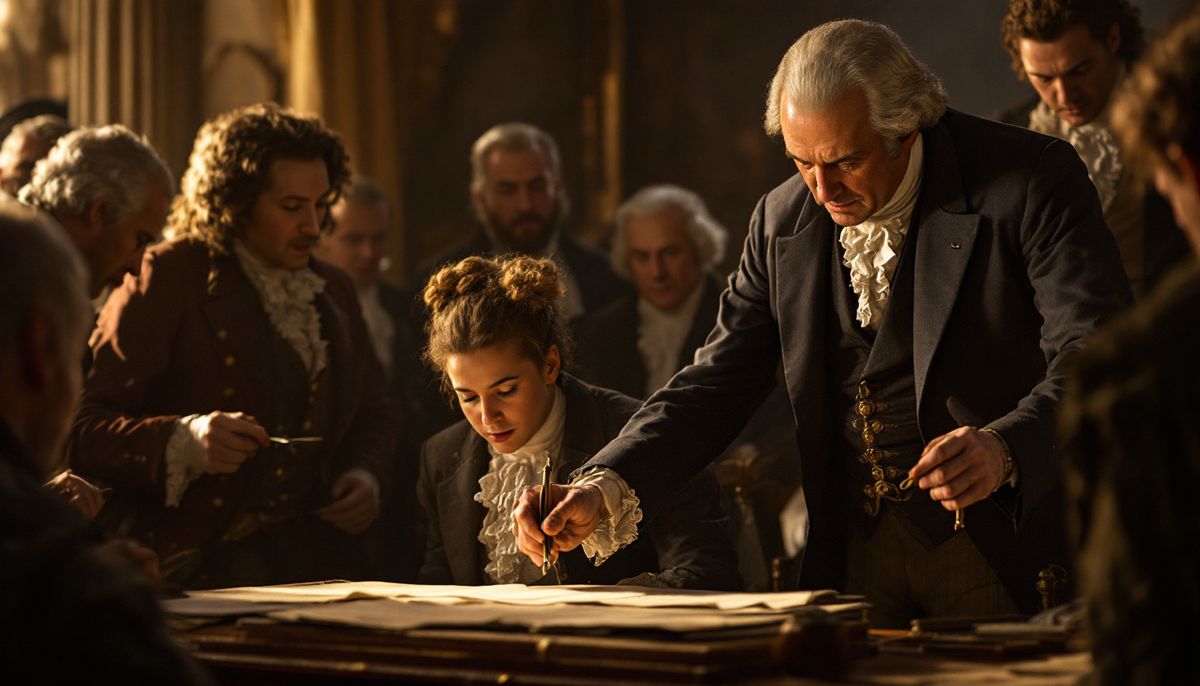
On July 31, 1790, a document crossed George Washington’s desk unlike anything a president had ever signed before. It was America’s very first patent — Patent No. 1 — and it went to a man named Samuel Hopkins of Philadelphia for an improved process of making potash, the humble industrial chemical boiled down from wood ashes and used in soap, glass, and gunpowder. It doesn’t sound glamorous, but potash was one of young America’s most valuable exports, and Hopkins had figured out how to make it better and faster. The brand-new federal government decided that idea was worth protecting for fourteen years.
What’s remarkable is who had to approve it. Under the Patent Act of 1790, every single application was reviewed by a board nicknamed the “Commissioners for the Promotion of Useful Arts” — and its members were Secretary of State Thomas Jefferson, the Secretary of War, and the Attorney General. That’s right: America’s first patent examiner was Thomas Jefferson himself, an obsessive inventor who took the job seriously enough to personally scrutinize the science. Hopkins’ patent bears the signatures of Washington, Jefferson, and Attorney General Edmund Randolph. Only two more patents made it through that gauntlet in all of 1790.
Then, in 1836, disaster nearly erased the whole story. A fire tore through the U.S. Patent Office, destroying the records of roughly 10,000 patents issued in the nation’s first five decades. Because the government had never numbered them, the burned patents were reconstructed afterward only when copies could be recovered from inventors and courts — and rechristened as “X-patents.” Fewer than 3,000 were ever recovered. Hopkins’ potash patent became X-000001, the first patent of the first patent system of its kind in the world.
And here’s the ending Hollywood couldn’t script: the original document — the actual parchment Washington signed — survived the fire for the simplest of reasons. It was the inventor’s own copy, safely in private hands, and it still exists today in the collections of the Chicago History Museum. More than 11 million U.S. patents later, the whole system still traces back to one sheet of parchment about boiling wood ashes.
Also On This Day…
1928 — The MGM Lion Roars for the First Time On July 31, 1928, moviegoers at the premiere of White Shadows in the South Seas — MGM’s first film released with a synchronized soundtrack — heard something brand new before the picture even started: Leo the Lion actually roared. The lion on screen that night was named Jackie, and he was already a legend among his handlers, nicknamed “Leo the Lucky” for surviving two train wrecks and even a plane crash in the Arizona wilderness. His recorded roar became one of the most recognizable sounds in entertainment history — an opening note Hollywood has kept for nearly a century.
1930 — A Sinister Laugh Debuts on the Radio On July 31, 1930, CBS listeners tuning in to the Detective Story Hour met a mysterious narrator with a chilling laugh who called himself The Shadow. He was only supposed to sell magazines — the show existed to promote a pulp publisher’s detective stories — but the creepy host stole the whole program. Fans mobbed newsstands asking for “that Shadow magazine,” which didn’t exist, so the publisher rushed one into print. The narrator became the hero of his own show, later voiced by a 22-year-old Orson Welles, and “Who knows what evil lurks in the hearts of men?” became one of the most famous lines in radio history.
1954 — Two Men Stand on Top of the Savage Mountain Everest fell in 1953. One year later, on July 31, 1954, Italian climbers Achille Compagnoni and Lino Lacedelli did something many mountaineers consider harder: they reached the summit of K2, the world’s second-highest peak and by far its meaner one. Climbers call K2 the “Savage Mountain” for its brutal weather and unforgiving slopes — to this day it has claimed roughly one life for every handful of successful summits. The two Italians pushed the final stretch even after their oxygen ran short, planted their flag at 28,251 feet, and gave Italy one of the great triumphs in climbing history.
1715 — The Treasure Fleet Goes Down Off Florida The oldest story of the day is the one still washing ashore. On July 31, 1715, a Spanish fleet of eleven ships — heavy with gold and silver bound from Havana to Spain — sailed straight into a hurricane off Florida’s east coast. Every Spanish ship was destroyed and roughly a thousand sailors drowned, scattering one of the richest cargoes ever lost at sea along the shallows near present-day Vero Beach and Sebastian. Salvagers, and then actual pirates, fought over the wrecks for years — but they never got it all. Three centuries later, that stretch of shoreline is officially called the Treasure Coast, and after big storms, beachcombers still find Spanish gold and silver coins in the sand. In 2015 — 300 years to the week after the sinking — one family of divers recovered $4.5 million in gold coins from the wreck sites in shallow water just off the beach.
From a sheet of parchment signed by Washington himself, to a lion’s first roar, to Spanish gold still tumbling in the Florida surf — July 31st is proof that some things refuse to stay buried: good ideas, great sounds, and sunken treasure.
