
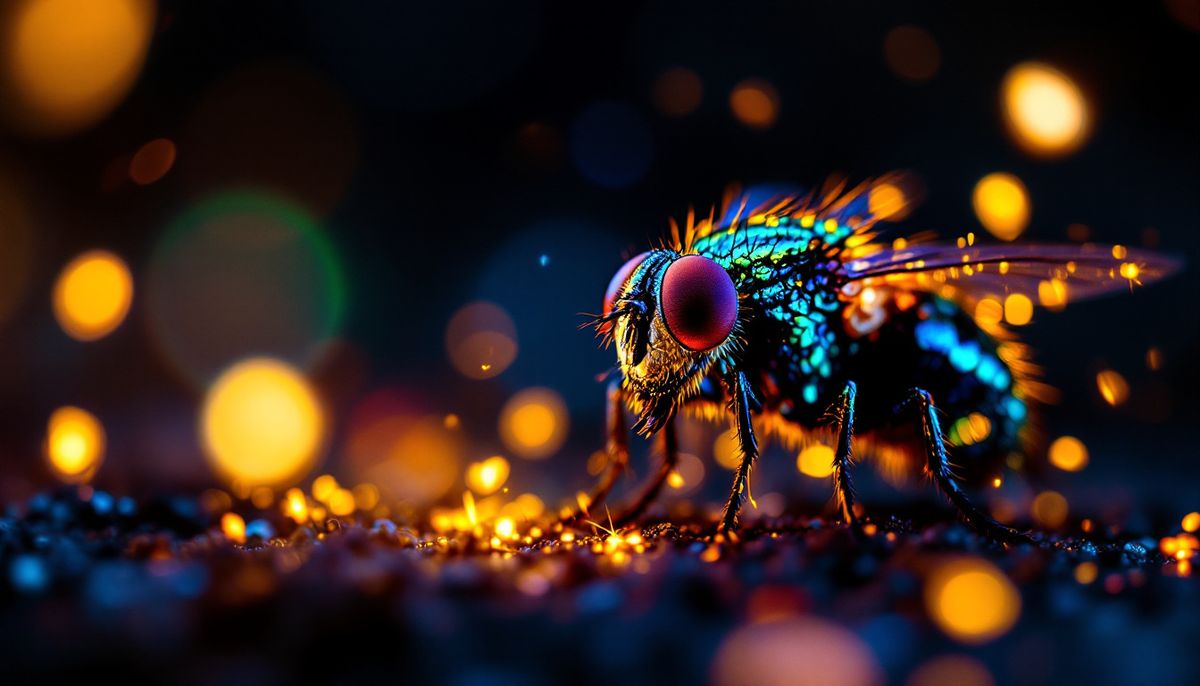
Every July, I sit out on the porch and watch the backyard fill up with those little blinking lights, and I never gave them a second thought beyond “pretty.” Then I started reading, and good grief, these things are running a secret operation out there. The glow on your lawn is a coded language, a chemistry trick that puts our light bulbs to shame, and in some cases, a flat-out murder plot. Before the next warm night gets away from you, here are five true things about fireflies that completely changed how I look at a summer evening.
Did you know fireflies aren’t flies at all? They’re beetles.
This one undid me, because the name is right there lying to your face. A firefly is not a fly. Neither is its other nickname, the lightning bug, accurate, since it’s not a bug in the technical sense either. Fireflies are beetles, members of the family Lampyridae, which comes from a Greek root meaning “shining fire.” So the next time someone calls them lightning bugs or fireflies, you can gently point out that the correct term is closer to “glowing beetle.” There are more than 2,000 species of them around the world, and despite the wings and the flying, every single one is a beetle through and through. I’ll never trust an insect’s common name again.
Did you know firefly light is “cold light” that’s nearly 100 percent efficient?
Here’s the part that genuinely embarrassed our entire light-bulb industry. When a firefly glows, it’s producing what scientists call “cold light,” meaning almost none of the energy is wasted as heat. The glow comes from a chemical reaction in the insect’s abdomen involving a compound called luciferin, and that reaction is nearly 100 percent efficient. Compare that to a standard incandescent bulb, which throws off less than 10 percent of its energy as light and wastes the rest as heat, or even an LED, which lands somewhere around 40 to 50 percent. A tiny beetle on your lawn is out-engineering Edison. Researchers have actually studied firefly anatomy to design better, more efficient LEDs. That little blink is basically the gold standard for turning energy into light.
Did you know each firefly species has its own unique flash pattern, like a secret password?
Those flashes aren’t random twinkling. They’re a language, and every species speaks a different dialect. Each kind of firefly has its own signature flash pattern that it uses to find a mate, varying in the duration of the flash, the timing between flashes, the number of pulses, the color, even the height and direction of the flight. The males cruise around flashing their species-specific “call,” and the females, perched on the grass or a leaf, answer back with their own precisely timed flash. It’s the insect version of a password and counter-password, making sure a firefly only courts its own kind. So that field of blinking lights isn’t a party. It’s hundreds of separate conversations happening in code all at once.
Did you know some female fireflies mimic other species’ flashes to lure males in and eat them?
This is where the romance curdles into something out of a horror movie. Females of the genus Photuris have earned the nickname “femme fatale” fireflies, and they have earned it. Knowing that each species answers a specific flash pattern, these females learn to imitate the answering signal of females from a completely different genus, Photinus. A hopeful Photinus male sees what he thinks is a willing mate flashing back at him, flies in close expecting romance, and instead gets grabbed and eaten. Some of these femme fatales can mimic the signals of up to three different firefly species. And it’s not just for a meal, by devouring the males, they steal defensive chemicals called lucibufagins that they can’t make themselves, which help protect them from predators like spiders. Brutal, brilliant, and happening in backyards right now.
Did you know baby fireflies glow too, and some species flash in perfect unison?
Two for the price of one here, because both stunned me. First, fireflies glow long before they can fly. The larvae of all firefly species are bioluminescent, giving off a steady glow from the ground, which is exactly why they’re sometimes called “glowworms.” Some species even lay eggs that glow. Second, there’s the synchronized flashing. In parts of Southeast Asia, and at a famous few spots in the United States like the Great Smoky Mountains, entire populations of fireflies flash in near-perfect unison, blinking on and off together like someone’s flipping a giant switch. Thousands of beetles, no conductor, all lighting up and going dark at the same instant. People travel across the world to witness it, and once you know it’s happening, an ordinary July evening starts to feel a lot more magical.
Send this to the friend who still calls them lightning bugs… they have no idea they’ve been watching beetles run a secret light-language murder mystery this whole time.
