
July 1st
On the morning of July 1, 1863, the little crossroads town of Gettysburg, Pennsylvania, was an unlikely place for the largest battle ever fought in the Western Hemisphere. It was a sleepy farming community of barely 2,400 souls, its dirt roads radiating out like spokes toward Chambersburg, Harrisburg, and Baltimore. By nightfall, those same roads would be clogged with the wounded, the dying, and the dead, and the name Gettysburg would be carved forever into the heart of the nation.
It began almost by accident. Robert E. Lee had marched his Army of Northern Virginia north, deep into Union territory, hoping to win a victory on enemy soil that might finally break the North’s will to fight. His soldiers, it was said, had come to town looking for shoes. Instead, just after seven-thirty in the morning, a Confederate column ran headlong into the dismounted cavalry of Union General John Buford, whose troopers had taken the high ground west of town and were determined to hold it. A single shot rang out along the Chambersburg Turnpike, and the bloodiest three days in American history had begun.
Buford’s outnumbered horsemen fought a desperate delaying action, buying precious time with their lives until Union infantry could rush forward. The fighting swelled through the morning and into the afternoon, savage and confused, surging across ridges and through fields of ripening wheat. General John Reynolds, one of the finest officers in the Union army, galloped to the front to steady his men and was shot dead from his saddle within minutes of arriving. By late afternoon the weight of Confederate numbers told, and the Union line buckled and broke, the blue-coated soldiers streaming back through the streets of Gettysburg in a chaotic retreat.
But here the story turned. The retreating Federals did not scatter and run. They rallied on the high ground south of town — Cemetery Hill, Culp’s Hill, and the long ridge that ran below them — and dug in. Lee had won the first day, but his exhausted enemy now held the better ground, the higher ground, the ground that over the next two days would shatter charge after Confederate charge and turn the tide of the entire war.
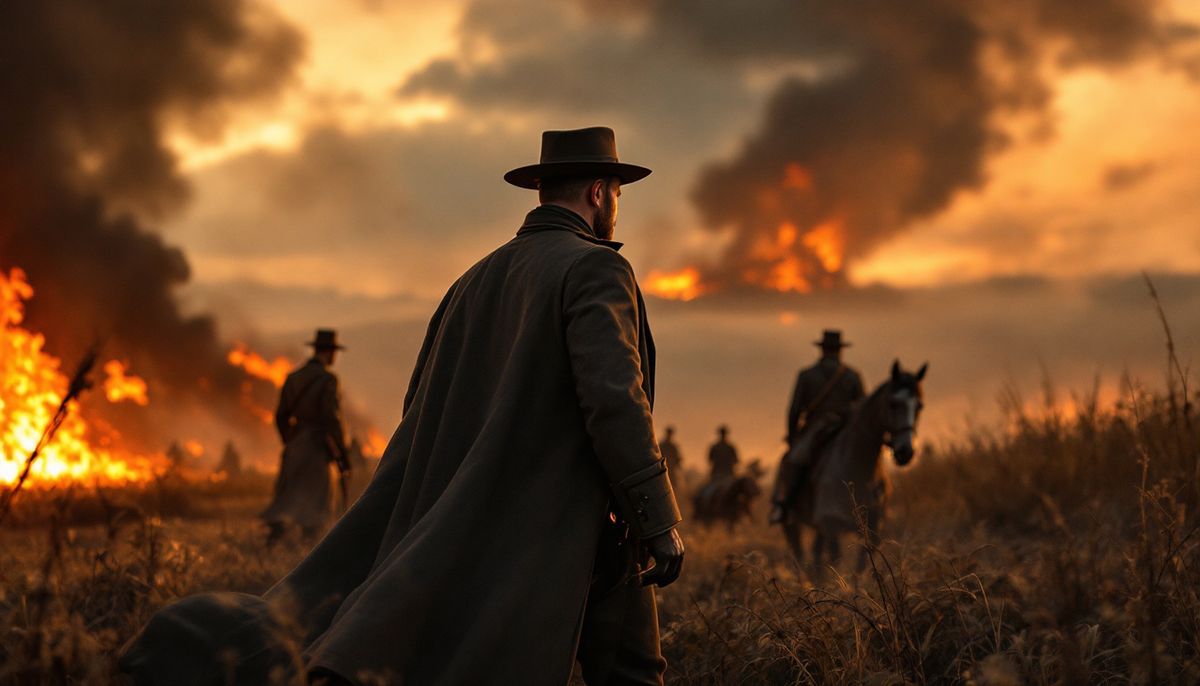
When the smoke finally cleared three days later, more than 50,000 Americans had been killed, wounded, or gone missing. Gettysburg marked the high-water mark of the Confederacy — the farthest north Lee’s army would ever reach, and the beginning of the long road to Appomattox. And it all started on a quiet July morning, when a single shot fired by a cavalryman on a ridge outside a sleepy Pennsylvania town set the fields ablaze.
Also On This Day…
1867 — A New Nation Is Born to the North On July 1, 1867, church bells pealed across a vast new country as the British North America Act took effect, uniting the provinces of Canada, Nova Scotia, and New Brunswick into a single self-governing federation: the Dominion of Canada. The day was christened Dominion Day, and from coast to coast, bonfires blazed, cannons thundered, and crowds gathered to celebrate the birth of a nation. More than a century later, in 1982, the holiday would be renamed Canada Day — but the date never changed. Every July 1, Canadians still mark the moment their country came into being on that bell-ringing summer morning.
1966 — A Promise Kept to America’s Elders On July 1, 1966, the doors of America’s hospitals opened to a new kind of patient. After decades of political battles, Medicare officially went into effect, offering government-backed health coverage to citizens aged 65 and older. More than 19 million older Americans had already signed up, and on that first day, men and women who had spent their lives unable to afford a doctor’s care could finally walk in and be seen. It was one of the most sweeping social programs in the nation’s history — and for millions of retirees, it transformed old age from a season of fear into one of dignity.
1997 — An Empire Lets Go At the stroke of midnight on July 1, 1997, the British flag came down over Hong Kong for the last time, ending 156 years of colonial rule. In a glittering, rain-soaked ceremony broadcast to billions around the world, Britain formally handed the bustling territory back to China. Prince Charles, Prime Minister Tony Blair, and Chinese President Jiang Zemin looked on as the Union Jack was lowered and the flag of the People’s Republic rose in its place. With that quiet exchange of banners, one of the last great chapters of the British Empire came to a close, and Hong Kong began a new and uncertain life as a Special Administrative Region of China.
From a single shot on a Pennsylvania ridge to the lowering of a flag over Hong Kong harbor, July 1st has a way of marking the turning points — the days when old worlds give way and new ones are born. History rarely announces itself in advance. More often it arrives, like it did at Gettysburg, on an ordinary summer morning that nobody expected to remember.
