July 13th
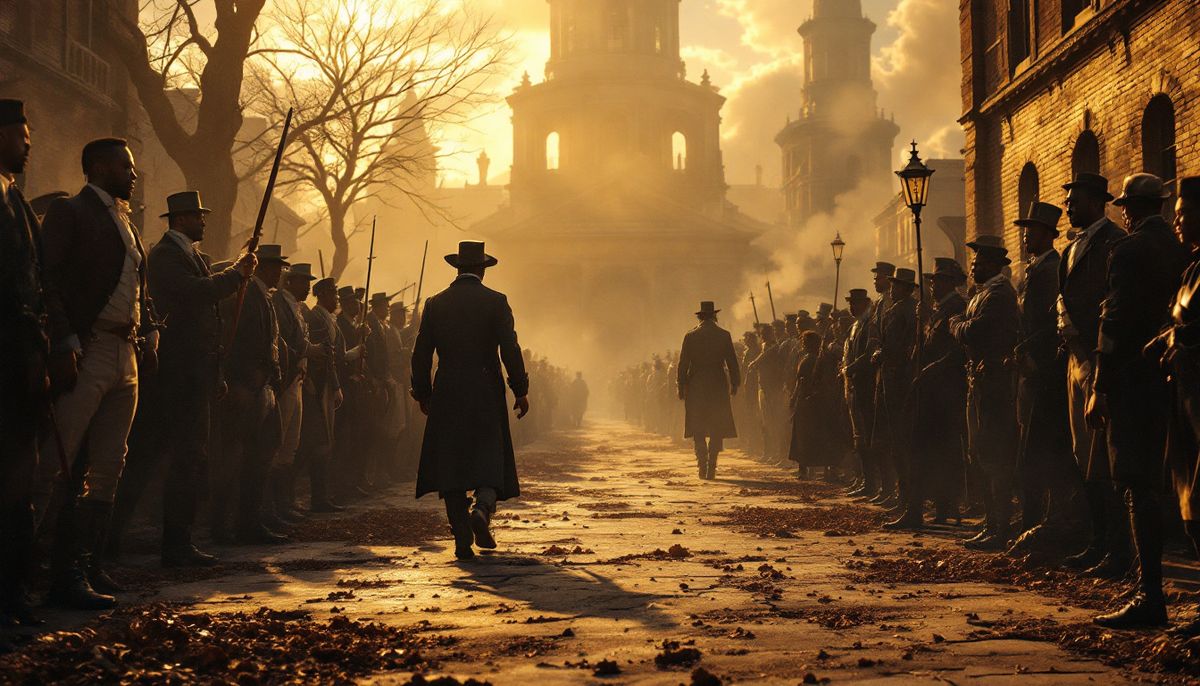
In the summer of 1787, America was running on a government that barely worked. The Constitutional Convention was locked away in Philadelphia trying to invent a new one — but the old Confederation Congress, meeting up in New York, had one great act left in it. On July 13, 1787, it passed the Northwest Ordinance, the law that decided what kind of country America would become as it grew. The question on the table was enormous: when a new nation expands, does it plant colonies — or create equals?
The Ordinance answered with something no empire in history had tried. The vast Northwest Territory — the land that would become Ohio, Indiana, Illinois, Michigan, Wisconsin, and part of Minnesota — would not be ruled from the capital like conquered ground. Instead, it would be carved into future states, and each one would enter the Union “on an equal footing with the original States, in all respects whatever.” America would not have colonies. It would have new Americans.
And Congress wrote a bill of rights into the deal — years before the Constitution had one. The very first article guaranteed that no peaceful person in the territory would ever be “molested on account of his mode of worship or religious sentiments.” Another article declared that “religion, morality, and knowledge, being necessary to good government and the happiness of mankind, schools and the means of education shall forever be encouraged” — a founding promise that free people need schoolhouses.
Then came the thunderclap. Article VI: “There shall be neither slavery nor involuntary servitude in the said territory.” With one sentence, the founding generation banned slavery across an area bigger than the original thirteen colonies’ settled land — the first time the national government ever drew a line against it. Every free farm in Ohio, every free town in Illinois, traced back to that July day. Abraham Lincoln himself would grow up on free soil that this law created — and would point back to it, again and again, as proof of what the founders really intended.
Also On This Day…
1863 — The Draft Lottery Ignites New York On July 13, 1863 — just ten days after the Union victory at Gettysburg — officials in Manhattan spun the lottery wheel for the second drawing of the Civil War draft, and the city exploded. Under the law, a drafted man could escape service by paying a $300 fee — more than a year’s wages for a laborer — and the fury of those who couldn’t pay turned into four days of rioting, the deadliest in American history. Mobs burned draft offices, fought police and soldiers, and turned their violence on the city’s Black residents, even burning the Colored Orphan Asylum. It took regiments fresh from Gettysburg marching into Manhattan to restore order — Union soldiers putting down an uprising in the Union’s largest city.
1969 — The Soviets Launch a Race to the Moon’s Finish Line On July 13, 1969, three days before Apollo 11 lifted off, the Soviet Union launched Luna 15 — an unmanned probe secretly designed to land on the Moon, scoop up soil, and rush it back to Earth before the American astronauts could return with theirs. For a week, the two spacecraft circled the Moon at the same time, and NASA even had astronaut Frank Borman contact Moscow to make sure the missions wouldn’t cross paths. It ended in the most American way possible: while Armstrong and Aldrin prepared to lift off from the Sea of Tranquility with 47 pounds of moon rocks, Luna 15 slammed into a lunar mountainside. The race to the Moon ended that week — and everyone knew who won.
1977 — The Night New York Went Dark At 8:34 p.m. on July 13, 1977, lightning struck a Con Edison substation on the Hudson — and within an hour, all of New York City went black. For 25 hours, in the middle of a brutal heat wave, the nation’s largest city ran on nothing but human nature. In some neighborhoods that meant chaos: more than 1,600 stores looted, over 1,000 fires, 3,700 arrests. But in others, ordinary New Yorkers directed traffic with flashlights, shopkeepers stood guard with neighbors at their side, and families slept on fire escapes sharing what was in the icebox. When the lights came back on the night of July 14, the city had seen both its worst instincts and its best — side by side, block by block.
1985 — Live Aid Rocks Two Continents at Once On July 13, 1985, the biggest concert in history opened at Wembley Stadium in London — and 89,000 more fans packed JFK Stadium in Philadelphia for the American half of the show. Live Aid ran over 16 hours across the two stages, beamed by satellite to an estimated 1.9 billion people in 150 nations — nearly 40 percent of every human being alive — to raise money for famine relief in Ethiopia. Queen delivered what many still call the greatest live set ever played, Phil Collins performed in London and then hopped the Concorde to play Philadelphia the same day, and a global TV audience proved that rock and roll could pass the collection plate around the entire planet.
2024 — Gunfire in Butler, Pennsylvania On July 13, 2024, at a campaign rally at the Butler Farm Show grounds in Pennsylvania, a gunman on a nearby rooftop opened fire on Donald Trump, and a bullet tore across his ear — inches from ending his life. Corey Comperatore, a 50-year-old former fire chief in the crowd, was killed shielding his wife and daughters from the gunfire; two other rally-goers were critically wounded before a Secret Service sniper killed the shooter. Bloodied, Trump rose, raised his fist, and told the crowd to “fight.” Whatever their politics, Americans everywhere understood how close the country had come to catastrophe that day — and remembered a firefighter who died the way he lived, protecting his family.
From a Congress banning slavery across half a continent, to two superpowers racing past each other at the Moon, to a dark city finding out what its neighbors were made of — July 13th keeps asking the same American question: when the moment comes, what kind of country do you choose to be?
