April 23rd
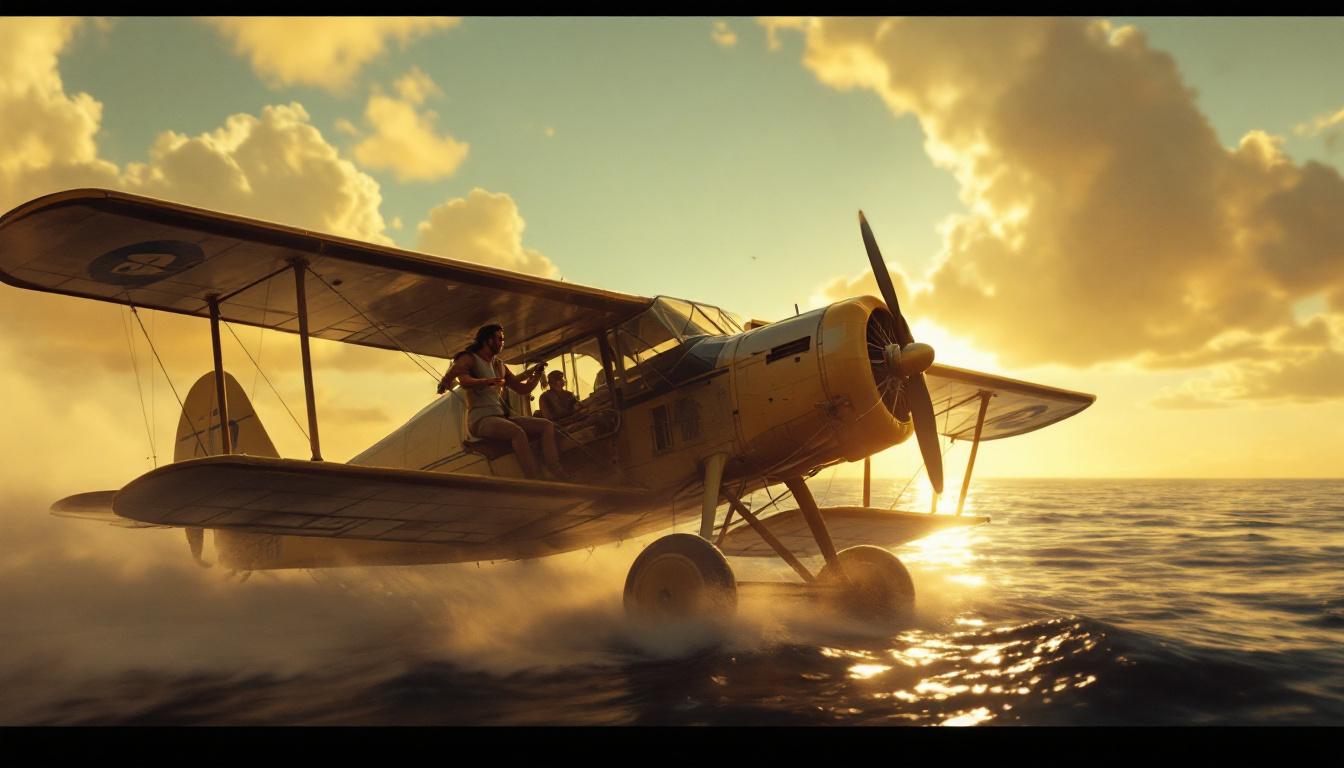
At 7:03 in the morning on April 23, 1988, a 30-year-old Olympic cyclist named Kanellos Kanellopoulos climbed into a pink-and-silver airplane on the island of Crete, wearing nothing but cycling shorts. He had cut holes in the shorts to save weight. The plane he sat in had no engine. It had pedals. And he was about to try to fly it across 71 miles of open ocean to the island of Santorini.
The aircraft was called Daedalus, named after the Greek myth of the man who built wings to escape from Crete. A team of MIT engineers had spent years designing it. It weighed less than the pilot. Kanellopoulos pedaled, and pedaled, and pedaled — for nearly four hours, mostly between 15 and 30 feet above the water, sipping a custom energy drink the MIT team had developed just for this flight. Below him, escort boats trailed across the brilliant blue of the Aegean. Above him, the same sky that had supposedly killed the original Daedalus’s son for flying too close to the sun.
He almost made it. Three hours, 54 minutes, and 71.5 miles in, with the black sand beaches of Santorini directly in front of him, a gust of wind caught the plane as he tried to turn into the breeze for landing. The graphite tail boom snapped. Daedalus crashed into the surf about 30 feet from shore. Kanellopoulos swam to the beach. He had just set two world records that have never been broken — the longest distance and longest duration of any human-powered flight in history. A man pedaled an airplane across the sea. On a random Saturday. In 1988.
Also On This Day…
1564 — William Shakespeare is (probably) born He was baptized on April 26, which means biographers had to back-calculate when he was actually born. They picked April 23 — partly because it’s St. George’s Day, and partly because it’s also the day he died, 52 years later. Whether or not he was actually born on this date, he definitely died on it, which is either the greatest poetic coincidence in literary history or a really committed editor.
1635 — America’s first public school opens Boston Latin School is founded — the oldest public school in what would become the United States. It is still operating today, 391 years later. Among its alumni: Benjamin Franklin (who dropped out), John Hancock, Samuel Adams, Cotton Mather, and Leonard Bernstein. Not a bad alumni page for a school that started before there was a country.
1778 — John Paul Jones invades England At 3 a.m., American naval commander John Paul Jones rowed two boats from his ship into the British port of Whitehaven and attacked. It was the only American assault on the British homeland during the Revolution — and the first successful invasion of England in over 700 years. The raid itself was small. The psychological damage was enormous. The British realized for the first time that their island was no longer untouchable, and that this scrappy new country across the Atlantic might actually be a problem.
1914 — Wrigley Field hosts its first game Originally called Weeghman Park, the Chicago ballpark would later become home to the Cubs and one of the most beloved stadiums in American sports. The ivy on the outfield wall wouldn’t be planted for another 23 years. Neither would the curse.
1954 — Hank Aaron hits his first major league home run He was 20 years old. He would go on to hit 754 more, eventually breaking Babe Ruth’s all-time record under conditions no athlete should have to endure. But on this day, it was just home run number one — a moment everyone present probably forgot about by the seventh inning. Nobody knew yet that they were watching the start of something historic.
1985 — New Coke is launched (and the country loses its mind) After spending $4 million and testing the new formula on 200,000 people, Coca-Cola announced it was changing its century-old recipe. In the blind taste tests, people preferred New Coke. In real life, people called the company 8,000 times a day to scream about it. Forty thousand complaint letters poured in. Original Coke was hoarded and resold at black-market prices. Seventy-nine days later, the old formula was back on shelves as “Coca-Cola Classic.” The lesson Coke learned the hard way: people don’t just drink soda — they drink the soda they grew up with.
2005 — The first video is uploaded to YouTube It was 18 seconds long, filmed at the San Diego Zoo, and titled “Me at the zoo.” The man in the video was YouTube co-founder Jawed Karim, standing in front of some elephants, observing that they had really, really long trunks. From that moment, an entire ecosystem of cat videos, conspiracy theories, makeup tutorials, and small children unboxing toys was born. Twenty-one years later, YouTube serves over 100 million hours of video a day. It all started with elephants.
Whether you wake up tomorrow inspired to invent something nobody asked for, change a recipe nobody wanted changed, or just pedal really hard across a body of water — April 23 has set the bar.
