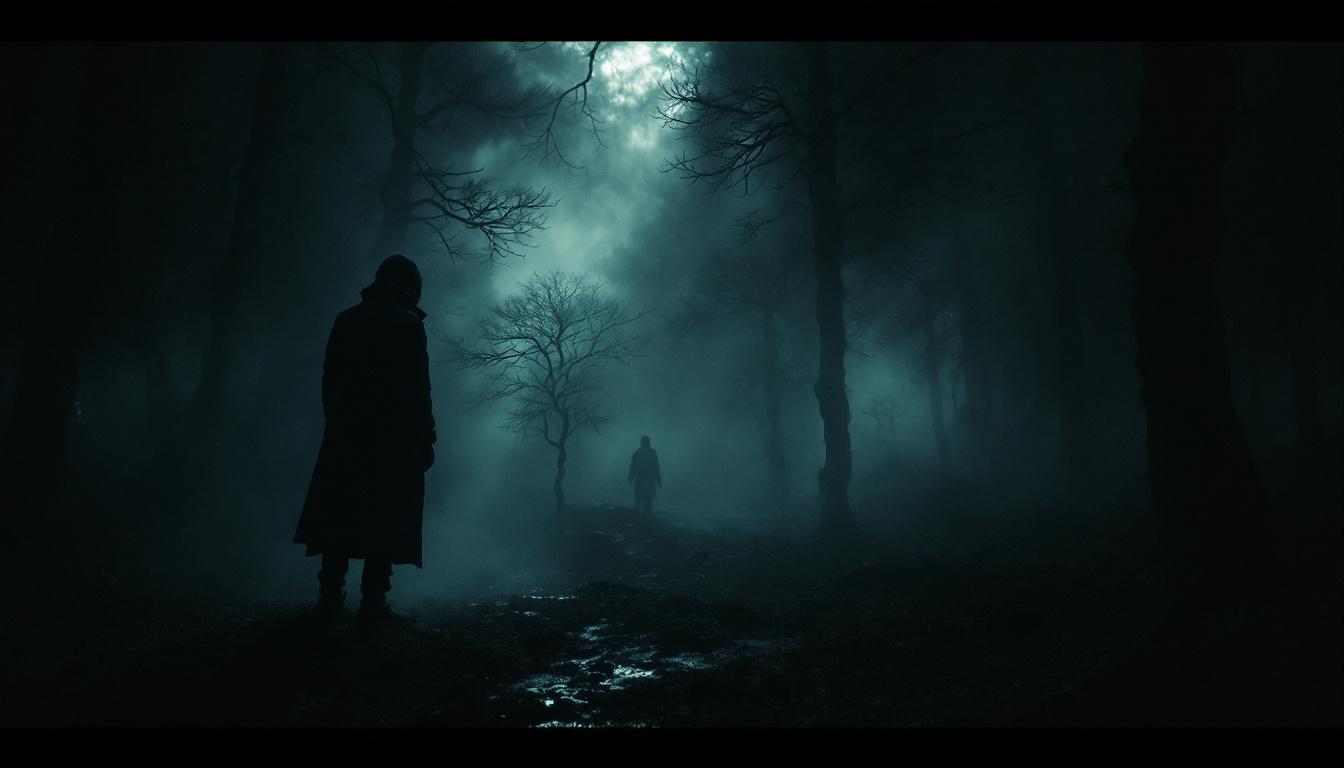
In 1974, a retired police officer sat down in a quiet room in Menlo Park, California, closed his eyes, and was handed nothing but a set of map coordinates. A latitude. A longitude. A dot in the middle of Siberia. He had never been to the Soviet Union. He had no photographs, no briefing, no idea what was supposed to be there. He was simply asked to describe what he saw.
He started talking about a crane. A huge one. Eight wheels, riding on rails, tall enough to pass over a man’s head. He sketched it. He described buildings going up around it, and a strange steel sphere being assembled piece by piece. And when the people running the experiment compared his drawing to the classified satellite imagery they were holding back from him, the crane was there. It matched. It matched well enough that the program got a formal Congressional investigation — not because it failed, but because somebody upstairs was worried it had succeeded too well, and that the real leak was a man on the inside feeding secrets to a psychic act.
Now sit down, because this one is going to take a minute.
The man was named Pat Price, and the dot in Siberia was a place called Semipalatinsk — in the files it was just URDF-3, Unidentified Research and Development Facility Number 3. Price was part of an experiment at the Stanford Research Institute, and that experiment was the seed of something that would run, under one code name or another, for the next two decades. It was called Gondola Wish, and then Grill Flame, and then Center Lane, and then Sun Streak, and finally — when the Defense Intelligence Agency folded all the pieces together in 1991 — it got the name most people know it by today. Star Gate. The United States government’s psychic spy program.
I want to be careful here, because this is the part where it sounds like a tabloid headline, and it isn’t one. This is not legend. This is not folklore. The program was real, it was funded, and the documents have a date on them. It began in earnest in 1977, run out of two unremarkable buildings — 2560 and 2561 — on the grounds of Fort Meade, Maryland, the same base that houses the National Security Agency. The unit was called Detachment G. Fifteen to twenty people worked there at its peak. And the building they worked in was, by every account, an old, leaky wooden barracks. America’s answer to Soviet mind-reading was a handful of soldiers and civilians sitting in a drafty shack, trying to see across the Iron Curtain with their eyes shut.
Why would the most powerful intelligence apparatus on Earth do that? Because in 1972, a report crossed the right desks claiming the Soviets were pouring serious money into ESP and psychokinesis research — and the one thing the Cold War could not tolerate was a gap. Missile gap, bomber gap, psychic gap, it didn’t matter. If Moscow was spending rubles on something, Washington was not going to be the side that shrugged it off. So the money started flowing. By the time it was over, the program had cost the taxpayer somewhere around $20 million.
The people they recruited were not carnival performers. The most famous of them, Joseph McMoneagle, was a retired Army intelligence officer — a serious man with a serious record. And the session that made his name reads like something out of a thriller, except that it actually happened and the proof eventually came down from orbit.
In 1979, U.S. intelligence knew the Soviets had built something enormous on the shore of the White Sea — at the time, the largest building under a single roof anywhere on the planet. Nobody knew what was inside it. On September 7, 1979, McMoneagle was given coordinates for that building and asked what was going on in there. He said they were building a submarine. A big one. He described slanted missile tubes and an unusual double-hull design, and he said it sat about a hundred yards from the water, with a strange amount of distance between where it was being built and where it could actually launch. He even ventured a rough timeline for when it would hit the water.
The people in the room had a problem with that. The building was a hundred yards from the shore, with no visible canal connecting the two. A submarine that couldn’t reach the sea wasn’t a submarine, it was an embarrassment. McMoneagle stuck to his story anyway. And in mid-January 1980, satellite photographs came back showing exactly what he had described — a new class of Soviet missile submarine, double-hulled, with the canted launch tubes, the largest the world had ever seen. The West would come to call it the Typhoon. The hundred yards of dry land that made everyone laugh? The Soviets dredged a channel through it. The submarine reached the water on roughly the schedule a man at Fort Meade had called out months before it was visible to a camera in space.
Here is where I have to stop being a salesman and start being honest with you, because the storyteller’s job is to tell you the whole thing, not just the good parts.
For every Pat Price crane and every McMoneagle submarine, there were sessions that produced nothing — vague impressions, wrong details, descriptions so loose they could fit a dozen places on Earth. Even in Price’s celebrated Semipalatinsk session, most of what he said was wrong or simply could not be checked. The hits got remembered and retold. The misses got filed and forgotten. And in 1995, when the CIA inherited the program and commissioned an outside review from the American Institutes for Research, the verdict was blunt. The reviewers concluded that remote viewing had “never provided an adequate basis for ‘actionable’ intelligence operations” — meaning that in twenty years, no general ever moved a single soldier, ship, or plane on the strength of what a psychic saw with his eyes closed. The CIA shut it down that same year.
But here is the turn nobody expects, and it’s the reason this story refuses to die. When they closed Star Gate, they did not bury it. They declassified it. And then, in January 2017, the CIA dumped roughly twelve million pages of its files onto the public internet — and a thick stack of those pages is Star Gate. The session transcripts. The viewer sketches. The internal memos arguing about whether any of it worked. The crane drawing. The submarine notes. Anyone with a connection can read them tonight, for free, in the agency’s own words.
So you get to do something the public almost never gets to do with a Cold War secret. You don’t have to take a journalist’s word for it, or mine. You can go look at the file yourself, and decide for yourself which of those sketches were lucky guesses and which were something the official report quietly couldn’t explain. The government spent twenty years and twenty million dollars asking a question — and then, in the end, it handed you the whole notebook and walked away without ever telling you the answer.
Conspiracy Confirmed
