I ate a banana this morning without giving it a single thought, which now feels like a mistake. Because the more I read about this thing, the weirder it got — botanically scrambled, genetically identical to every other banana on Earth, and just radioactive enough to make a port inspector nervous. Here are five facts that will permanently change how you look at the fruit bowl.
Did you know a banana is a berry — but a strawberry isn’t?
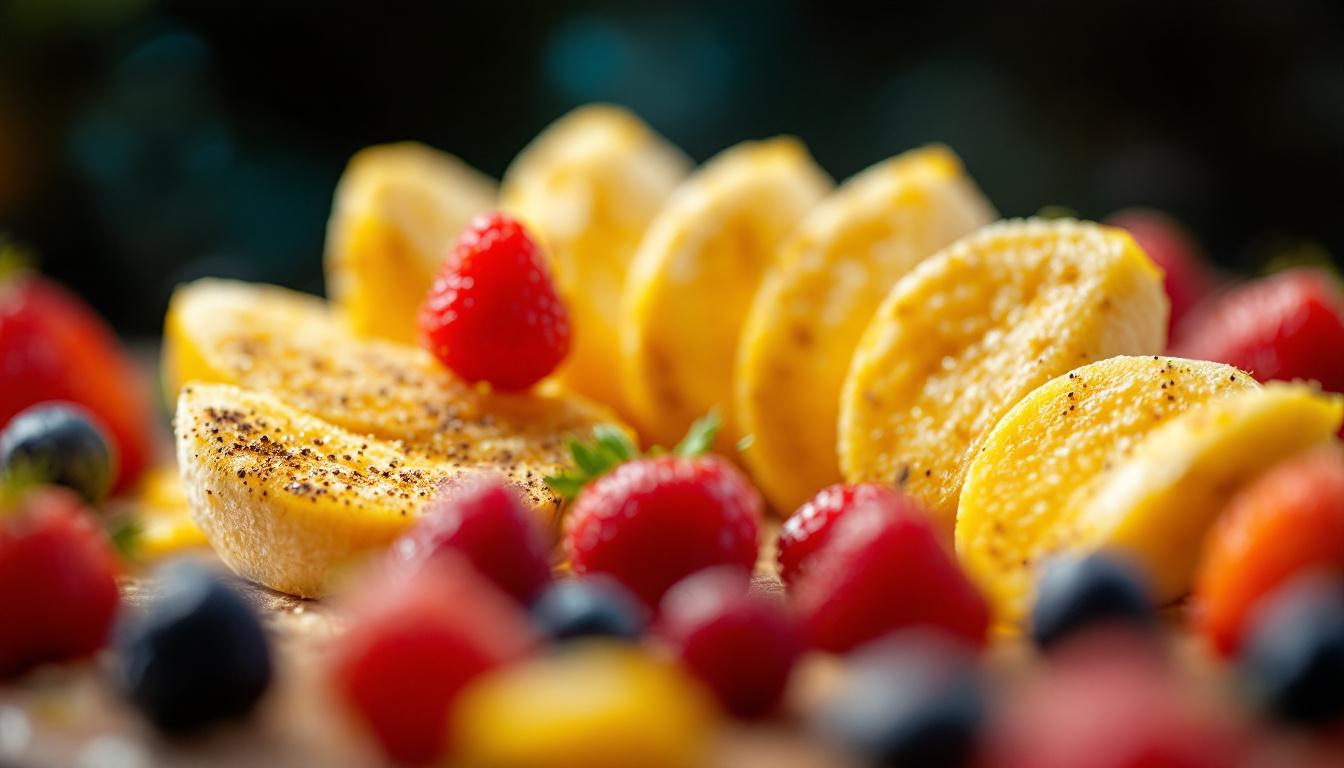
Botanists have a very specific definition of a berry: a fruit that grows from a single flower with one ovary and has its seeds embedded in the flesh. By that rule, the banana qualifies completely. The strawberry does not — it develops from a flower with multiple ovaries, and those little “seeds” on the outside are technically the actual fruits. So the banana, which looks nothing like a berry, is one, and the strawberry, which has “berry” right there in its name, is not. I don’t make the rules. I just have to live with them now, and so do you.
Did you know every banana you’ve ever eaten is a genetic clone of the same plant?
The banana in your kitchen is a variety called the Cavendish, and here’s the unsettling part — it can’t make viable seeds. Every Cavendish on the planet is grown by cutting a shoot off an existing plant, which means they’re all genetically identical copies of one another. The banana you eat today is, DNA for DNA, the same banana your grandparents ate decades ago. There is no banana family tree. There is one banana, copied a few billion times, sitting in grocery stores all over the world.
Did you know bananas are mildly radioactive — enough to trigger nuclear-smuggling alarms?
Bananas are loaded with potassium, and a tiny fraction of all potassium on Earth is a naturally radioactive isotope called potassium-40. That makes every banana slightly radioactive — harmlessly so, but measurably. It’s harmless enough that scientists actually use the “banana equivalent dose” as a friendly way to explain radiation. But here’s the wild part: truckloads and shipping containers of bananas have set off the radiation detectors at U.S. ports — the same monitors built to catch smuggled nuclear material. Bananas. Triggering nuke alarms. You’d need to eat hundreds a day for years to be in any danger, so enjoy your smoothie.
Did you know fake banana flavor tastes “wrong” because it’s based on a banana that’s basically gone?
You’ve noticed it — banana Runts and banana Laffy Taffy don’t taste like a real banana. The usual explanation is that the flavoring is just bad. It isn’t. Until the 1950s, the world’s dominant banana was a variety called the Gros Michel, and it was sweeter and more intensely “banana” than what we eat now. A fungus called Panama disease wiped it out commercially, and the industry switched to the milder Cavendish. The artificial flavor was modeled on the old Gros Michel — so fake banana flavor isn’t inaccurate. It’s a flavor of a banana that most of us have never tasted.
Did you know the banana “tree” isn’t a tree at all — it’s the world’s largest herb?
A banana plant can stand twenty feet tall and look every bit like a tree, but it doesn’t have one piece of actual wood in it. What looks like a trunk is a tightly packed bundle of leaf bases — soft, fibrous, and full of water. Because there’s no wood, botanists classify the banana plant as a herb, which technically makes it the largest herbaceous flowering plant on Earth. And it only fruits once: after a banana plant produces its bunch, it dies, and a new shoot rises from the same roots to take its place. You’ve been eating fruit off a giant herb your whole life. So have I. Nobody told us.
Send this to whoever you eat breakfast with — they are not ready to learn the strawberry has been lying to them.
