
So here’s one I think about more often than I’d like to admit, because it’s not a ghost story and it’s not a hoax and it’s not some half-remembered campfire thing — it’s just a hole in the record of American history that nobody has ever managed to fill. In the summer of 1587, a man named John White led about a hundred and fifteen English men, women, and children across the Atlantic to start a colony on Roanoke Island, off the coast of what we now call North Carolina. Three years later he came back to check on them. And they were gone. All of them. Not a body, not a grave, not a sign of a struggle. Just an abandoned settlement and a single word carved into a post. I want to tell you how we got there, because the story is stranger going forward than it is looking back.
Now, you have to understand the kind of person John White was, because it matters for the end. He wasn’t just the governor of this colony — he had family in it. His daughter, Eleanor, was one of the colonists. She was pregnant when they landed. And that August, on Roanoke Island, she gave birth to a little girl named Virginia Dare — the first English child born in the Americas. So when I tell you John White had reasons to come back, I want that to land. His daughter and his granddaughter were on that island. This was not a man who was going to forget about Roanoke.
But the colony was already in trouble almost from the start. The supplies were thin. Relations with the local tribes had gone sour before they’d even arrived, thanks to a disastrous earlier English expedition that had soured the welcome. The colonists decided, fairly quickly, that somebody had to sail back to England for help — and they more or less pushed White into being that somebody. He didn’t want to go. By his own account he hated leaving them, and especially leaving his family. But they argued that he was the one with the standing in England to actually get a relief ship sent. So in late 1587, he sailed home, expecting to turn right back around. And here’s the first cruel twist of the whole thing: he couldn’t.
Because the moment he got back to England, the entire country went to war. This was 1588 — the year of the Spanish Armada. Queen Elizabeth needed every ship that could float to defend England against a Spanish invasion fleet, and “go resupply a hundred settlers on an island across the ocean” was not high on anybody’s priority list when there were warships in the Channel. White begged. He scraped together a couple of small vessels at one point, and they got waylaid — attacked, robbed, forced to limp back to port without ever reaching the colony. Year after year, he tried. And year after year, something stopped him. Three full years went by while John White sat in England knowing his daughter and his granddaughter were on the far side of the ocean and he could not get to them.
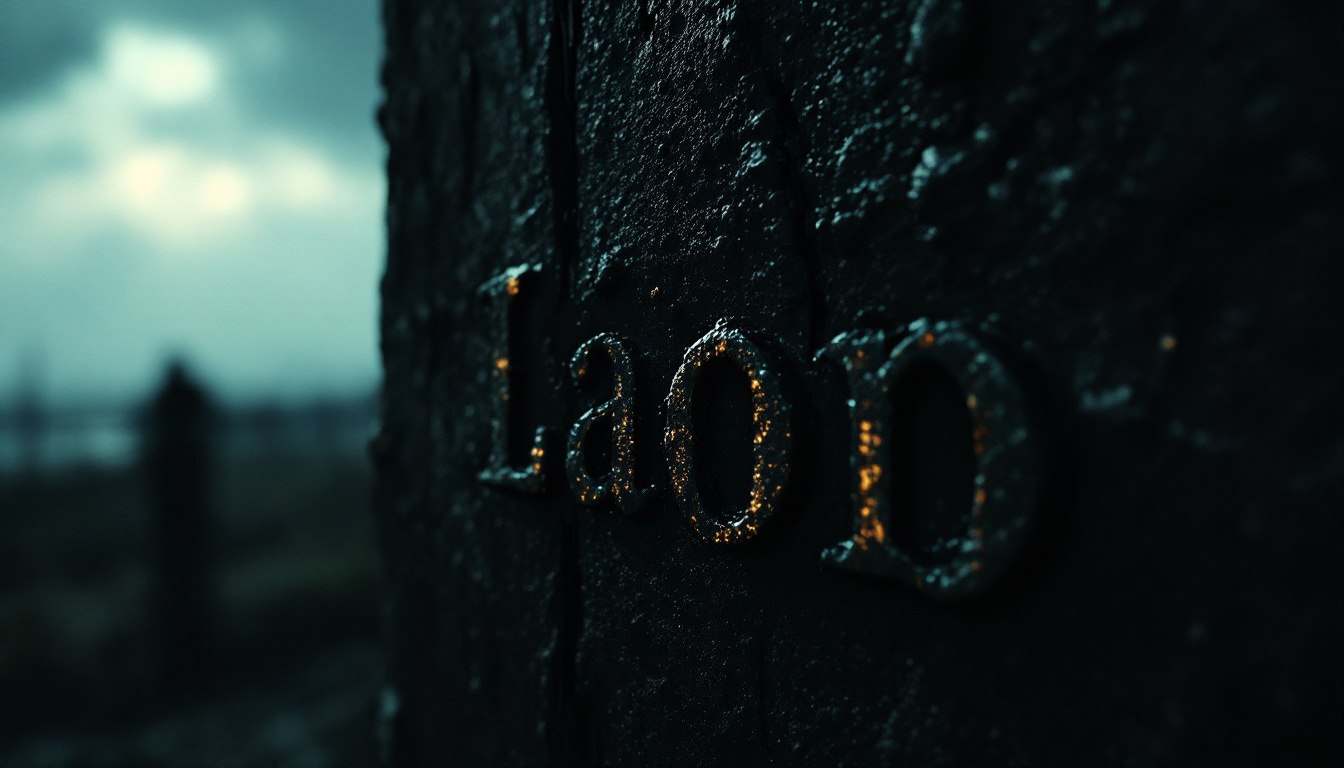
He finally made it back to Roanoke in August of 1590 — and as luck, or fate, or whatever you want to call it would have it, he landed on August 18th, which was Virginia Dare’s third birthday. Picture that. A grandfather rowing ashore on his granddaughter’s birthday after three years of trying. And what he found was nothing. The houses had been taken down — not burned, not destroyed, but dismantled, the way you’d do if you were planning to move and meant to take the materials with you. The settlement was enclosed by a newly built palisade of logs. And carved into one of the posts of that palisade was a single word, in capital letters: CROATOAN. Nearby, carved into a tree, were three more letters — CRO — as if someone had started the same word and been interrupted.
Now here’s the part that, to me, makes the whole thing ache instead of just spook. White wasn’t baffled by that word. He was relieved by it. Before he’d left three years earlier, he and the colonists had agreed on a plan: if they ever had to leave Roanoke, they’d carve their destination into something so he could find them — and if they left because they were in danger or under attack, they’d carve a cross above the name as a distress signal. There was no cross. Just the word. Croatoan was a real place — an island to the south, today’s Hatteras Island, and the home of a friendly tribe of the same name. So as far as John White was concerned, this wasn’t a mystery. It was a forwarding address. His family had moved fifty miles down the coast to live with people who’d been good to them, and they’d left him a note saying exactly where to look. He must have felt his chest unclench right there on the beach.
And then the weather turned. A storm was rolling in, the seas got dangerous, and the ships’ crews — who’d never been thrilled about this whole detour in the first place — refused to make the short run down to Croatoan. They lost an anchor. They were low on supplies and out of patience. And they sailed away. John White, standing the closest he would ever stand to his daughter and granddaughter, was carried back out to sea by his own crew and never, ever got another chance to return. He died years later in England, as far as we know never having learned what became of them. That’s the thing that gets me. The man left a note for himself, found it, read it, knew where they’d gone — and the ocean simply would not let him close the last fifty miles.
So what happened to the Lost Colony? The honest answer is that nobody knows, and I’ll lay out for you what the evidence actually supports, because it’s more interesting than the wild stuff. The most reasonable theory — and the one that word on the post points straight at — is that the colonists did exactly what they said they would: they abandoned a failing settlement and went to live among the Croatoan people on Hatteras Island, or split up among nearby friendly tribes, and were simply absorbed. For generations afterward, settlers and explorers reported encountering Native people in that region with gray eyes, with European features, with stories of ancestors who “could talk out of a book.” In modern times, archaeologists digging on Hatteras and at a site to the west called Site X have turned up English artifacts — pottery, a sword hilt, a writing slate, bits of gun hardware — in places and layers that hint the colonists really may have scattered inland and coastward and lived on, just no longer as an English colony. They didn’t vanish into thin air. They most likely walked into a new life and stopped being the thing the records were keeping track of.
But I’ll be straight with you, the way you have to be with a story like this: nobody has ever proven it. Not one colonist has ever been definitively identified, alive or dead. No grave, no skeleton, no diary, no scrap of paper signed by anyone who was there has ever turned up to close the case. And so for four hundred years the open door has stayed open, and people have walked right through it. Some say the Spanish marched up from Florida and wiped them out. Some say a hostile tribe did. Some say disease took them, or starvation, or a hurricane swallowed them whole. There are even folks who’ll tell you, in a lower voice, that there was something stranger going on out there entirely — and I’m not asking you to believe any of that, because there’s no evidence for it. I’m just telling you what’s true: that a colony of more than a hundred English souls, including the first English child born on this continent, set up a settlement on an island off Carolina, and within three years every single one of them was gone, leaving behind a dismantled town and one word carved into a post. CROATOAN. We have spent four centuries trying to follow that one word to wherever it was meant to lead. And we still haven’t gotten all the way there. Neither, in the end, did John White.
Unsolved Mystery
