
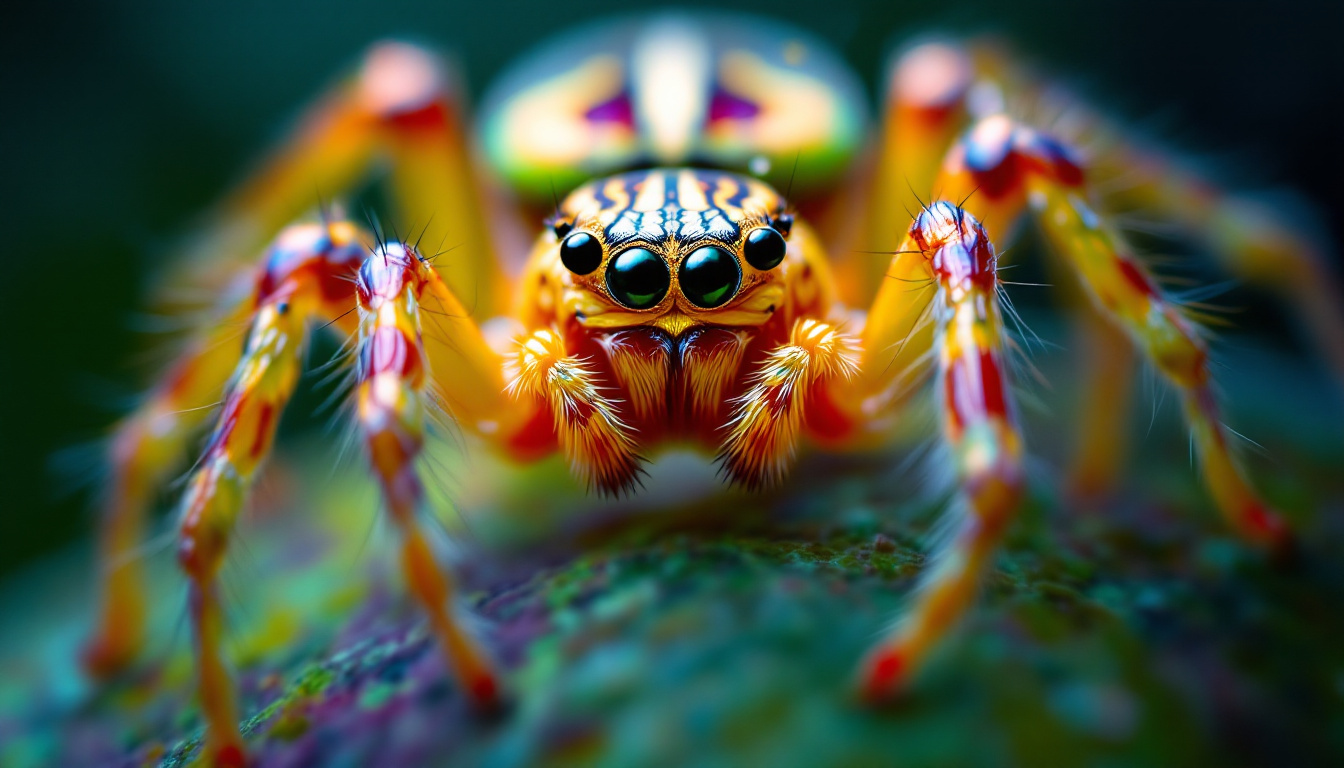
I have spent my whole life giving spiders a wide berth and never once stopping to appreciate what tiny engineering geniuses they actually are. Turns out the eight-legged thing in the corner of your garage is pulling off feats that human scientists are still trying to copy. Here are five facts that completely changed how I look at a spiderweb.
Did you know spider silk is stronger than steel by weight?
Pound for pound, the dragline silk a spider uses to anchor its web is stronger than steel and tougher than Kevlar — meaning it can absorb more energy before snapping. A strand thinner than a human hair can stretch well past its original length and still hold. Engineers have been trying to mass-produce the stuff for years to make better body armor, surgical thread, and lightweight cables, and they still can’t fully match what a garden spider cranks out from its abdomen without a second thought. The classic line is that a pencil-thick rope of spider silk could theoretically stop a jetliner in flight. A bug the size of your thumbnail is out-engineering our best laboratories.
Did you know some spiders build fake, bigger spiders out of debris to scare off predators?
In the Amazon, scientists found a tiny spider that builds an elaborate decoy in its web — a much larger, spider-shaped sculpture made of leaf bits, dead insects, and silk, complete with multiple “legs.” Then the real spider, a fraction of the size, hides nearby and even shakes the web to make its giant fake puppet appear to move. The whole point is to convince a hungry bird or wasp that it’s dealing with a much bigger, less appetizing opponent. Let that sink in: a spider with a brain the size of a grain of salt invented the body double. I’ve seen action movies built around a worse plan than that.
Did you know spiders can “fly” by riding electricity?
Tiny spiders travel hundreds of miles through the air using a trick called ballooning — they climb to a high point, lift their abdomens, and release strands of silk that carry them off on the wind. For ages everyone assumed it was just the breeze doing the work, but researchers discovered the silk also picks up an electric charge from Earth’s natural atmospheric field, and that charge gives the strands lift even on totally still days. Spiders can apparently sense this electric field through fine hairs on their legs and use it to decide when to launch. They’ve been spotted ballooning miles up in the sky and landing on ships far out at sea. The bugs figured out static-electricity air travel before we figured out the hot-air balloon.
Did you know the largest spider web ever found could span a small river?
The Darwin’s bark spider of Madagascar holds the record for the biggest web on the planet, sometimes stretching its silk anchor lines up to about 80 feet across rivers and streams to suspend a web in the open air over the water. And the silk it uses is the toughest biological material ever measured — more than twice as tough as any other known spider silk. Picture an animal smaller than a quarter casually rigging a load-bearing bridge cable across a river to catch the dragonflies flying over it. Nobody told this spider what it’s “supposed” to be capable of, so it just went ahead and did it anyway.
Did you know a spider once spent six months living on the International Space Station learning to spin webs in zero gravity?
NASA has sent spiders to orbit more than once to see how they handle weightlessness, and the results are oddly heartwarming. On Earth, spiders use gravity to orient their webs and let themselves drop on a thread. In space, with no “down” to work with, the first webs came out lopsided and chaotic — but within days the spiders adjusted and started spinning surprisingly normal, symmetrical webs anyway. They even began using the space station’s lights as a substitute reference point for which way was “up.” A creature that has relied on gravity for 300 million years got rocketed into orbit and basically shrugged and figured it out. Honestly, that’s a better attitude than I had about my own commute.
Send this to the person in your life who screams at spiders — they’re not pests, they’re tiny structural engineers, and now you can prove it.
