
June 5th
The morning of June 5, 1947, broke warm and bright over Harvard Yard, and the fifteen thousand people packed onto the folding chairs had come for a celebration, not a turning point in human history. It was commencement day. There were diplomas to hand out, honorary degrees to bestow, proud parents dabbing their eyes. The featured speaker that afternoon was a tall, silver-haired soldier named George Catlett Marshall, the Secretary of State, and almost no one in the crowd expected him to say anything they’d remember by supper.
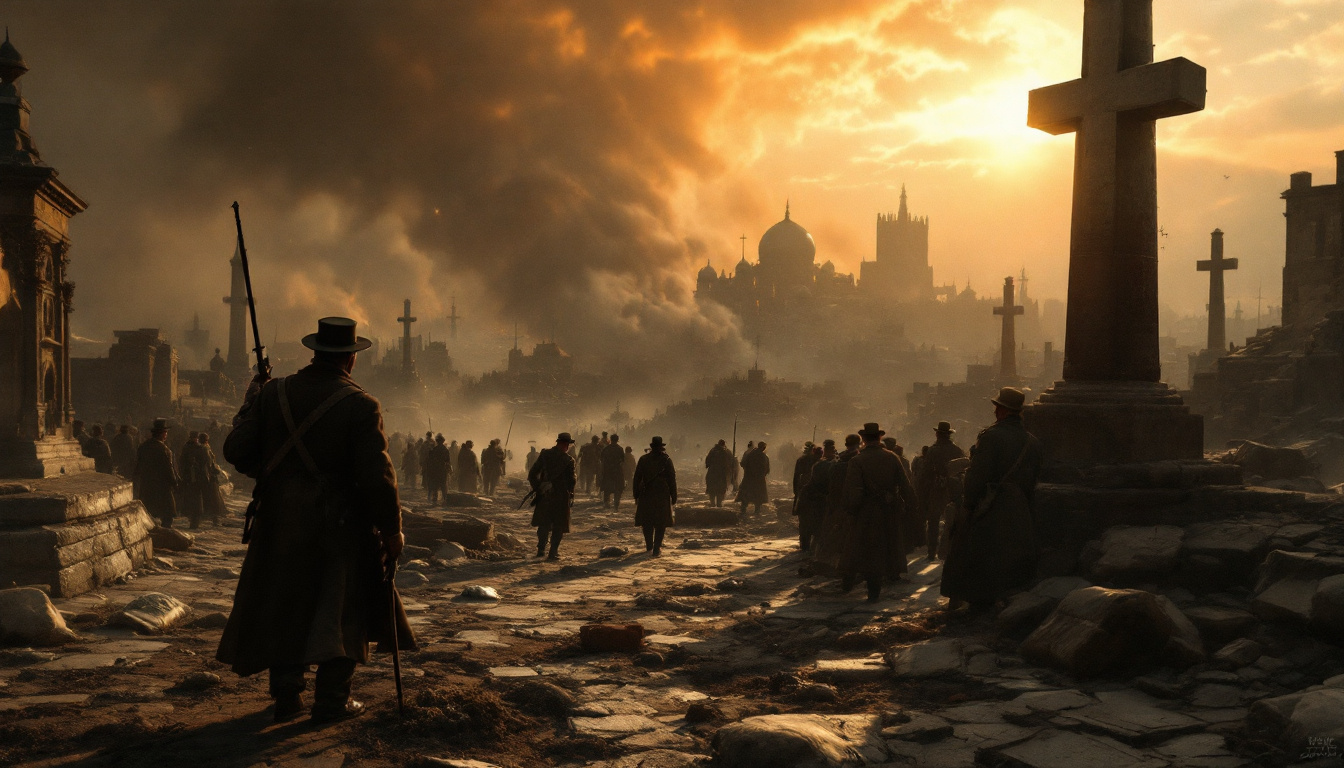
What they didn’t know was that Europe was dying. Two years after the guns of World War II fell silent, the continent was still a smoking ruin. Cities lay in rubble. Farms had gone fallow. Factories sat cold and idle. A brutal winter had frozen people in their homes, and millions were going hungry in the spring of 1947 with no work, no food, and no hope. Worse, a desperate and starving Europe was exactly the kind of soil in which communism could take root. Marshall had just returned from a grim conference in Moscow, and he’d come home convinced that if America did nothing, the free world might simply collapse from exhaustion.
So at 2:50 in the afternoon, Marshall rose to the podium and spoke for less than twelve minutes. There were no soaring phrases, no thunderclaps of oratory. In flat, plain language, the old general laid out a staggering proposal: the United States would pour billions of dollars into rebuilding the very nations it had just finished fighting across, friend and former foe alike. “Our policy,” he said, “is directed not against any country or doctrine but against hunger, poverty, desperation, and chaos.” Then he sat down. The applause was polite. The crowd drifted off to their picnics.
It was, by design, almost an anti-event. Marshall had deliberately tipped off no one. He gave the American press no advance warning, made no grand announcement. But across the Atlantic, the right ears were listening. British Foreign Secretary Ernest Bevin heard the speech on a late-night radio broadcast and reportedly leapt out of bed, declaring it one of the greatest speeches in world history. Within weeks, European leaders were on planes to Washington.
What followed became known as the Marshall Plan, and over the next four years America delivered the equivalent of more than a hundred billion of today’s dollars to a battered continent. Roads were rebuilt. Factories roared back to life. Bread returned to the tables of cities that had been eating ration scraps. A war-torn Western Europe was pulled back from the brink and set on the path to becoming the prosperous, democratic partner it remains today. It stands as one of the most generous and far-sighted acts any nation has ever undertaken toward others.
For his eleven quiet minutes in Harvard Yard, George Marshall would become the only career soldier ever to win the Nobel Peace Prize. He had commanded the armies that won the war, and then, almost without raising his voice, he helped win the peace. Sometimes the words that change the world don’t arrive with a roar. Sometimes they arrive on a sunny afternoon, before the picnic.
Also On This Day…
1968 — A victory speech, then shots in the kitchen Just past midnight on June 5, 1968, Senator Robert F. Kennedy stood before a roaring crowd in the Embassy Ballroom of the Ambassador Hotel in Los Angeles. He had just won the California Democratic primary, and the path to the White House suddenly seemed wide open. “On to Chicago, and let’s win there,” he told his cheering supporters, flashing a peace sign as he left the stage. Moments later, taking a shortcut through a crowded kitchen pantry, Kennedy was shot by a 24-year-old gunman named Sirhan Sirhan. The senator died the following day at age 42, robbing a grieving nation — still reeling from the loss of his brother and of Dr. Martin Luther King Jr. just two months earlier — of yet another voice it had only begun to follow.
1981 — Five quiet sentences that announced an epidemic On June 5, 1981, the Centers for Disease Control published a short, technical bulletin in its weekly report that almost no one outside the medical world noticed. It described five young, previously healthy men in Los Angeles who had come down with a rare lung infection normally seen only in patients with badly weakened immune systems. There was no name yet for what they had, no understanding of why their bodies were failing. But that dry little notice was the first official report of what the world would soon come to know as AIDS. From those five cases would grow one of the defining health crises of the modern era, and the long, hard fight to understand and defeat it traces its beginning to that single page.
2004 — A long goodbye ends for the Gipper On June 5, 2004, Ronald Reagan, the 40th President of the United States, died at his home in California at the age of 93. A decade earlier, he had written a handwritten letter to the American people revealing his diagnosis of Alzheimer’s disease, telling the nation he was beginning “the journey that will lead me into the sunset of my life.” For ten years the former actor, governor, and Cold War president faded slowly from the public stage. His death prompted a week of national mourning, as hundreds of thousands of Americans filed past his casket in Washington to pay their respects to the optimistic leader who had so often spoken of America as a “shining city on a hill.”
There is a strange gravity to the fifth of June, a date that keeps gathering up the great hopes and great heartbreaks of the American century. On this one day, a soldier-turned-statesman offered a ruined world a hand up, a senator’s promise was silenced in a hotel kitchen, an unrecognized plague slipped quietly into the record, and a president who called the nation a city on a hill finally went home. Triumph and tragedy, woven into a single square on the calendar, reminding us how much history can turn on a single ordinary-seeming day.
