
May 15th
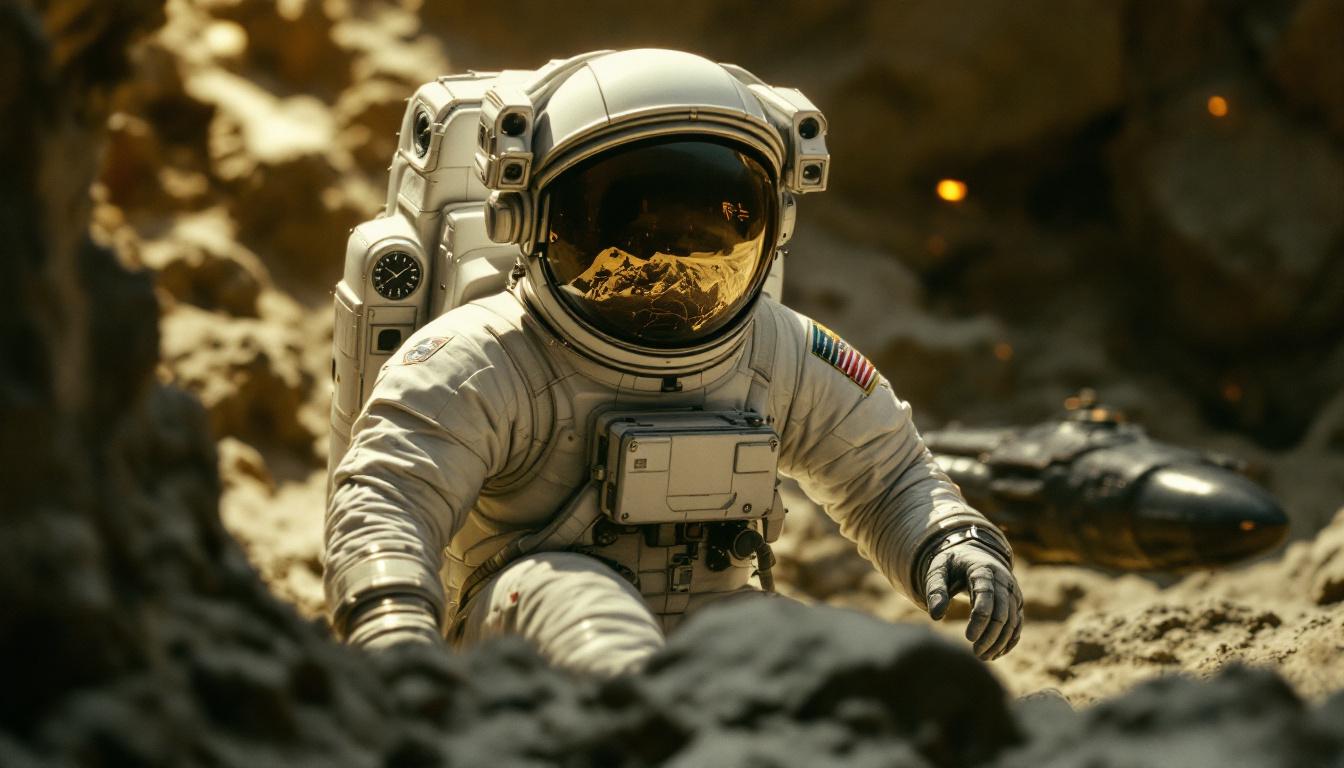
On May 15, 1963, Gordon Cooper climbed into a capsule barely bigger than a phone booth, sat on top of an Atlas rocket, and rode it into orbit. His spacecraft was called Faith 7, and for 19 orbits, it behaved beautifully. Then it started to die.
First a sensor lied to him, falsely reporting that the capsule was already beginning reentry. Two orbits later, a short circuit knocked out the automatic stabilization and control system entirely — the system that was supposed to point the ship in exactly the right direction so the retrorockets could fire and bring him home. Then carbon dioxide levels began climbing in the cabin and inside his own spacesuit. A NASA astronaut, alone, in a slowly poisoning tin can, with the autopilot gone. Cooper got on the radio and, in the most understated sentence in the history of spaceflight, told Mission Control: “Things are beginning to stack up a little.”
So he flew it himself. With no automatic guidance, Cooper lined the capsule up using the only tools he had left — the stars out his window, the lines drawn on the glass, and the minute markers ticking on his wristwatch. He counted down by hand, fired the retrorockets by hand, rode the fireball of reentry, and pulled both parachutes manually. When Faith 7 splashed into the Pacific, it landed just 4.4 miles from the recovery carrier USS Kearsarge — the most accurate splashdown of the entire Mercury program. The man flew home from space by eyeballing it. That mission closed out Project Mercury, and to this day it remains the last time a single American flew solo in orbit.
Also On This Day…
1718 — A London lawyer patents the world’s first machine gun James Puckle, who was a lawyer and not an engineer, patented a tripod-mounted, revolving-cylinder gun that could fire 63 shots in seven minutes — at a time when a regular soldier could manage maybe five. Here is the part that lives rent-free in my head: Puckle designed it to fire two kinds of ammunition. Round bullets for fighting fellow Christians, and square bullets for fighting Turks, because square bullets caused nastier wounds and would, in the patent’s actual words, “convince the Turks of the benefits of Christian civilization.” It was never used in combat, and possibly only two were ever built. Three hundred years later, we are still talking about the square bullets.
1800 — The U.S. government packs up and leaves Philadelphia President John Adams ordered the entire federal government to pick up and move from Philadelphia to a half-finished swamp town on the Potomac called Washington. The new capital was barely built — muddy streets, unfinished buildings, the whole thing more construction site than city. Adams himself would move into the still-unfinished President’s House later that year. The country didn’t just decide to have a capital; it had to physically box everything up and haul it down the road.
1928 — Mickey Mouse makes his debut — and it flops Everyone thinks Mickey Mouse was born in “Steamboat Willie.” He wasn’t. Mickey and Minnie actually first appeared on May 15, 1928, in a silent test screening of a short called “Plane Crazy,” where Mickey builds a homemade airplane and tries to impress Minnie with it. The cartoon was inspired by Lindbergh’s flight the year before — and it failed. Disney couldn’t find a distributor. It was only after the sound-equipped “Steamboat Willie” became a hit that November that Disney went back, added sound to “Plane Crazy,” and re-released it. The most famous mouse on Earth bombed on his first audition.
1940 — The first McDonald’s opens — and it’s a barbecue joint On May 15, 1940, brothers Richard and Maurice McDonald opened a restaurant in San Bernardino, California. It was not the McDonald’s you’re picturing. There were no golden arches, no Big Mac, no drive-thru — it was a barbecue stand with carhops, slow-cooking meat in a pit over hickory chips shipped in from Arkansas. Only years later did the brothers notice that 80% of their money came from hamburgers, shut the place down for three months, fired all 20 carhops, ditched the plates and silverware, and reinvented it as fast food. The empire started as a pork sandwich.
1940 — Four million pairs of stockings vanish in four days The very same day the first McDonald’s opened, DuPont put nylon stockings on sale to the American public for the first time. Women lined up by the thousands. Roughly four million pairs sold in the first two days, and the whole national supply was gone within four days — at about a dollar a pair. Nylon looked like silk, cost far less, and didn’t fall apart, and the country lost its mind over it. May 15 is still observed as National Nylon Stocking Day, which is a real thing I did not invent.
1941 — Britain’s first jet aircraft takes off At RAF Cranwell, test pilot Gerry Sayer climbed into the Gloster-Whittle E.28/39 and flew it under jet power for the first time — a 17-minute flight that gave Britain its first jet aircraft. The engine came from Frank Whittle, who had been pushing the idea of jet propulsion for years against a fair amount of official skepticism. That little 17-minute hop led straight to the Gloster Meteor, the only Allied jet fighter to see combat in World War II. Every jet you’ve ever boarded traces back, in part, to a quiet airfield in Lincolnshire on this date.
1970 — The U.S. Army gets its first female generals President Nixon appointed Anna Mae Hays and Elizabeth P. Hoisington as brigadier generals — the first women ever to wear a general’s star in the United States Army. Hays had been a combat nurse who served in three wars, from World War II through Vietnam. Hoisington led the Women’s Army Corps. After roughly 195 years of the U.S. Army existing without a single woman among its generals, two got the rank on the same day.
Some days in history give you one big story. May 15 gives you a barbecue stand that became McDonald’s, a cartoon mouse that flopped, and an astronaut who flew home from space using a wristwatch — and somehow that all happened on a regular Friday.
