
May 26th
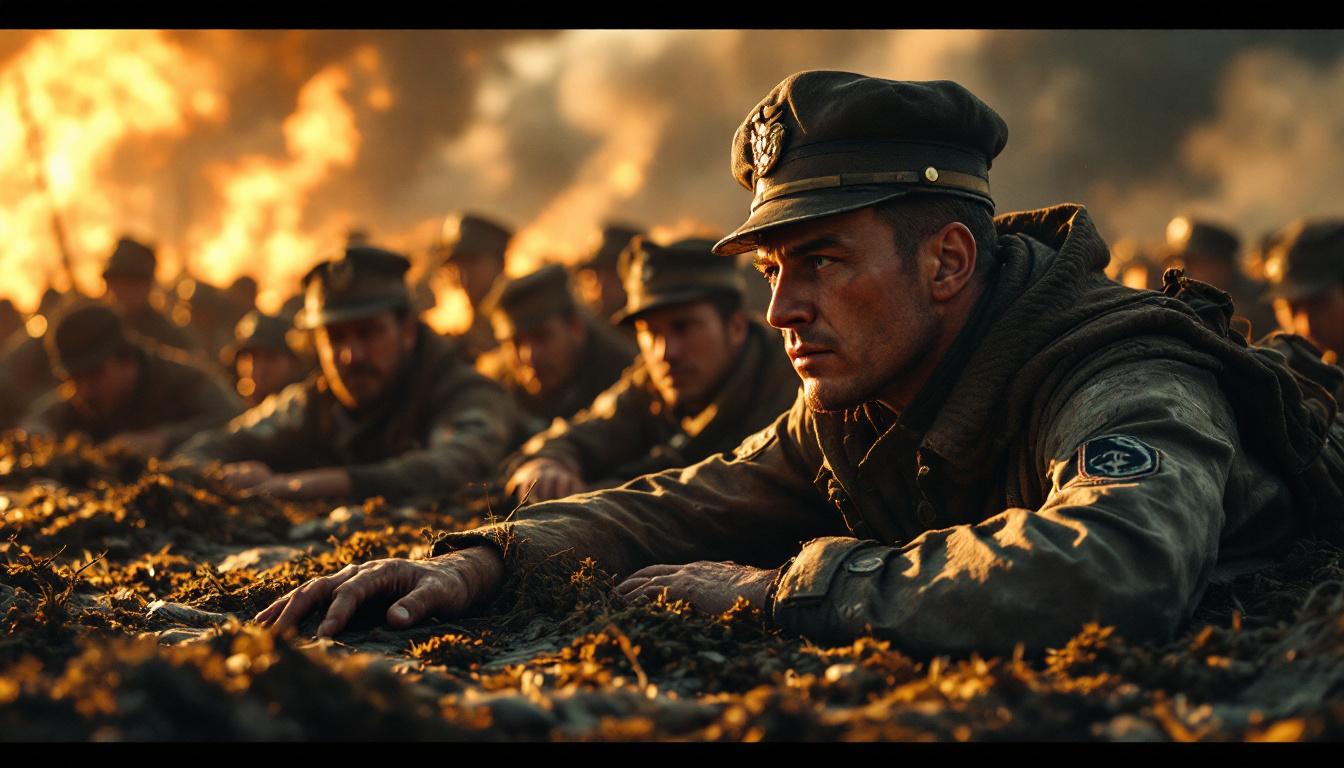
By the evening of May 26, 1940, the British Army was, in plain terms, trapped. The German blitzkrieg had torn across France faster than anyone believed possible, and the entire British Expeditionary Force — along with tens of thousands of French and Belgian soldiers — had been pushed back against the sea at the little port town of Dunkirk. There was nowhere left to retreat. Just before 7 p.m., Winston Churchill gave the order to begin Operation Dynamo: get as many men off those beaches as the Royal Navy possibly could before the Germans closed the trap for good.
Nobody expected it to go well. The planners at Dover Castle — working out of a network of tunnels carved deep into the white cliffs — quietly estimated they might rescue 45,000 men in two days before German artillery and aircraft made the harbor unusable. That was the realistic hope. Everyone else, they assumed, would be captured. Churchill himself braced the cabinet for the loss of most of Britain’s army. And then something happened that has been argued over by historians ever since: the German tanks, for several crucial days, paused. The reasons are still debated. But the pause bought time, and time was everything.
What followed was nine days that the British have never stopped calling a miracle. The Navy’s destroyers weren’t enough, so the call went out for anything that could float — and an astonishing flotilla of 850-some vessels answered it. Fishing boats. Pleasure yachts. Ferry boats. Lifeboats. Tugs. Civilian skippers steered their own small craft across the English Channel, into a combat zone, to ferry exhausted soldiers from the shallows out to the bigger ships. By the time it ended on June 4, they had carried home not 45,000 men but 338,226. An army that was supposed to be lost was instead standing on English soil — beaten, but alive, and able to fight another day.
Also On This Day…
1868 — A president kept his job by a single vote On May 26, 1868, the impeachment trial of President Andrew Johnson ended in the U.S. Senate. To remove him from office required a two-thirds majority — and the final tally came in at 35 guilty, 19 not guilty. That was exactly one vote short. Seven Republicans broke with their own party to acquit a president most of them genuinely disliked, deciding the case against him simply wasn’t strong enough. It would be 130 years before another American president was impeached, and Johnson’s near-miss set the bar: it is supposed to be very, very hard to undo an election.
1889 — The Eiffel Tower finally got its elevators When the Eiffel Tower opened to the public during the 1889 World’s Fair, it had one small problem — no working elevators. For its first eleven days, the roughly 30,000 visitors who wanted the view had exactly one option: climb. All 1,710 steps of it. On May 26, 1889, the tower’s lifts finally began carrying passengers, and they were instantly the tallest and most advanced elevators on Earth. Anyone who’d made that climb in the first week was, understandably, a little annoyed.
1897 — A vampire checked into English literature On May 26, 1897, a Dublin-born theater manager named Bram Stoker published a gothic novel about a Transylvanian count with an unsettling interest in necks. It was called Dracula. The book did fine at first — respectable reviews, modest sales — and gave no hint that it would become one of the most adapted stories in the history of fiction. Stoker died in 1912 without ever knowing he’d created a character who would outlive him by well over a century and counting.
1927 — The last Model T rolled off the line On May 26, 1927, Henry Ford and his son Edsel personally drove the 15-millionth Ford Model T out of the factory, marking the end of its production run. For nineteen years the Model T had been the car that put America on wheels — simple, cheap, available, as Ford famously joked, in any color you wanted “so long as it is black.” But the world had moved on to flashier cars, and Ford had to shut down his plants for months to retool for the Model T’s successor. The age of one car for everyone was over.
1970 — A Soviet jet hit Mach 2 with passengers in mind On May 26, 1970, the Soviet Tupolev Tu-144 became the first commercial transport in history to fly faster than twice the speed of sound. It had even beaten the more famous Concorde into the air by a couple of months, and for a moment it looked like the Soviets had won the supersonic race. The Tu-144’s career, though, was short and troubled, and it carried paying passengers on only 55 flights before being quietly retired. Going twice the speed of sound, it turned out, is the easy part. Doing it reliably and affordably is not.
1972 — Two superpowers agreed to slow the arms race On May 26, 1972, in Moscow, President Richard Nixon and Soviet leader Leonid Brezhnev signed the SALT agreements — the Strategic Arms Limitation Talks treaty. After years of both nations racing to build ever more nuclear missiles, the two leaders sat down and agreed, in writing, to limits. It didn’t end the Cold War or eliminate a single warhead. But it was the first time the two superpowers had formally agreed to put a ceiling on the most dangerous arsenals ever assembled, and it cracked open a door that more treaties would later push through.
It’s a fitting roster for a date that sits right around Memorial Day — a beaten army that refused to be lost, a president saved by one vote, a treaty meant to make the world a little safer. May 26 has a way of landing on the moments when things could have gone very badly, and didn’t.
