
I have shoveled, scraped, and complained about snow my entire life, and I never once stopped to think about what it actually is. Turns out the white stuff in your driveway is hiding some genuinely strange secrets — it’s not even really white, for starters. Here are five facts that completely changed how I look at a snowstorm.
Did you know snow isn’t actually white?
Snow looks white, but the ice crystals it’s made of are completely colorless — they’re translucent, like tiny shards of glass. Snow appears white because each crystal has so many faceted surfaces that light bounces around inside the pile and reflects back out in every direction at once. When your eye gets hit by every wavelength of visible light bouncing back together, your brain reads that as “white.” It’s the same reason crushed glass looks white even though a windowpane is clear — and once you know it, you can’t un-know it.
Did you know fresh snow makes the world quiet on purpose — and you can measure it?
That hushed, peaceful feeling after a snowfall isn’t your imagination. Fresh, fluffy snow is about 90 to 95% trapped air, and all those tiny pockets between the crystals act like an acoustic sponge, soaking up sound waves before they can travel. Researchers found that a fresh layer of snow can cut ambient noise by up to 60% — your whole neighborhood is essentially wearing earmuffs. The catch: it only works while the snow is fresh and fluffy. Once it gets packed down or crusty, the air pockets collapse and the silence goes away.
Did you know every single snowflake has exactly six sides — no exceptions?
Snowflakes are famous for all being different, but here’s the part nobody mentions: they’re all the same in one way. Every snow crystal has six sides. Always. It comes down to the water molecule itself — two hydrogen atoms and one oxygen atom that, when frozen, lock together into a hexagonal lattice because that’s the most efficient way for them to pack. No matter how wild and lacy and unique a snowflake’s pattern gets, that six-sided skeleton is non-negotiable. Nature picked a shape and absolutely refuses to compromise on it.
Did you know snow can turn pink and smell like watermelon?
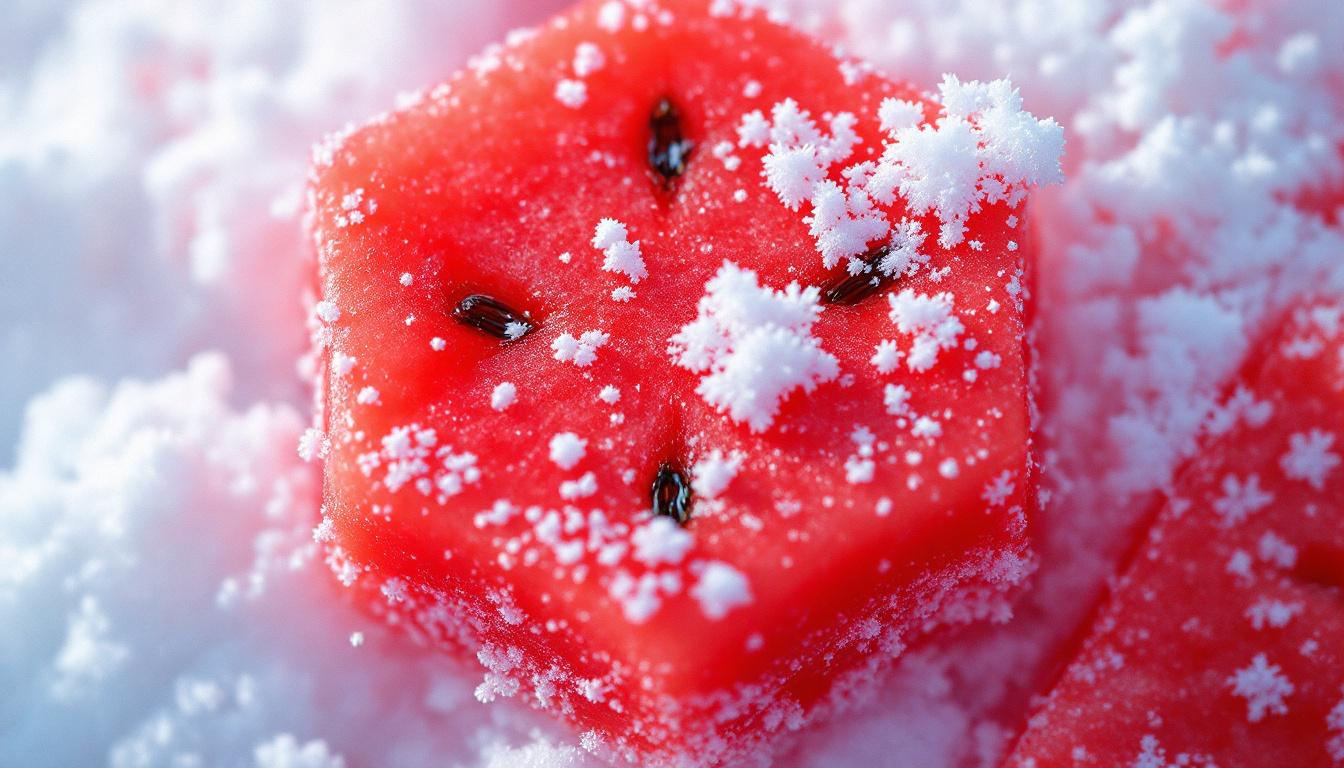
In high mountains and polar regions, hikers regularly stumble onto patches of bright pink snow — and yes, it actually smells faintly sweet and fruity, which is why it’s called “watermelon snow.” The color comes from a cold-loving algae that lives in the snow; it’s normally green, but in summer it cranks out a red pigment as a kind of built-in sunscreen against intense UV light. It’s been spotted on all seven continents. As tempting as a pink, watermelon-scented snowbank sounds, do not eat it — it’ll give you a serious stomachache.
Did you know the “Eskimos have 100 words for snow” thing was basically made up?
You’ve heard it your whole life: Arctic peoples have dozens, even a hundred, words for snow. It’s one of those facts that just feels true. But it traces back to one anthropologist in 1911 who mentioned about four snow words — and over the decades, writers kept inflating the number until a 1984 newspaper editorial confidently printed “one hundred.” The real explanation is grammar, not obsession: Inuit and Yupik languages build long words by stacking suffixes, so they can spin out endless variations on almost any topic, not just snow. The “100 words” legend says less about snow and more about how easily a good story snowballs.
Send this to whoever in your life still insists snow is white — it’s not, and now you can prove it.
