
May 27th
For most of the 1920s, the smartest engineers in America agreed on one thing: a bridge across the Golden Gate Strait could not be built. The water was too deep, the currents too violent, the winds too strong, and the fog too thick. The San Andreas Fault ran almost directly beneath the proposed site. The U.S. Navy worried a single bomb or collapse would bottle up San Francisco Bay. Even the man who eventually became the bridge’s chief engineer, Joseph Strauss, was originally laughed at when he proposed it. The official position, more or less, was: nice idea, impossible.
They built it anyway. Construction started in January 1933, in the depths of the Great Depression, and dragged on for more than four years through everything the Pacific could throw at it. The work was so dangerous that Strauss did something nobody had done on a major American project before — he ordered a giant safety net strung beneath the entire span at a cost of $130,000. It saved nineteen men who fell into it during construction. Those nineteen formed their own private club and gave it the only name that fit: the Halfway to Hell Club.
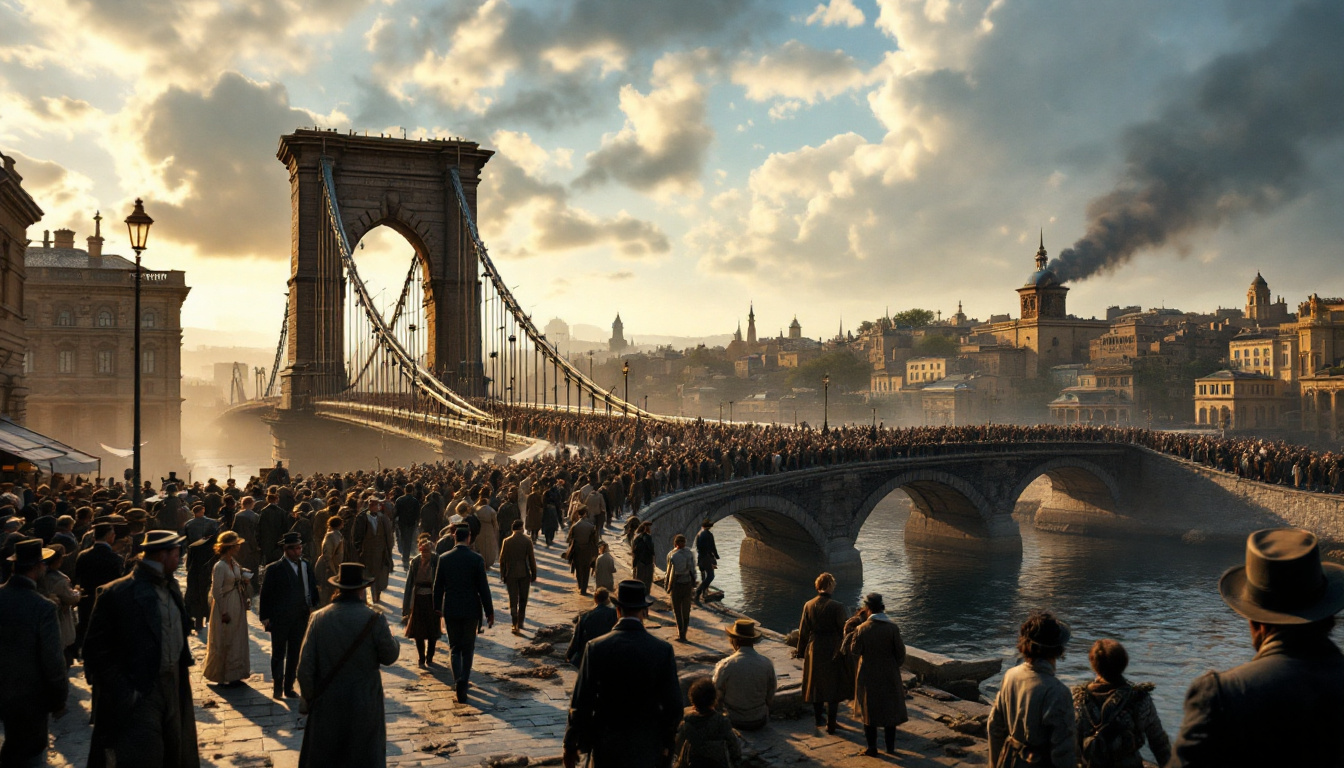
By dawn on Thursday, May 27, 1937, the bridge was finally finished, and San Francisco threw it the kind of party only San Francisco throws. The plan was a week-long “Golden Gate Bridge Fiesta,” and the first event was “Pedestrian Day” — one day, before any car was allowed across, when ordinary people could walk the bridge for a quarter. By 6 a.m., 18,000 people were already lined up at each end, waiting in the cold to be the first across. A junior college sprinter named Donald Bryan was the first person to make it the full span. Two sisters, Carmen and Minnie Perez, were the first to roller-skate it. Somebody walked across on stilts. Somebody else tap-danced.
By the end of the day, around 200,000 people had crossed on foot, paying their quarters and staring down at water that the experts had said could never be bridged. The next day at noon, President Franklin Roosevelt sat in the White House and pressed a telegraph key, and 2,500 miles away the bridge officially opened to cars. For the next 27 years it would hold the record as the longest main suspension span in the world. And the thing the engineers said couldn’t be built has now stood there, painted that strange orange-red color called “International Orange,” for nearly ninety years.
Also On This Day…
1930 — The Chrysler Building took the title of tallest in the world On May 27, 1930, the Chrysler Building officially opened on East 42nd Street in Manhattan, and at 1,046 feet it instantly became the tallest building on Earth — finally beating out the Eiffel Tower, which had held the record for 41 years. Auto tycoon Walter Chrysler had wanted a monument to his car company, and his architect William Van Alen gave him an Art Deco crown of stainless steel that still looks futuristic almost a century later. The Chrysler Building only kept the world record for eleven months, though. The Empire State Building, going up just a few blocks away at the same time, took it back in 1931.
1933 — Disney released a cartoon that became an unlikely Depression anthem On May 27, 1933, Walt Disney released a Silly Symphony short called Three Little Pigs. It was eight minutes long and cost about $22,000 to make, and it became one of the biggest cartoon hits of the entire decade — some theaters held it over for so many weeks they jokingly drew beards on the pigs in the posters. The song from the cartoon, “Who’s Afraid of the Big Bad Wolf?”, turned into something nobody quite expected: a national rallying cry. In a country still flattened by the Great Depression, a song about three little pigs standing up to the wolf at the door hit harder than anyone could have planned. It won the Academy Award the next year.
1941 — The Royal Navy finally caught the Bismarck On May 27, 1941, somewhere about 300 nautical miles west of the French coast, the German battleship Bismarck was hunted down and sunk by the Royal Navy. Three days earlier, the Bismarck had stunned the world by destroying HMS Hood — the pride of the British fleet — in less than ten minutes, with only three of Hood’s 1,418-man crew surviving. A furious Winston Churchill issued a two-word order: Sink the Bismarck. What followed was one of the largest sea chases in history, ending at 10:40 a.m. on May 27 when the battered German ship rolled over and went down. Of the Bismarck’s crew of 2,222, only 110 lived to be pulled from the water.
Three of the four things on today’s list shouldn’t have worked. A bridge nobody could build, a skyscraper that needed to outrun a rival across town, a cartoon about pigs that somehow became a Depression-era hit. May 27 has a knack for delivering the underdog.
