
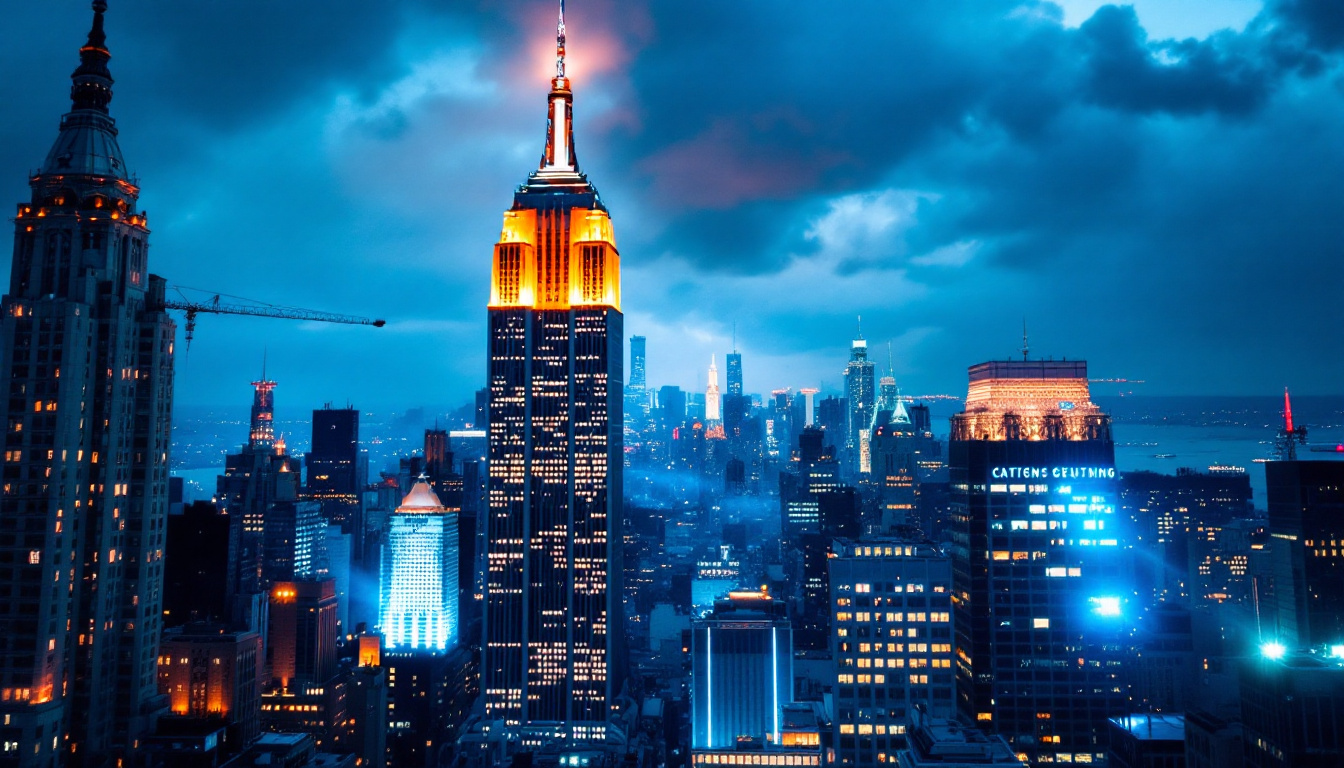
Okay, I thought I knew this skyscraper. Then I found out a B-25 bomber once crashed straight into the 79th floor, the building was nearly empty for years after it opened (people literally called it the “Empty State Building”), and there’s a hidden floor where you can’t actually go. It even has its own ZIP code. Here are ten things about America’s most famous skyscraper that surprised even me.
1. A B-25 bomber crashed into the 79th floor in 1945.
On a foggy Saturday morning in July 1945, an Army B-25 Mitchell bomber lost its way over Manhattan and slammed into the north side of the building between the 78th and 80th floors. Fourteen people died, and burning aviation fuel poured down the elevator shafts. One elevator operator, Betty Lou Oliver, survived a 75-story plunge when her cables snapped, still holding the record for the longest survived elevator fall. The skyscraper reopened for business that Monday.
2. People called it the “Empty State Building” for years.
When it opened in 1931, the country was deep in the Great Depression, and there were almost no tenants willing to rent the offices. For its first decade, so much of the building sat vacant that New Yorkers mocked it with the nickname “Empty State Building.” The observation decks actually brought in more money than the office rent in those early years. It didn’t turn a profit until 1950.
3. It was built in just 410 days.
Construction moved at a frankly insane pace, with workers raising the steel frame at a rate of about four and a half stories per week. From the start of excavation to ribbon-cutting, the entire 102-story tower went up in roughly 13 months, finishing ahead of schedule and under budget. At peak, around 3,400 workers swarmed the site. Modern projects of that scale routinely take several years.
4. The spire on top was supposed to be a dock for blimps.
That elegant tower at the summit wasn’t just for looks. It was originally designed as a mooring mast where dirigibles could dock, letting passengers stroll off an airship and into Midtown Manhattan. The idea was wildly impractical because of high-altitude winds, and after a couple of harrowing test attempts, it was quietly abandoned. The airship terminal that never worked is now the base of the broadcast antenna.
5. The building has its own ZIP code.
The Empire State Building is so large and houses so many businesses that the U.S. Postal Service assigned it its very own ZIP code: 10118. Only a handful of buildings in New York carry that distinction. At its peak it had thousands of workers spread across hundreds of companies inside. Mail addressed to that code goes nowhere else on Earth.
6. There’s a hidden 103rd floor.
Above the famous 102nd-floor observatory sits a secret 103rd floor that the public never sees. It’s a small, raw space with a narrow balcony and a low wall, originally part of the would-be airship platform. Celebrities and VIPs have occasionally been sneaked up there for jaw-dropping, rail-free photos. For everyone else, it doesn’t officially exist.
7. King Kong made it a movie star in 1933.
Just two years after opening, the building got its pop-culture coronation when a giant ape climbed it while swatting at biplanes in the original “King Kong.” The image became one of the most iconic in film history and cemented the tower as the symbol of New York itself. The building has since appeared in well over 250 films. Not bad for a structure that couldn’t fill its own offices.
8. The lights change color for hundreds of occasions.
The tower’s upper floods aren’t always white. Since the 1970s, the building has lit up in different color combinations to mark holidays, causes, sports victories, and tributes, from red-and-green at Christmas to pink for breast cancer awareness. The system was upgraded to programmable LEDs capable of millions of colors and even synchronized light shows set to music. There’s a published calendar so you can decode what each night’s colors mean.
9. The tip gets struck by lightning around 25 times a year.
Standing 1,454 feet to the top of its antenna, the Empire State Building is a natural lightning rod for Manhattan and gets hit roughly two dozen times every year. It’s built to take it: the strikes are safely channeled down through the steel structure into the ground. Photographers have captured stunning images of bolts hitting the spire mid-storm. The building basically eats lightning for a living.
10. Climbing its 1,576 stairs is an actual annual race.
Every year, runners gather for the Empire State Building Run-Up, a brutal foot race straight up the stairwell from the lobby to the 86th-floor observatory. That’s 1,576 steps, and the fastest athletes have powered to the top in just over nine and a half minutes. The event has run since 1978 and draws elite “tower runners” from around the world. Most of us would need a nap by floor 20.
Which one made your jaw drop? Send this to the friend who thinks they know New York…
