June 10th
In the spring of 1935, a failed New York stockbroker named Bill Wilson stood in the lobby of Akron’s Mayflower Hotel, staring across the room at the bar. He was broke, far from home, and a deal that was supposed to rescue him had just collapsed. The laughter and the clink of glasses drifted toward him like a current pulling at his feet. He had been sober only a few months, and every cell in his body was begging him to walk through that door and order a drink.
Instead, he walked to a payphone. Wilson had a hunch, born of his own desperate experiments, that the only thing that could keep him sober was talking to another drunk who was trying just as hard to stay dry. He began working the church directory, calling minister after minister, asking a strange question: did they know an alcoholic who needed help? After a string of dead ends, one call led him to a local society woman, who led him to a man at the absolute end of his rope, an Akron surgeon named Dr. Bob Smith whose hands had begun to shake too badly to operate.
The two men met that evening and talked for hours. Smith, who had promised to give the stranger fifteen minutes, found he could not stop listening. Here, at last, was someone who understood, not a preacher, not a doctor, but a fellow sufferer who spoke the same private language of shame and craving. Wilson did not lecture. He simply told the truth about himself, and in doing so handed Smith something no sermon ever had: the proof that one alcoholic, talking honestly to another, could do what willpower alone never could.
Dr. Bob took his last drink on June 10, 1935. That date, the day a surgeon finally put down the bottle for good, is the day Alcoholics Anonymous counts as its birth. There were no bylaws, no headquarters, no famous Twelve Steps yet, just two men who had figured out that they could stay sober only by helping each other do it. They went looking for a third.
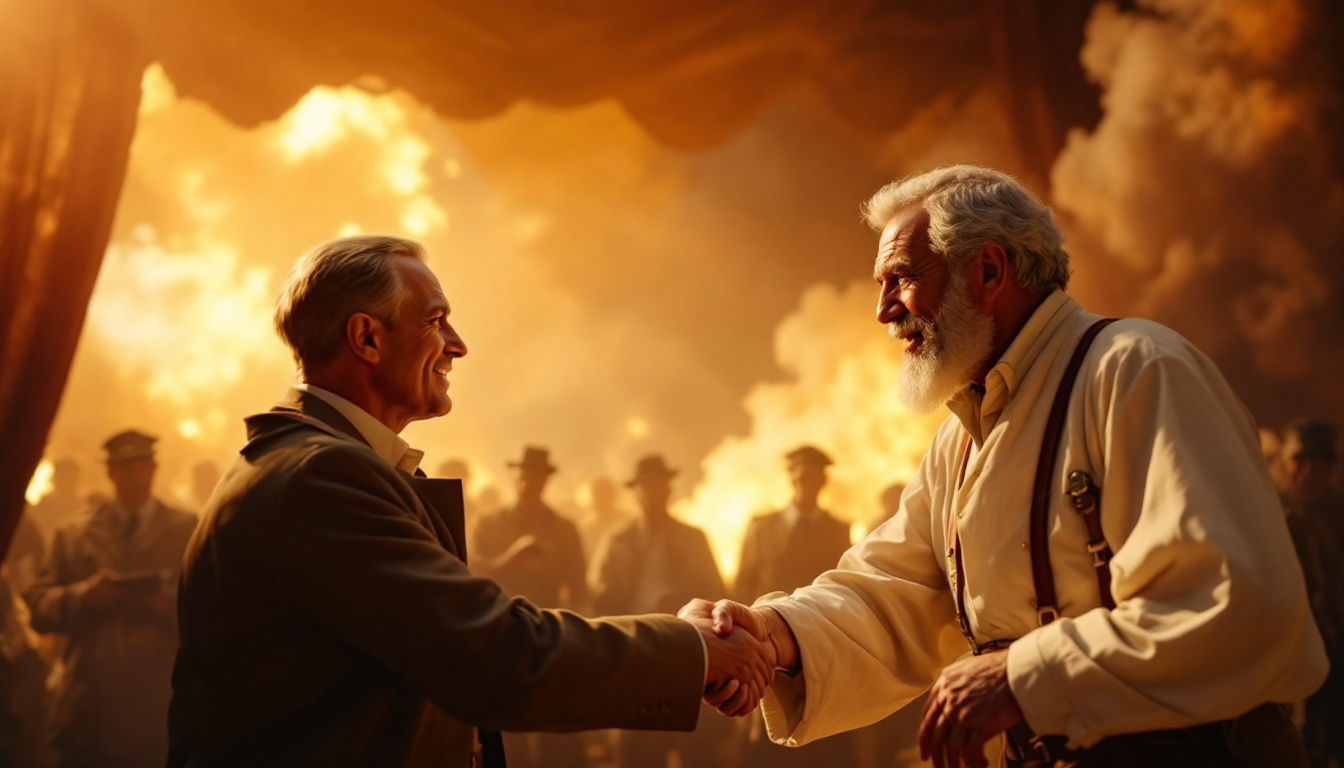
From that single conversation grew one of the most quietly powerful movements in American life. The fellowship the two men sketched out in an Akron living room now spans more than 120,000 groups in roughly 160 countries, with millions of members who introduce themselves only by their first names. It charges no dues, takes no outside money, and has no leaders in the ordinary sense. It is, in the deepest American tradition, a thing that ordinary people built for themselves, person to person, one honest admission at a time, all of it tracing back to a handshake in Ohio on this day.
Also On This Day…
1898 — The Marines Storm Ashore at Guantanamo Bay On June 10, 1898, a battalion of about 650 U.S. Marines splashed ashore at Guantanamo Bay, Cuba, in the first major American land action of the Spanish-American War. They had been ordered to seize the harbor so the U.S. Navy would have a protected anchorage to coal its ships, a dull-sounding mission that turned into days of brutal fighting in the heat and brush. The Marines dug in, held their ground against Spanish counterattacks, and refused to be pushed back into the sea. Their stand secured the harbor and helped clear the way for the campaign that ended Spanish colonial rule in the hemisphere. More than a century later, those first boots on Cuban soil still mark a turning point in America’s arrival as a world power.
1943 — The Pen That Conquered the World Gets Patented On June 10, 1943, Hungarian journalist László Bíró secured a patent in Argentina for a writing instrument that would change daily life on every continent: the ballpoint pen. Bíró, who had fled the Nazis with his chemist brother, was frustrated by fountain pens that smeared, leaked, and needed constant refilling. Working with quick-drying ink and a tiny rotating ball at the tip, the brothers built a pen that wrote cleanly, survived a pocket, and never blotted. American servicemen and aviators quickly fell in love with it, because it worked at high altitude where fountain pens failed. Within a few years the “Biro” had gone from a wartime curiosity to a fixture in every American desk drawer, shirt pocket, and schoolroom.
1692 — Salem’s First Witch Goes to the Gallows On June 10, 1692, Bridget Bishop was hanged on Salem’s Gallows Hill, the first person executed in the witch trials that would scar colonial Massachusetts. A thrice-married tavern keeper known for bright clothes and a sharp tongue, Bishop made an easy target for a community gripped by fear and rumor. Her trial lasted just over a week before the new court condemned her on the testimony of girls who claimed her spirit tormented them. Nineteen more men and women would follow her to the gallows before the hysteria finally broke. Her death stands as one of the earliest and most haunting American lessons in what happens when accusation is treated as proof.
June 10th is a date that runs the full sweep of the American story, from a 1692 gallows that warned us what fear can do, to Marines proving their grit on a Cuban shore, to a clever pen that put writing in every working hand, to two desperate men in Akron who discovered that the surest way to save yourself is to reach out and save someone else. It is a date about the quiet courage of starting over, and the stubborn American faith that we can.
