
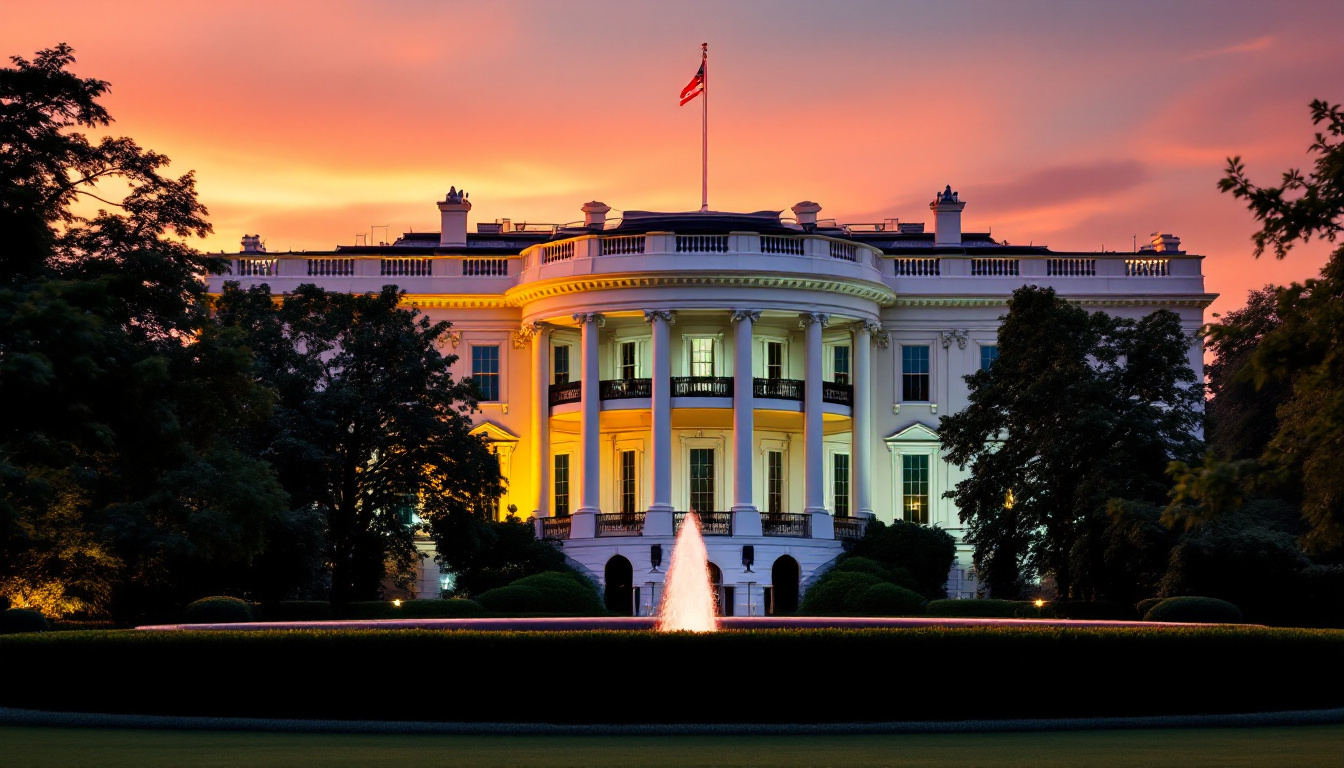
I’ve walked past pictures of this building my entire life and assumed I knew it. Then I found out it once had a different name, it was almost burned to the ground by a foreign army, and there’s a room inside dedicated entirely to making chocolate. By the time you get to the one about who actually built it, you’ll never look at that famous white mansion the same way again. Let’s open the door.
1. The British literally set the White House on fire in 1814.
During the War of 1812, British troops marched into Washington on August 24, 1814, and torched the place. The fire gutted the interior so completely that only the scorched exterior walls were left standing. Legend has it First Lady Dolley Madison saved a famous portrait of George Washington on her way out the door. James Hoban, the original architect, was brought back to rebuild the whole thing from the ashes.
2. It wasn’t officially called “the White House” until 1901.
For its first century, it went by names like the “President’s Palace,” the “President’s House,” and the “Executive Mansion.” It took Theodore Roosevelt to make “White House” official. In 1901 he had the name printed on his stationery and ordered the government to swap “Executive Mansion” for “White House” on all official papers. One man, one letterhead change, and a nickname became history.
3. It has 132 rooms and 35 bathrooms.
That’s not a typo. Tucked inside are 132 rooms, 35 bathrooms, and six levels in the Residence alone. Throw in 412 doors, 147 windows, 28 fireplaces, 8 staircases, and 3 elevators, and you’ve got less of a house and more of a small, very secure city. Good luck finding a free bathroom during a state dinner.
4. There’s an entire room just for making chocolate.
Down in the basement sits the “Chocolate Shop,” a small kitchen devoted purely to crafting chocolate treats for big events and dinners. It gets especially busy around Easter, when confectioners crank out giant chocolate bunnies and eggs for the famous Egg Roll. There’s also a separate pastry kitchen for cakes, cookies, and pies. Yes, the most powerful address in America has a dedicated chocolate room.
5. Tragically, it was built partly by enslaved laborers.
This is the part the postcards leave out. Enslaved African Americans worked alongside hired white laborers and craftsmen to construct the White House and its surrounding facilities. They quarried stone, baked bricks, and did the brutal physical work of raising the nation’s most famous symbol of freedom. It’s a hard truth that’s finally being told more openly.
6. Painting the outside takes 570 gallons.
That gleaming white coat doesn’t come cheap or easy. Every few years the exterior gets repainted, and it takes a staggering 570 gallons of paint to cover the whole thing. That’s enough to fill more than ten standard bathtubs. So the next time your weekend paint job feels endless, just be glad you don’t live here.
7. The White House has its own ZIP code.
It’s 20500, all to itself. It gets better: the President’s official ZIP+4 is 20500-0001, and the First Lady gets her own at 20500-0002. Few addresses in America can claim their own postal code, but the most famous house in the country pulls it off without blinking.
8. The cornerstone was laid in 1792.
Construction kicked off when the cornerstone was set on October 13, 1792, making this one of the oldest public buildings in Washington. George Washington picked the site and approved the design, but here’s the kicker: he’s the only president who never actually lived there. It wasn’t finished until John Adams moved in eight years later.
9. There’s a bowling alley and a movie theater inside.
President Truman cut the ribbon on the first White House bowling alley in 1947, and a version still exists today. Movie buffs got their fix even earlier, when FDR converted a coat room into a 42-seat screening room in 1942, now known as the Family Theater. Add a swimming pool and a tennis court, and the place has better amenities than most resorts.
10. It was almost completely rebuilt from the inside out in the 1950s.
After surviving the 1814 fire, the structure was so worn and unstable by the Truman era that engineers found it in danger of collapse. The entire interior was gutted down to the exterior walls and rebuilt with a steel frame, while the historic outer shell was preserved. The house you see today is older on the outside than it is on the inside.
Which one surprised you the most? Send this to the friend who thinks they already know everything about American history…
