
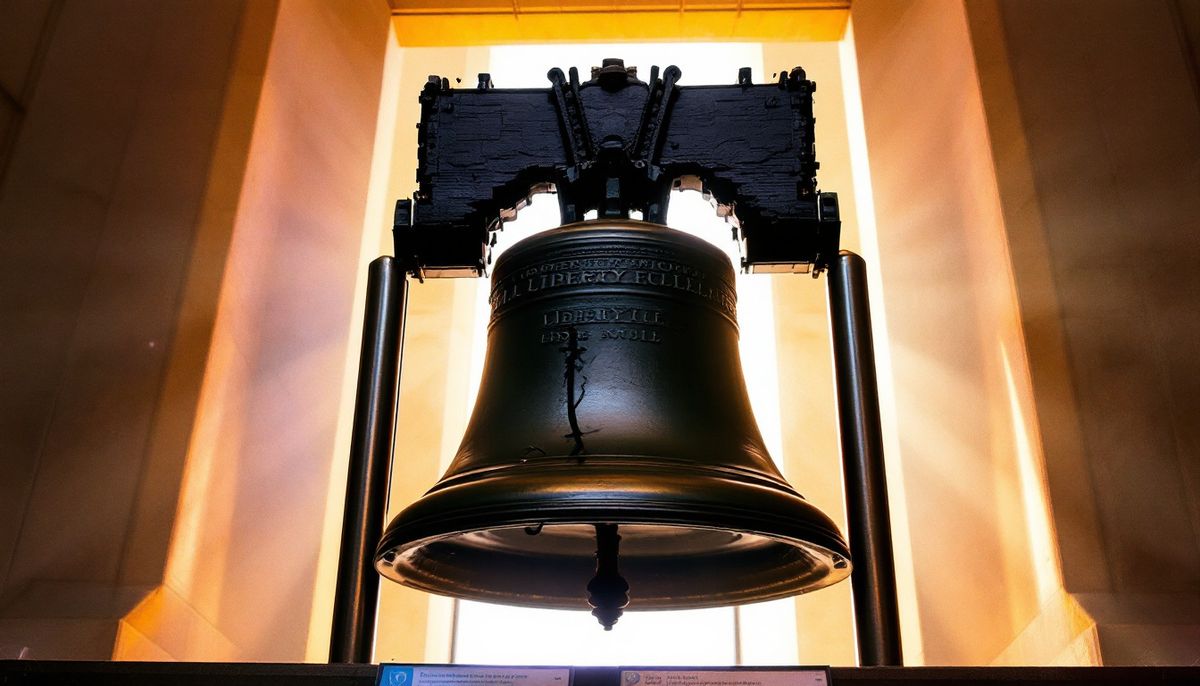
You’ve seen it on coins, stamps, and a thousand Fourth of July decorations — that big cracked bell that somehow means “freedom.” But here’s what gets me: the most famous fact about it (that it rang on July 4, 1776) almost certainly never happened, the word “Pennsylvania” on it is “wrong” but actually wasn’t, and the people who gave it the name “Liberty Bell” weren’t the Founding Fathers at all. It hasn’t rung a real note in 180 years — and yet every July 4th it still speaks. Grab your sparklers. Number 6 is going to rearrange a fact you’ve believed your whole life.
1. It was born in London — not Philadelphia.
In 1752, Pennsylvania’s colonial assembly ordered a new bell for the State House (now Independence Hall) from the Whitechapel Bell Foundry in London. So the most American object in America actually came over on a ship from England. It crossed the Atlantic, got hauled up to test its sound — and immediately let everyone down. Literally. We’ll get to that.
2. It cracked the very first time anyone rang it.
When the new bell arrived and was struck for the first test, the rim cracked on the opening blow. Not a triumphant first toll — a flop. Two local craftsmen, John Pass and John Stow, were handed the job of fixing it, and you can still read their names cast right into the bell today. Most icons earn their fame over decades. This one was a dud out of the box.
3. It had to be recast twice — and people *mocked* the result.
Pass and Stow melted the broken bell down and recast it, adding copper to make it less brittle. When they rang the new version, witnesses said it sounded like two coal scuttles being banged together. The crowd laughed them out of the square. So they melted it down and did it again. The third try in 1753 finally stuck — the bell we revere today is the founders’ third draft.
4. The inscription is a Bible verse — “Proclaim Liberty throughout all the land.”
Wrapped around the top of the bell is a line from the Old Testament book of Leviticus: “Proclaim LIBERTY throughout all the Land unto all the Inhabitants thereof.” It was chosen back in 1752, long before any talk of revolution — likely to mark the 50th anniversary of Pennsylvania’s founding charter. The word “liberty” was sitting on that bell decades before the Declaration of Independence made it a battle cry.
5. “Pennsylvania” looks misspelled on it — but technically wasn’t.
Look closely and the bell reads “Pensylvania,” with one “n.” Modern eyes scream typo. But in the 1750s, English spelling wasn’t standardized, and “Pensylvania” was an accepted way to write it at the time — it even appeared that way on official documents. So the famous “misspelling” is real on the metal, but it wasn’t actually a mistake by the standards of the day. History loves a technicality.
6. It almost certainly did NOT ring on July 4, 1776.
Here’s the big one. The beloved image of the bell pealing the moment independence was declared? There’s no evidence it happened — and good reason to doubt it. The Declaration wasn’t read publicly until July 8, 1776, four days later. That’s when bells around Philadelphia, likely including this one, rang to call citizens to hear it. The single most famous “fact” about the Liberty Bell is, almost certainly, a myth.
7. The founders never called it the “Liberty Bell” — abolitionists did.
For decades it was just “the State House Bell.” The name we use today was coined in the 1830s by anti-slavery activists, who seized on that “Proclaim Liberty… unto all the Inhabitants” inscription and turned the bell into a symbol of their cause — pointing out that America wasn’t yet living up to its own words. So the name “Liberty Bell” isn’t a Revolutionary War relic. It’s an abolitionist rallying cry.
8. Nobody knows exactly when the famous crack happened.
The single most recognizable feature of the bell — that big jagged crack — has a murky origin. There’s no reliable record of the exact moment or cause of the original fracture. Various stories have it cracking at different funerals or celebrations over the years, but historians can’t pin it down. The most photographed crack in America is, in a sense, an unsolved mystery.
9. That wide crack you see was deliberately drilled WIDER.
The dramatic gash isn’t entirely natural. In the 1840s, repairmen used a technique called “stop drilling” — they widened the existing crack into the gap we see now (about 21 inches long) so the edges wouldn’t buzz against each other when struck. The goal was to make it ring true again. It didn’t last. The bell’s most iconic feature is partly a repair job that failed.
10. It hasn’t rung a real note in 180 years — but it still gets tapped every July 4th.
The bell rang its last clear toll on February 23, 1846, in honor of George Washington’s birthday, before a fresh fracture silenced it for good. Since then it’s stayed quiet — but not forgotten. Every Fourth of July, descendants of the Declaration’s signers symbolically tap the silent bell 13 times, once for each original colony, while bells ring across the nation. It can’t sing anymore. So we let the whole country sing for it.
Which one rewrote a fact you thought you knew — the July 4th myth or the abolitionist name? Forward this to someone who needs the perfect bit of trivia for the cookout this year.
