
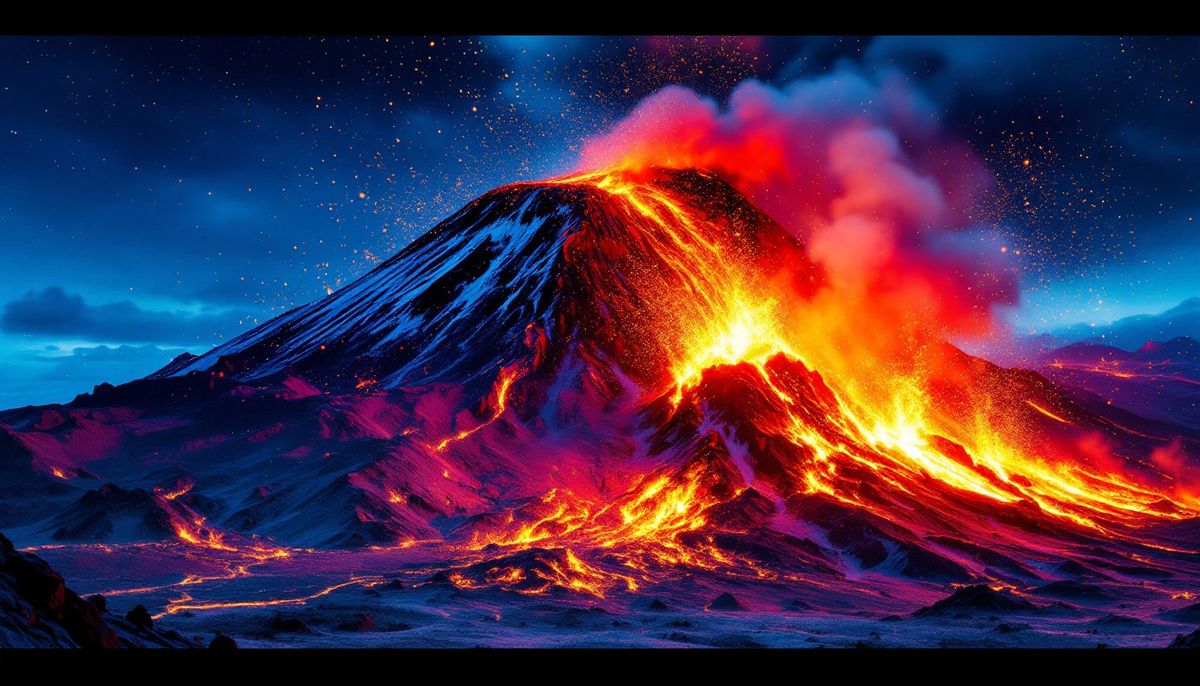
You probably remember the photos — the gray mushroom cloud, the flattened forests, the old man who refused to leave. But the real story of Mount St. Helens is stranger and bigger than the headlines ever let on. The eruption set off the largest landslide in recorded human history, vaporized the top of a mountain, and buried a man who’d been warned for weeks. One scientist’s last radioed words have haunted geologists for decades. And here’s the twist nobody expected: the “dead zone” came back to life far faster than the experts swore it could. Number 6 is the moment a young researcher saw it coming — and couldn’t get away.
1. It blew its top on May 18, 1980 — and it was the deadliest eruption in U.S. history.
At 8:32 a.m. on a Sunday morning, a magnitude 5.1 earthquake rocked the mountain and the north face let go. About 57 people died, making it the deadliest and most economically destructive volcanic event in the history of the United States. It wasn’t some remote eruption nobody saw coming — geologists had been watching the mountain bulge and grumble for weeks. Then, in seconds, it all came apart.
2. It triggered the largest landslide in recorded history.
Before the eruption even properly began, the entire north flank of the mountain collapsed and slid away. It remains the largest landslide in recorded human history — a wall of rock and debris racing downhill at well over 100 miles per hour. That collapse is what uncorked the volcano: with the side of the mountain suddenly gone, the pressurized magma and gas inside exploded sideways. The landslide didn’t follow the eruption. The landslide caused it.
3. The blast went sideways, not up — and flattened forests for miles.
Because the north face slid off first, the explosion erupted laterally — straight out the side of the mountain instead of skyward. This “lateral blast” tore across the landscape at speeds reaching hundreds of miles per hour, leveling nearly everything in a 180-degree arc to the north. Ancient old-growth trees were snapped off and laid flat like matchsticks across roughly 150 square miles. Some hillsides six miles away were stripped completely bare. It was a sideways shotgun blast the size of a county.
4. The mountain lost about 1,300 feet of height in minutes.
Mount St. Helens used to be a near-perfect snow-capped cone — so symmetrical that locals called it the “Mount Fuji of America.” When the dust settled, its summit had dropped from 9,677 feet to about 8,365 feet, a loss of roughly 1,300 feet. In place of the graceful peak sat a gaping, mile-wide, horseshoe-shaped crater. A mountain that took thousands of years to build lost its crown in a single morning.
5. The lodge owner who refused to leave was buried under the avalanche.
Harry R. Truman — no relation to the president — was an 83-year-old innkeeper who had lived near the mountain for 54 years. As authorities begged residents to evacuate, Truman dug in, telling reporters the mountain wouldn’t dare hurt him and that he wasn’t leaving his lodge and his 16 cats. When the north face collapsed, his home and Spirit Lake were buried under hundreds of feet of avalanche debris. He became the eruption’s most famous holdout — and one of its victims.
6. A young volcanologist’s final words were “Vancouver! Vancouver! This is it!”
David Johnston was a 30-year-old USGS scientist manning an observation post about six miles from the summit on the morning of the blast. He was the first to report the eruption, radioing the now-legendary message — “Vancouver! Vancouver! This is it!” — moments before the lateral blast swept over his position. He was killed instantly, and his body was never found. His warnings beforehand had actually helped keep the area closed, almost certainly saving thousands of lives. The ridge where he died is now named Johnston Ridge in his honor.
7. The ash fell in 11 states and circled the entire planet.
The eruption blasted a column of ash about 80,000 feet into the sky — roughly 15 miles up. Measurable ash fell across 11 U.S. states, with grit drifting as far east as the Great Plains, more than 900 miles away. Towns in eastern Washington went dark at noon as the cloud blotted out the sun and streetlights flicked on. The ash cloud crossed the United States in three days and circled the entire Earth in about 15.
8. It’s a stratovolcano in the Cascades — and it’s still very much active.
Mount St. Helens is a stratovolcano, part of the Cascade Volcanic Arc that runs down the Pacific Northwest, built over a zone where one of Earth’s tectonic plates dives beneath another. It is the most active volcano in the Cascade Range, and 1980 was far from its last word — it kept erupting on and off for years afterward and roared back to life again in 2004. This is not a sleeping relic. It’s a living, breathing geologic machine that simply takes naps.
9. It was named after a British diplomat who never saw it.
The peak’s English name has nothing to do with a saint and everything to do with 18th-century politics. Explorer George Vancouver, charting the Pacific coast in the 1790s, named the mountain after his friend Alleyne FitzHerbert — a British diplomat who held the title Baron St Helens. FitzHerbert almost certainly never laid eyes on the towering volcano that would carry his name into history. He just happened to know the right explorer.
10. Life came roaring back decades faster than scientists predicted.
Experts surveyed the gray, lifeless moonscape after the blast and predicted it would take centuries for the ecosystem to recover. They were wrong. Plants whose roots and seeds had been shielded under snow and ash survived, and burrowing critters like pocket gophers and deer mice had ridden out the blast underground. Within just a few years, lupine flowers, insects, elk, and fish were reclaiming the “dead zone.” Today Mount St. Helens is one of the world’s great living laboratories — proof that nature is far harder to kill than anyone guessed.
Which one floored you — the man who wouldn’t leave, or the mountain that lost its peak in minutes? Forward this to the friend who loves a good disaster story…
