
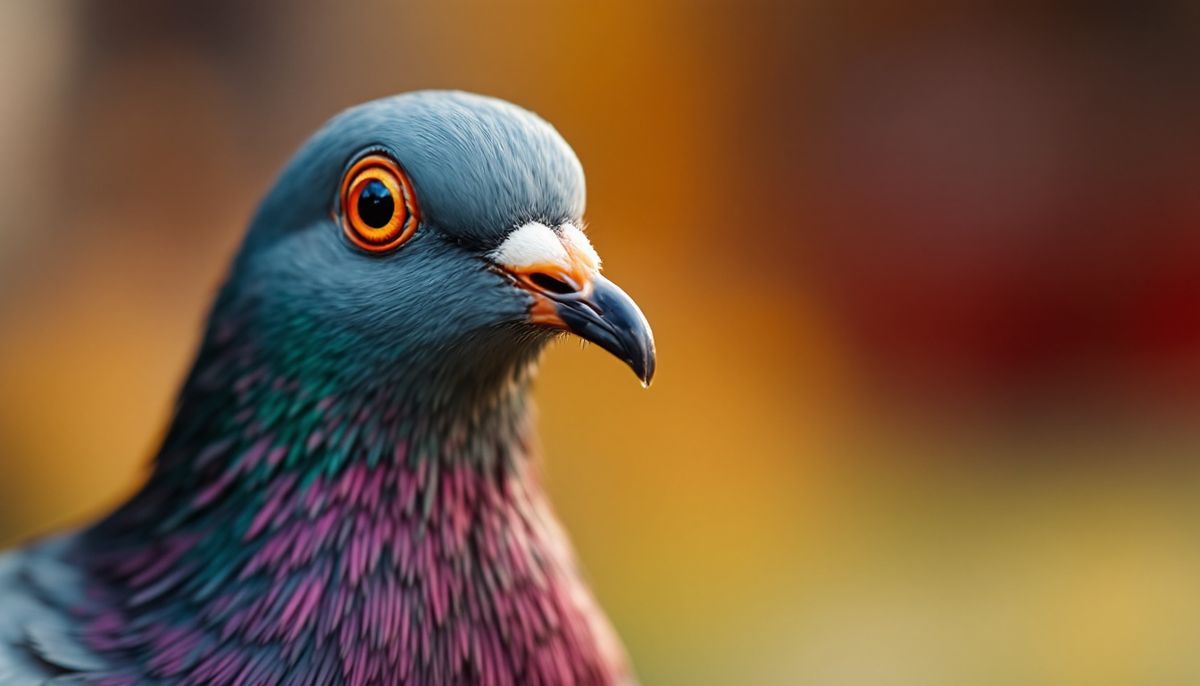
If someone told you the most decorated animals in military history were pigeons, you’d probably laugh. I did. Then I found out that a one-legged pigeon named Cher Ami saved nearly two hundred American soldiers, that another pigeon single-handedly stopped an Allied bombing raid, and that the CIA once strapped cameras to pigeons and sent them out to spy on the Soviets. The bird you shoo off your park bench comes from a long line of legitimate war heroes. Here are five true stories about war pigeons that genuinely rearranged my brain.
Did you know a pigeon named Cher Ami saved 194 American soldiers in World War I?
In October 1918, roughly 550 men of the U.S. 77th Division were trapped behind German lines in the Argonne Forest, surrounded, starving, and, worst of all, being shelled by their own artillery, which didn’t know their position. Runners were shot. Radio didn’t exist for them. Their last hope was carrier pigeons, and the Germans shot down the first birds they released. The final pigeon, Cher Ami, took off with a desperate message: “Our artillery is dropping a barrage directly on us. For heaven’s sake stop it.” German riflemen hit her almost immediately. She went down, then somehow got back up and flew 25 miles in about half an hour, arriving shot through the breast, blinded in one eye, with the message capsule dangling from what was left of her leg. The shelling stopped. Around 194 survivors of the “Lost Battalion” walked out alive because a one-pound bird refused to quit.
Did you know France awarded that pigeon an actual military medal?
Cher Ami didn’t just get a pat on the head and a handful of seed. France awarded her the Croix de Guerre with palm, a legitimate military decoration for gallantry, the same honor given to human soldiers. Army medics fought to save her life, and when they couldn’t save her mangled leg, they carved her a tiny wooden one. General John J. Pershing himself reportedly saw her off when she sailed home to America, where she lived out her retirement as a national celebrity. When she died in 1919, the Army didn’t bury her. They had her preserved by a taxidermist, and you can still visit her today, standing on her wooden leg, in the Smithsonian’s National Museum of American History, displayed near Sergeant York’s medals. A pigeon, in the national collection, with a service record better than most of us.
Did you know a pigeon named G.I. Joe once stopped a bombing raid with 5 minutes to spare?
In October 1943, British troops captured the Italian town of Calvi Vecchia ahead of schedule, which was great news with one catch: Allied bombers were already scheduled to flatten the town, and radio attempts to call off the strike failed. So the troops released G.I. Joe, a U.S. Army Pigeon Service bird, who flew about 20 miles in 20 minutes and arrived at the air base just as the bombers were taxiing for takeoff. The raid was scrubbed with roughly five minutes to spare, saving the town and an estimated 1,000 people, including the British troops occupying it. For that single flight, G.I. Joe became the first non-British recipient of the Dickin Medal, presented at the Tower of London. One bird, twenty minutes, a thousand lives. Your fantasy football league has never produced a clutch performance like this.
Did you know pigeons have won more medals for animal bravery than dogs?
The Dickin Medal is the animal kingdom’s Victoria Cross, awarded since 1943 to animals displaying conspicuous gallantry in wartime. You’d assume dogs dominate the leaderboard. Not even close. Of the original 54 medals awarded through 1949, a full 32 went to pigeons, compared with 18 dogs, 3 horses, and a single cat. Birds like Winkie, who escaped a ditched RAF bomber and flew 120 miles home, soaked in oil, to trigger a rescue of the downed crew; and Commando, who flew more than 90 missions carrying intelligence out of Nazi-occupied France. During World War II, Britain alone put around 250,000 homing pigeons into service. The humble park pigeon isn’t a rat with wings. It’s a decorated veteran’s great-grandkid, and statistically, it out-earned the dogs.
Did you know the CIA built spy cameras for pigeons, and we still don’t fully know how they find home?
In the 1970s, the CIA’s Office of Research and Development ran a program that fitted pigeons with tiny, battery-powered cameras designed to snap photos automatically as the birds flew over sensitive targets. A pigeon flies low, looks completely innocent, and goes exactly where you trained it to go, making it a surveillance platform no satellite could match. Details of the missions remain classified to this day, but one of the cameras sits in the CIA’s own museum. And here’s the kicker: the guidance system powering all of it is still not fully understood. Homing pigeons have returned home from over 1,000 miles away through terrain they’ve never seen. Scientists have proposed magnetic field sensing, sun compasses, smell maps, even infrasound, and after more than a century of research, nobody has cracked the complete answer. We built GPS. The pigeon just has it.
Send this to someone who complains about pigeons… they’re insulting a decorated war hero’s family.
