
July 15th
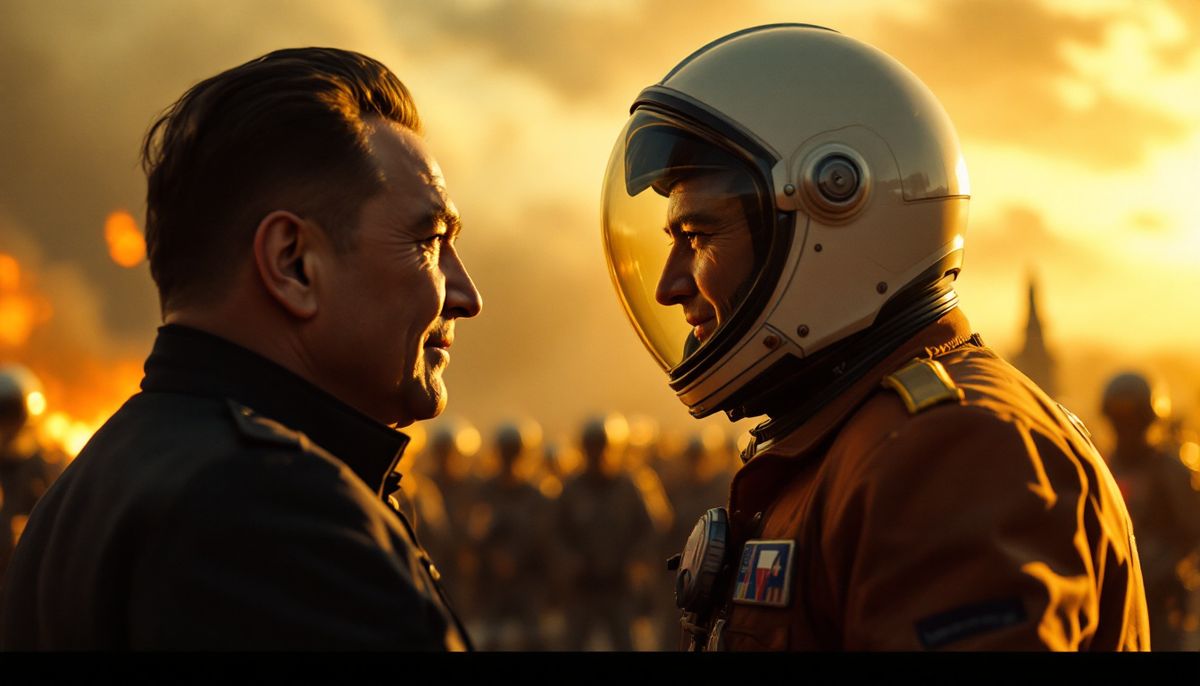
On the morning of July 15, 1975, a Soyuz rocket thundered off the pad at the Baikonur Cosmodrome in Soviet Kazakhstan. Seven and a half hours later, a Saturn IB answered from Kennedy Space Center in Florida. For nearly two decades, American and Soviet rockets had been aimed at the same prize — the Moon, the headlines, the future. Now, for the first time in history, they were aimed at each other. On purpose. To meet.
This was the Apollo-Soyuz Test Project: the first crewed international space mission ever flown, and the unthinkable finale to the Space Race. Aboard the Soyuz rode cosmonauts Alexei Leonov — the first human ever to walk in space — and Valeri Kubasov. Aboard the Apollo were Tom Stafford, Vance Brand, and Deke Slayton, one of the original Mercury Seven astronauts, who had been grounded by a heart murmur for 16 years. At age 51, Slayton was finally getting his ride — the oldest rookie ever to fly.
Two days later, on July 17, the two ships found each other 140 miles above the Earth and docked. When the hatches opened, Stafford and Leonov reached across the threshold and shook hands — the first international handshake in space, televised live to millions on both sides of the Iron Curtain. The crews had spent years training in each other’s countries and languages for this moment; Leonov joked that Stafford’s Oklahoma-accented Russian was a third language all its own, “Oklahomski.”
The two crews exchanged flags, shared meals, and swapped tree seeds to plant back home. Then they undocked and returned to a world still locked in the Cold War. But something had shifted. That handshake became the seed of everything that followed — Shuttle-Mir, the International Space Station, decades of astronauts and cosmonauts flying side by side. The Space Race that began with Sputnik’s beep ended with a handshake, 140 miles up.
Also On This Day…
1806 — Zebulon Pike Sets Out for the Rockies At about 3 o’clock on the afternoon of July 15, 1806, a young Army lieutenant named Zebulon Pike pushed off from Fort Bellefontaine near St. Louis with two boats, roughly 20 soldiers, and a party of Osage being escorted home to their people. His orders: probe the uncharted southern reaches of the brand-new Louisiana Purchase, map the terrain, and find the headwaters of the Red River. It was the first official U.S. expedition into the southern Great Plains and Rockies — and along the way, Pike would sight a massive Colorado peak he declared no man could climb. Today it bears his name: Pikes Peak.
1903 — Ford Takes Its Very First Order On July 15, 1903, the month-old Ford Motor Company received its first order: an $850 two-cylinder Model A, bought by Dr. Ernst Pfenning, a Chicago dentist. The little red runabout, built at Ford’s plant on Mack Avenue in Detroit, topped out around 30 miles per hour and was delivered about a week later. The company was so new it was nearly broke — that dentist’s check helped keep the lights on. From one Chicago dentist’s order grew the company that would put America on wheels.
1916 — Boeing Is Born in a Boathouse On July 15, 1916, a Seattle timber merchant named William Boeing incorporated the Pacific Aero Products Company, operating out of a former boathouse on the Duwamish River. Exactly one month earlier, his first airplane — a spruce-and-linen seaplane called the B&W — had made its maiden flight. The company was renamed Boeing Airplane Company the following year, and the little boathouse operation grew into the aviation giant that built the B-17, the 747, and much of the American century in the sky.
1971 — Nixon Drops the China Bombshell On the evening of July 15, 1971, President Richard Nixon appeared on live television and calmly announced he would visit Communist China — a country the United States had refused to even recognize for 22 years. The announcement stunned the world; Henry Kissinger had arranged it during a secret trip to Beijing that almost nobody in the U.S. government knew about. It was the ultimate shock from the ultimate anti-communist: Nixon had built his career fighting Red China, which is exactly why he could be the one to open the door. The trip came in February 1972 — and diplomacy has spoken of a “Nixon goes to China” moment ever since.
1979 — Carter’s “Crisis of Confidence” On July 15, 1979, after ten strange days holed up at Camp David listening to governors, preachers, and ordinary citizens, President Jimmy Carter went on national television and told Americans the country’s real problem wasn’t just gas lines and inflation — it was a “crisis of confidence” striking “at the very heart and soul and spirit of our national will.” Though Carter never actually used the word, the address went down in history as the “malaise” speech. His approval ratings jumped — then he abruptly demanded resignations from his entire cabinet days later, and the goodwill evaporated. It remains one of the most debated presidential speeches ever delivered.
From Pike’s boats pushing into the unknown, to a dentist buying Detroit’s future, to a handshake between rivals 140 miles above the Earth — July 15th is the day Americans keep deciding the frontier isn’t closed, it’s just farther out.
