
July 17th
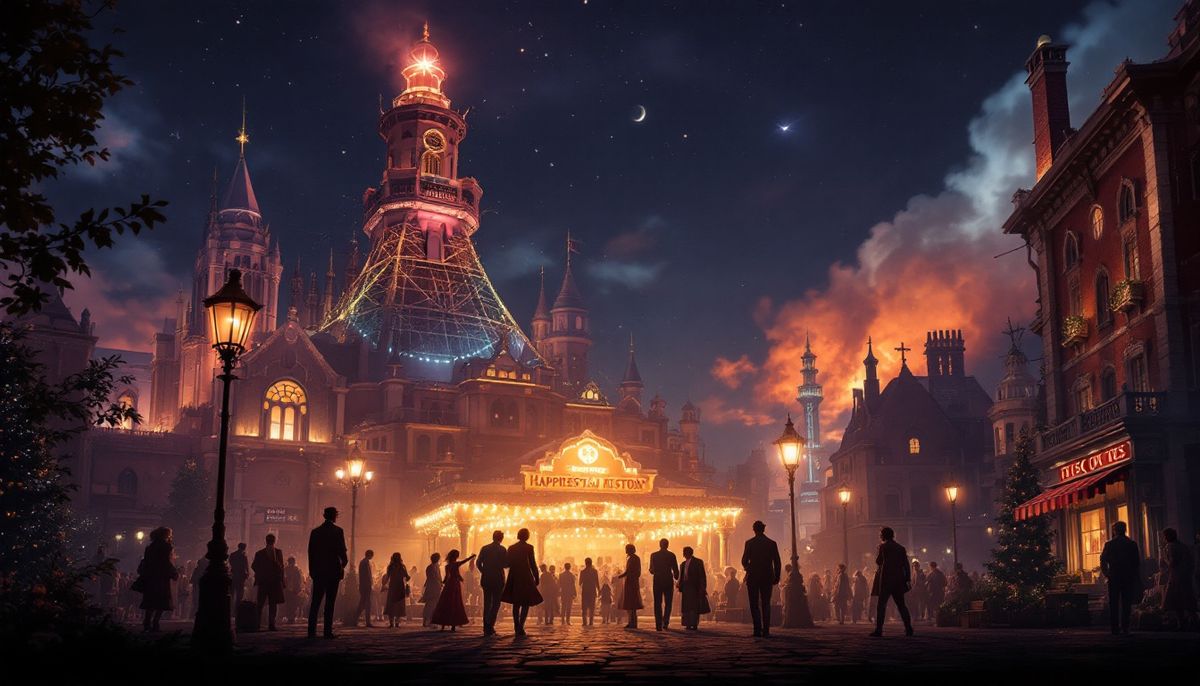
On July 17, 1955, Walt Disney stood in front of live television cameras in Anaheim, California, and dedicated Disneyland “to the ideals, the dreams and the hard facts that have created America.” Ninety million Americans watched the broadcast — co-hosted by a young actor named Ronald Reagan. What those cameras mostly didn’t show was that behind Walt, the Happiest Place on Earth was coming apart at the seams.
The park had been thrown together in just 366 days, and opening day was supposed to be an invitation-only preview for about 15,000 guests. Instead, more than 28,000 people poured through the gates — thousands of them waving counterfeit tickets, and some simply climbing over the back fence. One enterprising local reportedly propped a ladder against the fence and charged admission for the climb.
Then Southern California did what it does in July. Temperatures soared past 100 degrees, and Main Street’s asphalt — poured fresh just hours earlier — began to melt. Women’s high heels sank right into the street. A plumbers’ strike had forced Walt into a brutal choice: working toilets or working drinking fountains. He chose toilets, which meant thousands of overheated guests found the fountains dry and assumed it was a scheme to sell them soda. Restaurants and snack carts ran out of food within hours. A gas leak shut down Fantasyland. The Mark Twain riverboat, packed far beyond capacity, wallowed with water sloshing over her deck.
The press savaged the opening, and Walt himself forever after called it “Black Sunday.” But here’s the part worth remembering: he spent the next days personally walking the park, fixing everything that had failed. Within seven weeks, Disneyland welcomed its one millionth guest — and the disaster of July 17, 1955 became the foundation of the most successful theme park empire in history.
Also On This Day…
1902 — A 25-Year-Old Engineer Invents Air Conditioning On July 17, 1902, a young engineer named Willis Carrier initialed a set of mechanical drawings meant to solve a very specific problem: humidity at the Sackett & Wilhelms printing plant in Brooklyn was warping paper and smearing ink. His system — installed that same summer — controlled humidity and temperature at once, and is recognized as the world’s first modern air conditioning system. Carrier thought he was fixing a printing press. He ended up making the American Sun Belt livable, the summer movie theater possible, and the modern office bearable. Not bad for a day’s paperwork.
1917 — The British Royal Family Changes Its Name In the middle of World War I, Britain’s royal family had an image problem: their family name was Saxe-Coburg and Gotha — thoroughly German — while German bombers called Gothas were dropping bombs on London. On July 17, 1917, King George V declared at Buckingham Palace that the royal house would henceforth be known by a sturdy, castle-inspired English name: Windsor. With one proclamation, a thousand years of German dynastic naming was traded for a brand so successful the family still wears it today.
1938 — “Wrong Way” Corrigan Flies to Ireland “By Mistake” At 5:15 a.m. on July 17, 1938, Douglas Corrigan took off from Floyd Bennett Field in Brooklyn in a $310 Curtiss Robin he’d rebuilt from a trash heap — with an approved flight plan back to California. Twenty-eight hours and thirteen minutes later, he landed in Dublin, Ireland. Corrigan, who had helped build Lindbergh’s Spirit of St. Louis and had been repeatedly denied permission for a transatlantic flight, swore with a straight face that heavy clouds and a misread compass had turned him the wrong way. Nobody believed him. Everybody loved him. “Wrong Way” Corrigan came home to a New York ticker-tape parade bigger than Lindbergh’s — and he never, ever changed his story.
1975 — The Handshake, 140 Miles Up Two days ago we told you about the July 15 launches that sent an American Apollo and a Soviet Soyuz chasing each other into orbit. On July 17, 1975, they caught each other. The two ships docked 140 miles above the Earth, the hatches swung open, and commander Tom Stafford reached across to grip cosmonaut Alexei Leonov’s hand — the first international handshake in space, broadcast live on both sides of the Iron Curtain. The Space Race that began with sirens and panic ended with two old rivals shaking hands over France.
From melting asphalt in Anaheim, to a compass “misread” all the way to Dublin, to a handshake high over the Iron Curtain — July 17th is the day the plan falls apart and something better happens anyway.
