
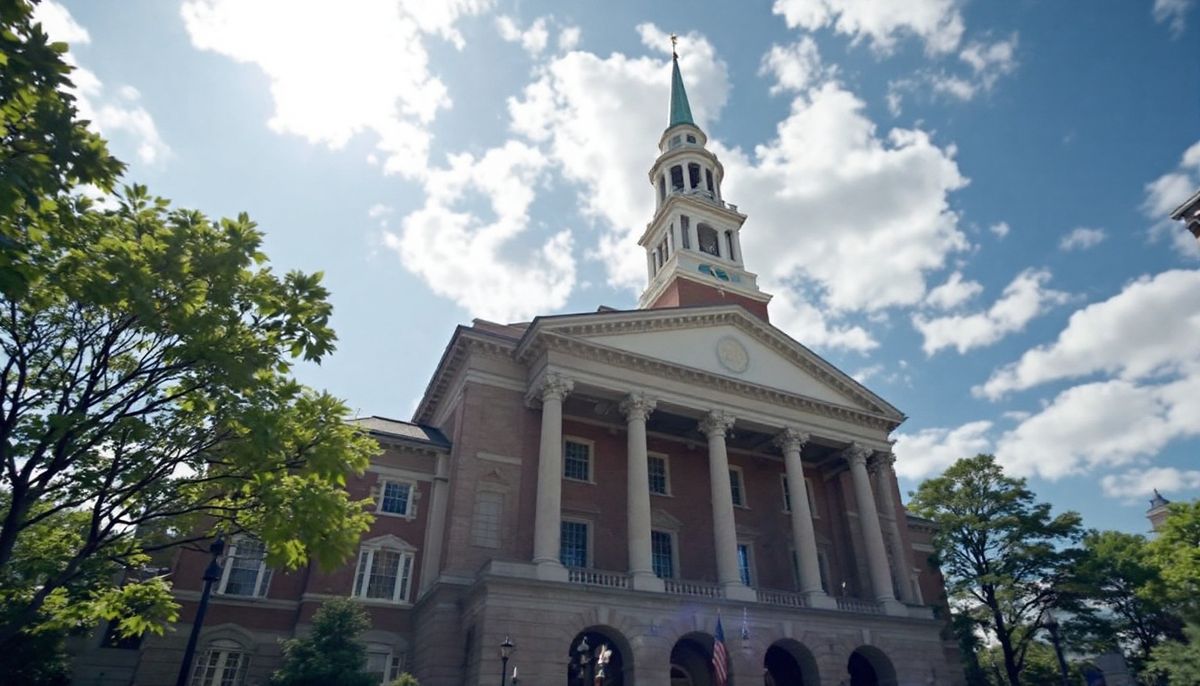
Confession: I used to think of Independence Hall as “that brick building on the field trip.” Then I started digging, and it turns out the birthplace of America has led a far stranger life than the textbooks let on. Did you know Pennsylvania nearly sold it off for building lots? Or that the famous steeple you see in every photo isn’t the original? Or that there’s a decades-long argument about what time it is on the back of the $100 bill? Here are ten Independence Hall facts that’ll make you the most interesting person at your next barbecue.
1. It’s the only building where BOTH the Declaration of Independence and the Constitution were signed.
Same room, eleven years apart. The Declaration was adopted in the Assembly Room in July 1776, and in the summer of 1787 the Constitutional Convention hammered out the Constitution in the exact same space. No other building on Earth can claim both founding documents of a nation. And here’s the kicker: it wasn’t even built for that. It was the Pennsylvania State House — a colonial government office building that accidentally became the most important room in American history. Talk about overperforming your job description.
2. Pennsylvania almost demolished it and sold the land for building lots.
In the 1810s, the state government had moved to Harrisburg and saw the old State House as surplus real estate. The plan on the table: tear it down, carve up the yard, and auction the lots to developers. The city of Philadelphia stepped in and bought the building and its square in 1816 for $70,000 to save it. Imagine explaining to the rest of history that the room where America was born got flipped into row houses. It came that close.
3. That iconic steeple? It’s a do-over.
The original wooden steeple rotted so badly it became a safety hazard and was torn down in 1781 — just five years after the Declaration. For nearly half a century, Independence Hall sat there decapitated, with a stubby little roof where the tower had been. The steeple you see today was designed by architect William Strickland and added in 1828. And yes, the Liberty Bell once hung up there — but that cracked celebrity got its own full story from us on the Fourth of July.
4. The Assembly Room you tour today is mostly a recreation.
Brace yourself: the sacred room where it all happened was gutted and remodeled repeatedly over the centuries, and most of what visitors see is a careful 20th-century restoration with period furnishings — not the original tables and chairs. But one showstopper survived: the “Rising Sun” chair George Washington sat in while presiding over the Constitutional Convention. Ben Franklin famously mused that he’d stared at the sun carved on it all summer, wondering if it was rising or setting — and finally decided it was rising. The chair is real. The goosebumps are included.
5. The British turned it into a prison hospital — and trashed the place.
When the British army occupied Philadelphia in 1777–78, they used the building to hold wounded and captured American soldiers, with officers reportedly quartered nearby in style while prisoners suffered inside. When the redcoats finally left, the birthplace of independence was described as being in “a most filthy condition,” with the yard scarred by burial pits. Congress came home to a building that needed a deep clean and an exorcism. The ultimate bad tenants.
6. It’s on the $100 bill — and people argue about what time it is.
Flip over a Benjamin and there’s Independence Hall. For decades, sharp-eyed bill readers debated the clock: the old design showed the hands at what most agreed was around 4:10, though plenty of people swore it was 2:22 — the engraving is that tiny. The Treasury never gave an official reason for the time. Then the redesigned 2013 hundred quietly changed it to 10:30, restarting the argument for a new generation. Somewhere, a currency engraver is enjoying this immensely.
7. Lincoln made a promise there — and came back in a way nobody wanted.
In February 1861, on his way to his first inauguration, Abraham Lincoln raised a flag outside Independence Hall and declared he would “rather be assassinated on this spot” than abandon the principles of the Declaration. Four years later, almost to the season, his funeral train brought him back: in April 1865, Lincoln lay in state in the Assembly Room itself, feet from where the Declaration was signed, as hundreds of thousands of mourners filed past. History doesn’t usually write its own endings that precisely. This time it did.
8. The Constitution was written with the windows shut — in a Philadelphia summer.
The delegates of 1787 swore themselves to total secrecy, so the Assembly Room’s windows were kept closed and sentries posted at the doors — through a sweltering East Coast summer, in wool coats, before air conditioning was even a dream. Delegates griped about the heat and the flies in their letters. The framers of the Constitution essentially wrote it inside a brick oven. Suddenly your office thermostat war doesn’t seem so bad.
9. The same silver inkstand served both signings.
The elegant Syng inkstand — crafted by Philadelphia silversmith Philip Syng Jr. in 1752 — supplied the ink for the signatures on the Declaration in 1776 AND the Constitution in 1787. One humble desk accessory touched both founding documents, which arguably makes it the most accomplished piece of office equipment in world history. It’s still displayed at Independence Hall today, presumably feeling superior to every stapler on Earth.
10. It’s a UNESCO World Heritage Site — in the same club as the Taj Mahal.
In 1979, Independence Hall was named a UNESCO World Heritage Site, one of the very few buildings in the United States to earn the designation. That puts a Georgian brick statehouse from 1750s Philadelphia on the same global list as the Taj Mahal, the Great Wall, and the Pyramids of Giza. The citation honors it as the birthplace of the universal principles of freedom and democracy. Not bad for a building the state once tried to sell for parts.
Which one made you say “no way”? Send this to the friend who slept through the field trip — or the one who still argues about the clock on the $100 bill…
